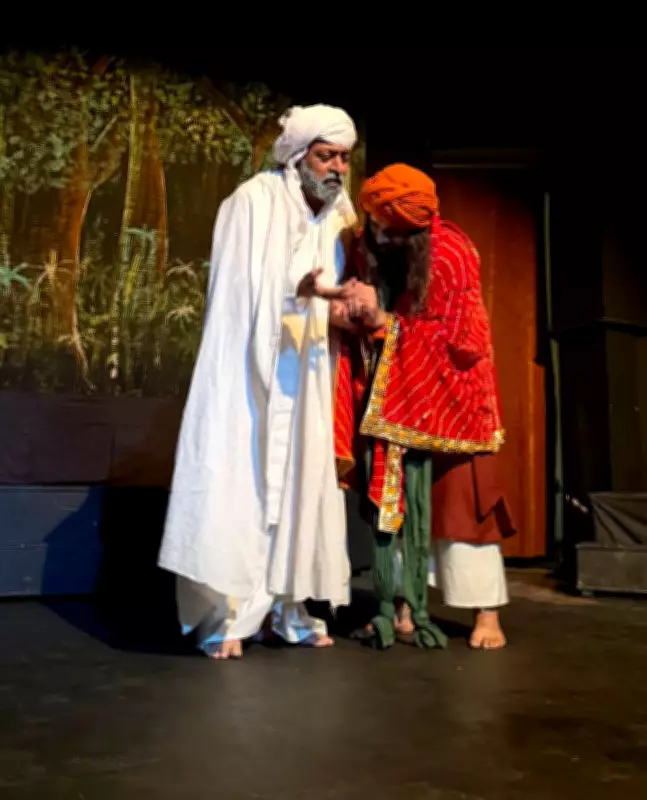
Play 'Tu Bulleh Wangu Bol' Closes Festival with Powerful Message
The five-day National Theatre Festival, organized by Kewal Dhaliwal through Manch-Rangmanch Amritsar and the Virsa Vihar Society, concluded with a stirring performance of the play Tu Bulleh Wangu Bol (Speak as Bulleh did). The play, written by Dr Swarajbir, invokes the philosophy of the renowned Sufi poet Bulleh Shah, who courageously challenged religious orthodoxy, caste divisions, and political authority through his poetry. Set at the historically significant Preet Nagar artist commune near the India-Pakistan border, the production examined Punjab's recurring cycle of political violence and the responsibility of artists in confronting historical and moral conflicts.
Exploring Parallels Between Past and Present
The narrative of Tu Bulleh Wangu Bol moved between Bulleh Shah's era and contemporary times, drawing striking parallels between the two periods. According to the play, social restrictions imposed by rulers and conservative clerics during Bulleh Shah's time, along with prevailing customs and social injustices, continue to echo in the present. By highlighting these similarities across centuries, the play underscored the irony that while generations have changed, many conflicts and prejudices remain unchanged.
Dr Swarajbir, whose body of work frequently engages with themes such as caste oppression, social injustice, state violence, gender stereotypes, and political turmoil, crafted a narrative that revolves around Bulleh Shah's ideas of human dignity, equality, and resistance to sectarianism. The play compelled audiences to reflect on contemporary realities, suggesting that while the faces of perpetrators may change, the patterns of injustice often remain the same.

Bulleh Shah's Life as Dramatic Foundation
Bulleh Shah's life itself offered a wealth of dramatic possibilities. His relentless search for truth, devotion to his spiritual guide Shah Inayat, confrontations with intolerant clerics and corrupt rulers, and opposition to wars and bloodshed carried out in the name of religion formed the powerful foundation of the play. The production highlighted how Bulleh Shah's poetry and philosophy remain relevant today, urging audiences to speak truth to power with courage.
Festival Organizer's Vision
Kewal Dhaliwal, who brought the festival to a close with the performance, emphasized that the play was not merely about a bygone era. “Tu Bulleh Wangu Bol is not just a play; it is a celebration of Punjab’s rich and vibrant culture. It is also a commentary on what is happening around us, on our past, present and future,” said Dhaliwal. The festival, which lasted five days, featured multiple theatrical presentations and drew audiences from across the region.
Significance of Preet Nagar Venue
The choice of Preet Nagar as the venue added cultural and historical depth to the event. Founded in the 1930s as a progressive artists' commune, Preet Nagar has long been a symbol of creative resistance and intellectual exchange. Staging the play there reinforced the theme of artists' responsibility in times of political and social turmoil.