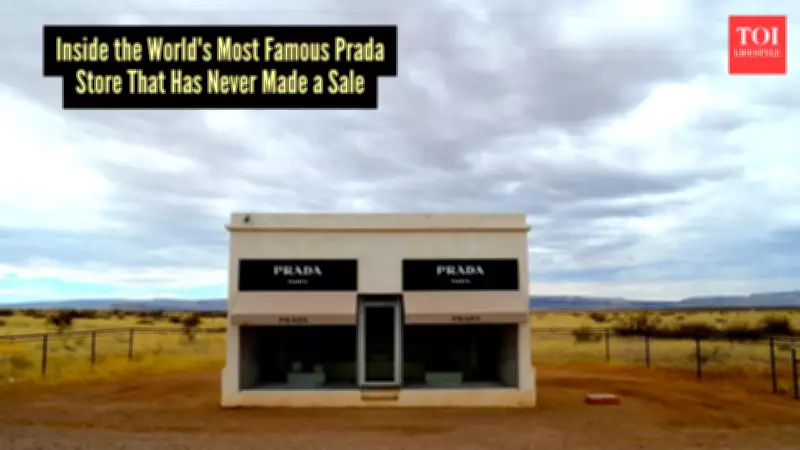
Imagine driving along a dusty, desolate stretch of Highway 90 in the scorching Chihuahua Desert of Texas. Tumbleweeds roll by, mirages shimmer on the horizon, and the landscape stretches endlessly. Then, out of nowhere, you spot it: the glowing, minimalist facade of a high-end Prada boutique. It feels like a glitch in the matrix, but it is very real. Welcome to Prada Marfa, arguably the world's most famous and most frustrating luxury landmark. It boasts iconic awnings, pristine softly lit window displays, and shelves stocked with authentic Prada pieces. There is just one massive catch: the door is permanently locked, and you cannot buy a single thing.
A Store Designed to Decay
Erected in 2005 by the Scandinavian artistic duo Michael Elmgreen and Ingar Dragset, Prada Marfa is not actually a retail store. It is a permanent pop architectural land art project. Situated about 37 miles outside the tiny desert town of Marfa, the structure was deliberately built far away from any urban retail context using biodegradable adobe bricks. The original plan was to let nature take its course. The idea was for the building to decay naturally, eventually melting back into the desert soil. It was supposed to be a raw, physical metaphor for how fleeting fashion trends are, pointing out the absurdity of our obsession with buying things. The entire structure was designed as a built-in critique of modern society's worship of big brands. To drive that point home, the luxury items trapped behind the glass are completely useless. The pristine shoes are exclusively for the right foot, and the gorgeous luxury handbags have no bottoms.
The Ultimate Ironic Plot Twist
But here is where things get interesting and deeply ironic. Instead of quietly decaying into a forgotten pile of desert rubble, Prada Marfa became an absolute sensation. Over the years, the installation has morphed into a global cultural icon. Everyone from hardcore fashion enthusiasts to A-list celebrities has flocked to the middle of nowhere just to snap a picture in front of it. What started as an edgy, subversive critique of gentrification and luxury obsession ironically turned the desolate region into a booming tourist magnet and an art mecca. It acts as a fascinating psychological mirror. Because you cannot actually buy, wear, or use the items inside, they lose all their practical, functional value. Instead, visitors consume the idea of the brand. It becomes the ultimate flex—a symbol of elite taste and high-fashion exclusivity that runs entirely on visual aesthetics and sheer sign-value.

Miuccia Prada's Corporate Masterstroke
You would think a massive luxury house would immediately sue a couple of artists for hijacking their trademarked logo to critique capitalism. But Miuccia Prada did the exact opposite. Though the fashion house did not formally commission the project, Miuccia completely supported the idea. She gave Elmgreen and Dragset permission to use the branding and personally handpicked the shoes and bags from the brand's Fall/Winter 2005 collection to stock the doomed shelves. It was a stroke of absolute genius. By quietly participating in a joke meant to mock them, Prada achieved a masterclass in brand positioning. The move elevated the label from a mere seller of expensive bags to a sophisticated patron of contemporary, intellectual art. It cemented that elusive cultural capital that brands spend billions trying to fake. Today, Prada Marfa still stands, stubbornly refusing to melt into the desert. It is the ultimate paradox: an anti-capitalist art piece that inadvertently became one of the greatest advertisements in modern fashion history. And honestly, it is a brilliant reminder that sometimes the most alluring luxury is the kind you can never actually touch.