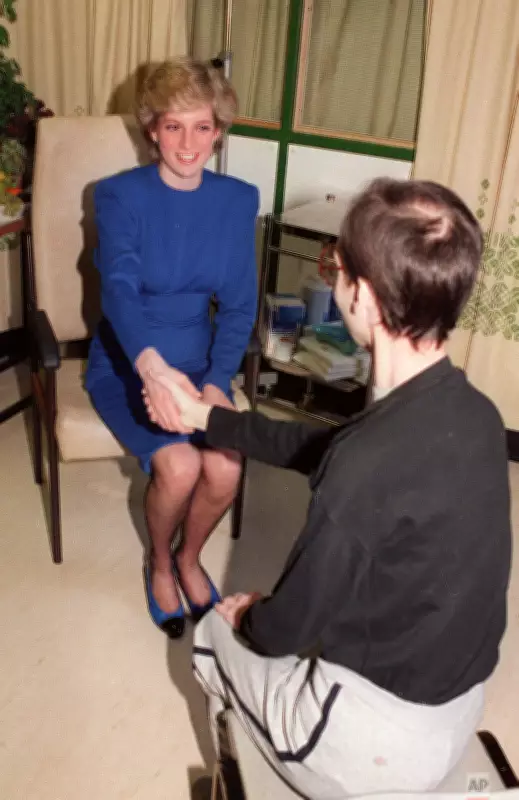
Deliberately walking through the sterile halls of a London medical institution, a young and highly empathic British royal took action that would, alone, challenge widespread fear and misinformation. In an era characterised by mass fear, ignorance, and social isolation of individuals suffering from a poorly understood and heavily stigmatised disease, her actions brought a sense of hope.
While the members of the royal family would normally have been expected to maintain a degree of prudent detachment when dealing with social unrest, the meeting which took place was indeed a crucial point in modern humanitarian history. It remains one of the most culturally significant moments of the late twentieth century, completely transforming how global populations perceived the devastating HIV crisis. Stepping inside the newly established Broderip Ward at the Middlesex Hospital in April 1987, the Princess of Wales chose to look past the intense social stigma and look directly at the humanity of the individuals suffering on the ward.
While the rest of society was living in sheer terror of contracting the disease through any physical contact, her action blatantly stood in contrast to the prevalent notion of fear. Through her direct interaction with those individuals whose families and society had completely ostracised, she proved how human kindness triumphs over paranoia.

Busting Medical Stereotypes Through Action, Not Words
The enormous historical significance of this particular hospital visit is based on a single, deeply symbolic gesture which was seen in countless homes all over the world. The Princess simply extended her entirely ungloved and bare hand to welcome the young man who was suffering from the disease. What seems like a simple act became nothing less than explosive back in 1987, when not only doctors, but also emergency personnel and even family members avoided any kind of contact with the patients out of fear of airborne contamination.
With her deliberate choice to disregard the use of gloves and protective gowns that had become customary among those treating the sick, she sent a clear message to people around the world, without needing a formal speech. As explained in the historic records captured on the BBC platform, the princess's friendly smile made it clear within seconds that the virus was not spread by any skin-to-skin contact and thus broke any fears that might have existed within the minds of viewers at the time.
The simple act became an instant trigger for mass education about the disease, as regular members of society could observe that if it were perfectly fine for one of the key figures of the royal family to shake hands with the patient of HIV/AIDS, then there would be no need to ostracise one's neighbours, colleagues, and even classmates in fear of infection. Utilising her tremendous worldwide media exposure, she succeeded in overcoming the hysterical atmosphere surrounding the topic at the time. She set a whole new standard of social decency and scientific knowledge. This image was taken on April 24, 1991, when Princess Diana hugged and played with an HIV positive baby in Faban Hostel, San Paulo, on the second day of her visit to Brazil.
The Psychological Impact of Royal Compassion in the Long Run
Although the historical event is mostly remembered for its immediate media coverage during the late eighties, its long-term effect on people remains firmly rooted in the development of modern treatment for the disease. Based on extensive social evidence and patient testimony collected during the years since the event, the simple gesture by the princess brought dignity back to the lives of the whole marginalised community. Before this historic act of kindness, people who had contracted the illness were being socially excommunicated, thrown out of their homes, and even fired from their jobs.
Through the decision to utilise her powerful position to advocate for unconditional compassion, she provided the world a new standard of behaviour for an institution's leadership to follow. By making it a point to revisit the special care units in private in the coming years, she made sure that the discussion on health stigma stayed centred around empathy and not statistics.

In the end, the legacy of that afternoon in April demonstrates once again that great leaders do not always need to make major policy changes or grandiose statements on the politics of the day. Through her decision to reach out to another human being in his time of deepest despair with nothing more than an open palm, Princess Diana delivered a lesson in soft diplomacy that will be remembered forever.