As rainbow flags fill streets across India this month, some of the most powerful symbols of change are not the banners overhead, but the parents carrying them. At Pride events from Mumbai to Kolkata, parents are stepping into public view alongside their queer kids, challenging a stigma that has often taken root within families themselves.
Personal Journeys of Acceptance
Smitha and Ashok Gaikwad, familiar faces at Pune Pride events over the past five years, said acceptance came only after years of watching their child struggle. Their 27-year-old daughter, now a tattoo artist, came out as a trans woman at 19. Ashok recalled how the way she dressed and spoke often drew concern. At a family wedding when she was 14, cousins forcibly applied lipstick and mocked her before a crowd. What followed were years of depression, self-harm and withdrawal. A near-fatal suicide attempt became the turning point. “I realised I was choosing society’s expectations over my child’s life,” said Smitha.
Teachers by profession, the couple acknowledge they have “not yet been able to afford gender-affirming procedures,” but remain committed to supporting their daughter’s journey.

Mothers Leading the Way
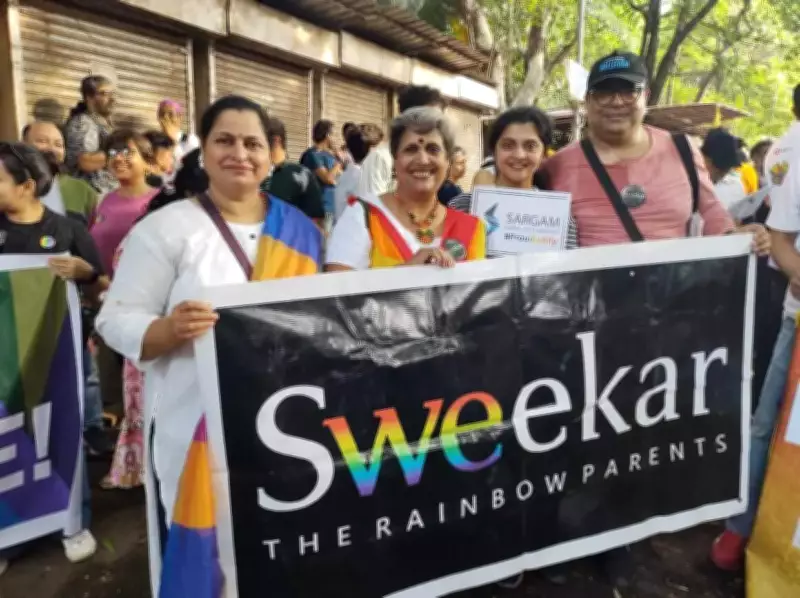
Aruna Desai’s path to advocacy began when her son came out as gay at 17 years old. She attended one of India’s earliest Pride marches in Mumbai in 2008 and later co-founded ‘Sweekar: The Rainbow Parents’ in Mumbai in 2017. “Through counselling parents over the years, I’ve seen that acceptance often comes more easily to mothers. Fathers, in many cases, find it harder to move beyond patriarchal expectations. Mothers have often ended up divorcing their husbands to support their child,” Desai said.
She believes the growing presence of parents at Pride events carries a special significance. “For years, Pride marches were spaces where many queer people came searching for acceptance, often carrying the pain of rejection from home. The presence of parents offers something that no policy or legal reform can fully provide,” said Desai.
Fathers Stepping Up
Fathers are not far behind, one such example being Arindam Banerjee, father of a 24-year-old who came out as bisexual three years ago. “I was raised to believe that strength meant control. But over time I’ve learned that real strength is standing beside your child even when you don’t fully understand their journey. It took me and my wife some time, but it saved our relationship with our daughter. Attending these events is my way of telling the world that I will fight for this community that my daughter belongs to,” said Banerjee.
From Ally to Parent
Pune resident Supriya Datar was familiar with the LGBTQIA+ community, but learning that her own daughter was queer was still a shock. She had been associated with Pune Pride since 2017 as an ally supporting her queer friends, much before her daughter came out. Datar said, “My husband took time to come to terms with it but eventually accepted it. Our message to other parents is simple: ‘Jaise hain acche hain, yeh hamare bachche hain.’ (they are good the way they are, they are our children).”
Impact and Expert Views
Supporting this stance, trans activist Manasvi Goilkar said, “A parent who stands beside their queer child sends a message that resonates beyond their home. They say: You are worthy. You are loved. You belong.”
Pune-based psychologist Insiya Lokhandwala said, “Acceptance comes from recognising your child as an adult capable of making informed choices. It can be difficult because parents are also navigating societal pressures, fears of discrimination and the grief of letting go of expectations.”
As more parents move from silent support to public solidarity, they are helping reshape long-held narratives. “Their visibility gives courage to families who may still be struggling to express love openly because of social pressures,” Lokhandwala added.
Sometimes the most profound acts of social change do not begin in courtrooms, legislatures or public squares. They begin at home.