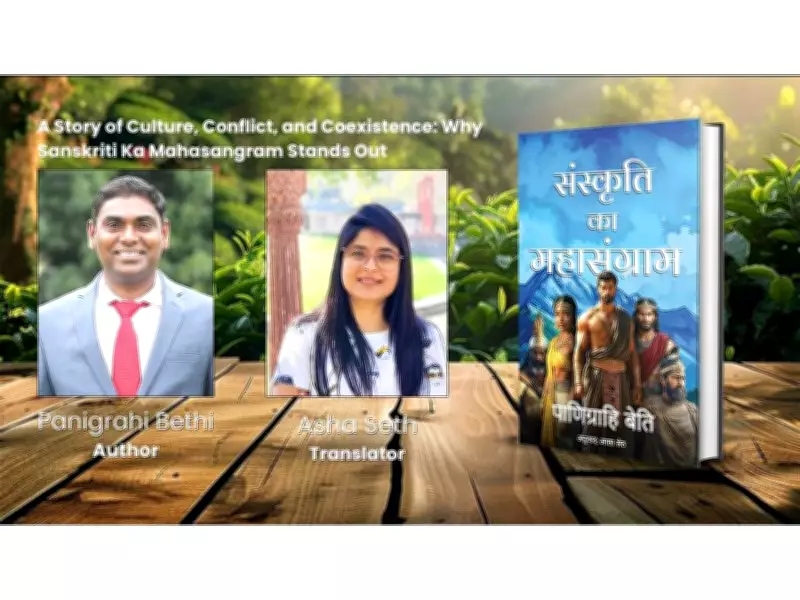
The book 'Sanskriti Ka Mahasangram' has emerged as a standout work in contemporary Indian literature, delving into the intricate dynamics of culture, conflict, and coexistence. Authored by a prominent thinker, the book offers a nuanced exploration of how diverse cultural forces shape and are shaped by societal tensions.
A Deep Dive into Cultural Dynamics
The narrative weaves together historical events, philosophical debates, and real-world examples to illustrate the constant interplay between tradition and modernity. It challenges readers to rethink simplistic narratives of cultural homogeneity, instead presenting a tapestry of interactions that define Indian identity.
Conflict as a Catalyst
Rather than viewing conflict solely as destructive, the book posits that cultural clashes often serve as catalysts for growth and adaptation. Through case studies, it shows how disagreements have led to new syntheses and innovations in art, language, and social norms.

Coexistence in Practice
The author highlights communities that have successfully navigated differences, offering models for peaceful coexistence. These examples underscore the importance of dialogue, mutual respect, and shared spaces in fostering harmony.
Why This Book Matters Now
In an era of rising polarization, 'Sanskriti Ka Mahasangram' provides a timely reminder of India's pluralistic heritage. It argues that embracing complexity rather than seeking uniformity is key to social resilience.
- Rich historical analysis covering ancient to modern periods
- Interviews with cultural practitioners and scholars
- Practical insights for policymakers and educators
The book has been praised for its accessible style, making complex ideas understandable without oversimplifying. It is a must-read for anyone interested in the forces that bind and divide societies.