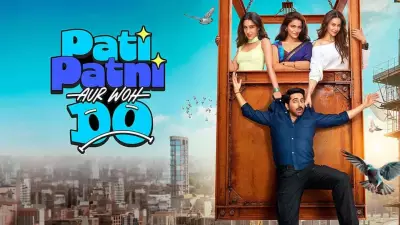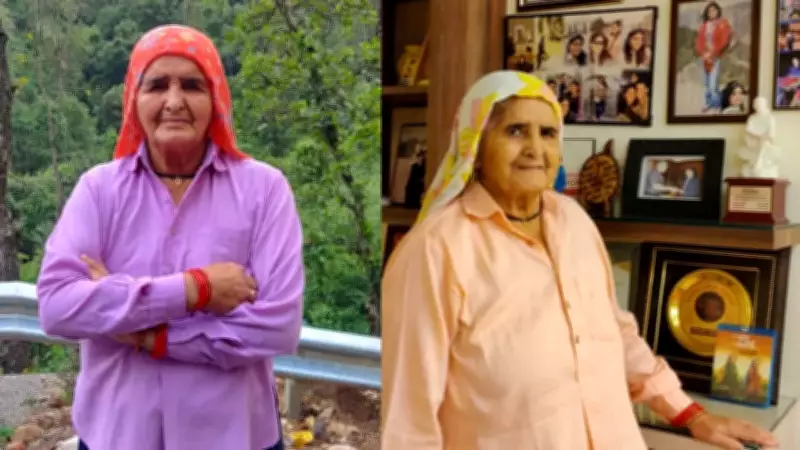
Nearly three decades after picking up a pistol at age 62, winning over 25 national and international championships, receiving presidential honors, inspiring the film Saand Ki Aankh, and helping transform attitudes toward girls in a conservative western Uttar Pradesh village, Prakashi Tomar—India's celebrated 'Shooter Dadi'—now faces a challenge she cannot outshoot: old age. Recovering from a recent health scare and no longer able to walk with ease, the 90-year-old spends most of her days at home in Baghpat's Johri village, surrounded by the medals, trophies, and certificates that made her a national icon. Yet the message that defined her extraordinary journey remains unchanged.
'The body grows old, not the mind,' she tells TOI. Dressed simply in a red dupatta and gold pendant, Tomar acknowledges that age has caught up with her. 'Weakness comes with age,' she says. Earlier this year, a ruptured nasal vein left her briefly hospitalized. Family members say she has since stabilized, though age has inevitably slowed her down. 'I cannot walk properly now, but I keep my courage,' she says. 'Once I feel better, I will go out again.'
Visitors continue to arrive at her home, curious about the woman who took up shooting in her sixties. 'Many young girls still come from far-off places,' she says with a smile. In 1999, her daughter Seema Tomar joined the Johri Rifle Club but was reluctant to go alone. Prakashi accompanied her in an accident of fate that changed not only her life but also the future of hundreds of girls in the region. At the range, coach Farooq Pathan watched in surprise as the grandmother effortlessly hit the target while showing her daughter how to hold a pistol, immediately encouraging her to start training.

An improbable journey
What followed was one of Indian sport's most improbable success stories—Tomar became one of the world's oldest competitive female sharpshooters. But coming from a deeply conservative village, the journey was not smooth. When she began shooting, girls rarely stepped out freely, and the idea of an elderly grandmother traveling for competitions with a gun invited ridicule. 'People used to laugh,' she recalls. 'They would say, Look at this old woman carrying a gun as if she is going to Kargil.'
'Nobody supported me initially. We had to gather courage ourselves,' she recalls. Support eventually came from her children, with her daughter Seema standing by her throughout the journey and son Rambeer Singh helping convince her husband, Jai Singh, to accept her participation. The family gradually came around as recognition followed.
Biggest achievement: changing mindsets
Honored with the Stree Shakti Puraskar by then President Pranab Mukherjee and recognized among India's 100 Women Achievers, Tomar does not mention medals when asked what she considers her biggest achievement. Instead, she talks about girls. 'When we started, the mindset was very different,' she says. 'Girls were not encouraged to go out,' contrasting it with today, when young visitors proudly tell her: 'Our Dadi is a shooter.'
In a region where sons were celebrated but daughters heavily restricted, Tomar encouraged her daughters and granddaughters to pursue goals—Seema went on to become an international trap shooter and the first Indian woman to win a World Cup medal in shotgun shooting. For coach Farooq Pathan, who first spotted Tomar's talent and has spent over 25 years training shooters, the impact extends far beyond medals. 'A lot has changed—in the village and in the sport,' he told TOI from Baghpat, pointing to better weapons, equipment, and infrastructure. But the bigger shift, he said, has been social. 'Earlier, we had to persuade parents to send their daughters, explaining that shooting could bring recognition and opportunities. Only two or three girls would come. Today, nearly half the participants are girls.' Much of that change, he added, was driven by Tomar's success. 'Girls would say they came because of Dadi. Families were inspired by her journey and began allowing their daughters to take up the sport,' he told TOI.

Women's empowerment through education
Today, Dadi sees women entering professions that once seemed unimaginable. 'Girls are becoming engineers. They are flying planes. They are driving buses and cars. They are doing everything.' She believes education remains the most powerful tool available to women. 'My message is simple: educate your children. Educate daughters especially. Do whatever you want to do, but women must build their own identity,' she says, while urging parents to stay involved in their children's lives.
Asked what she would tell women who feel age has passed them by, Tomar returns to the philosophy that turned her into a world champion at retirement age: 'The body grows old, not the mind.' 'Women who run households can begin a new life,' she says, by 'taking out fifteen minutes every day, doing something that helps create your own identity.'
At 90, Shooter Dadi's eyesight may not be as sharp as it once was and her steps may be slower, but she remains convinced that dreams do not come with an expiry date. More than the medals on her walls, she hopes to be remembered for proving that a village woman, a grandmother, a homemaker—or anyone told they are too old, too late, or too ordinary—can still change the course of her own story.