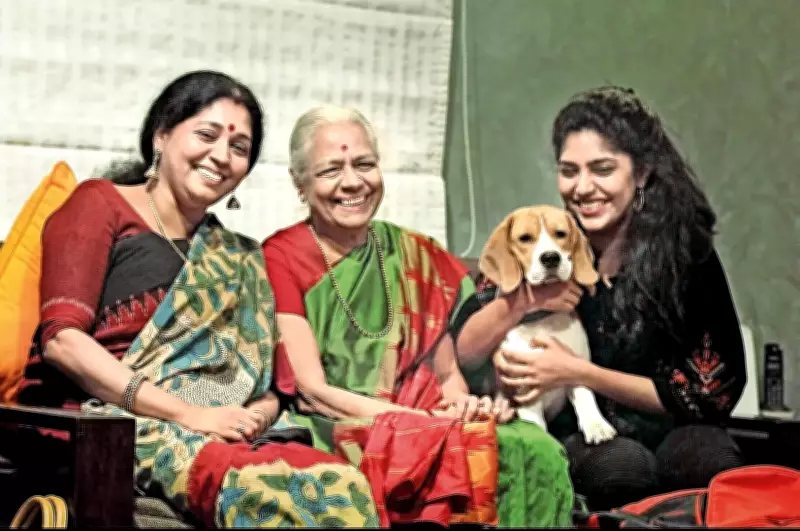
For decades, Sudha Belawadi has brought warmth, wit, and emotional depth to motherly characters on screen. However, away from the camera, the veteran actor believes motherhood should not be defined solely by sacrifice and suffering. This Mother’s Day, she reflects on the influence of her mother, actor-writer Bhargavi Narayan, the joy of being friends with her children, and why cinema needs to portray mothers as empowered individuals. Excerpts from a chat:
Mother’s Day is about gratitude. What is the one lesson from your mother that still guides you every day?
My mother, Bhargavi Narayan, balanced everything beautifully. She never missed taking care of everyone at home despite her busy life as an actor and writer. That sense of openness and making people feel welcome is something I still carry with me.
You have played many strong motherly characters on screen. How different is the real Sudha Belawadi from the mothers you portray in films and television?
The real Sudha is probably more fun and unconventional. I’m more like a friend to my children. In films, as a mother, I’m saying dialogues like, “Oota madidya?” (“Have you eaten”) or “Hushaar agi hogu” (“Be careful when you go out”); but I’m not the stereotypical mother at home. I enjoy music, dancing, laughing, and being spontaneous. I had gone to Vietnam with Samyu (actress Samyukta Hornad) recently and some street musicians were playing Made In India and I started dancing with them. It’s these impromptu moments that give me great joy. Even in theatres, my daughter and I laugh for no reason and I like it that way. I like being chilled out with my kids.

What do you think today’s generation of mothers is doing differently, and what can they learn from older generations?
Mothers these days are more relaxed and self-aware, which is wonderful. But I feel parenting has become very discipline-oriented — it’s about studies, marks, homework, rules. Many become overbearing in the process of being clued into their kid’s life. I think it’s important to let kids be. Parents want to drop their kids and pick them up. I feel they must be allowed to figure things out on their own. It helps them develop resilience and become independent. Give them freedom and they will become stronger individuals.
Cinema often glorifies sacrifice in motherhood. In real life, do you believe mothers should also prioritise their own dreams and happiness?
Absolutely. Mothers must pursue their own interests and identity, too — whether it is singing, dancing, painting, travelling, or restarting a career. Women shouldn’t lose themselves completely in sacrifice. A happy mother creates a happier family. I love characters that show women as independent thinkers with professional lives, humour, and emotional strength — not just self-pity or suffering. That’s why I enjoy working with filmmakers like Yogaraj Bhat, who write layered women characters with warmth and individuality. When he offered me Mungaru Male, I was a little hesitant to play a mother. But Bhatru said, “Neevu aa tarah amma alla” (“You will not be a stereotypical mother”), and I stepped in trusting his words. Playing Ganesh’s mom in the film was one of the most memorable roles because it was written so well. I wish writers sketched mother roles that are empowered and celebrate life, rather than ones wallowing in self-pity. Bhat brought in that change in our films.
If you could dedicate one message this Mother’s Day to all mothers watching you, what would you want them to hear?
Don’t forget yourself while taking care of everyone else. Be loving, be supportive, but also allow yourself joy. Today’s children are more understanding than we think. Mothers deserve happiness, friendship, creativity, and freedom at every stage of life — before marriage, after marriage, and beyond motherhood.
My mother and I have always been friends before anything else. One of the biggest lessons she taught me is to stay cheerful and believe that laughter can heal almost anything. Even when we are on film sets, the two of us are constantly laughing, and it’s usually mum who starts it.