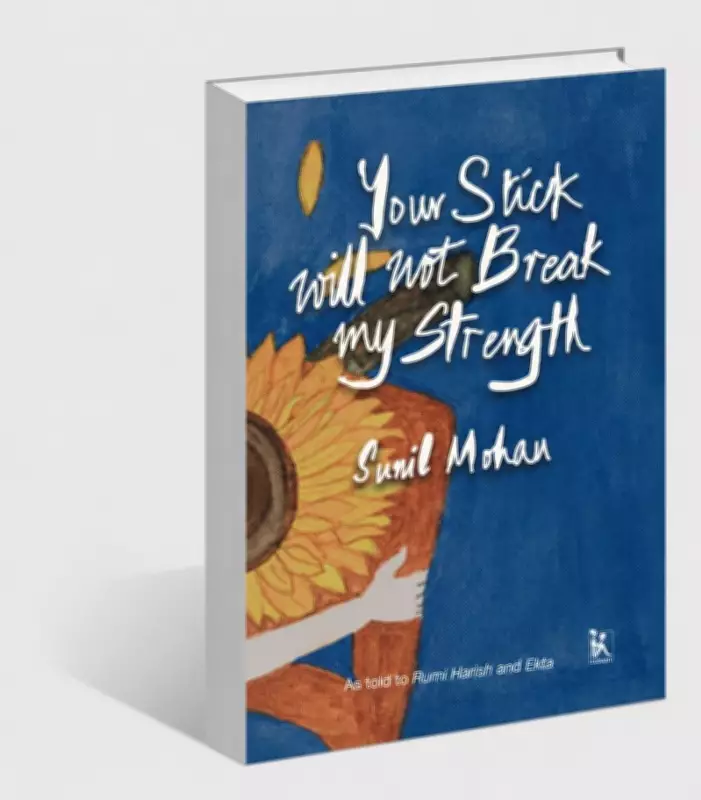
Sunil Mohan's autobiographical memoir, Your Stick Will Not Break My Strength, recently published by Zubaan Books, offers a rare and deeply personal account of a trans-man's life in activism. The book, told to Rumi Harish and Ekta, is a poignant exploration of household, family, kinship, and the journey of self-acceptance.
The Legal Landscape for Transgender Persons in India
The 2014 NALSA v Union of India judgment is often regarded as a significant intervention toward recognition of transgender identity in India. It granted the trans community a guarantee of dignity, equality, and protection under the constitution. This was further cemented by the Transgender Persons (Protection of Rights) Act, 2019, which mandated protection against discrimination and a right to self-identify. However, the Transgender Persons (Protection of Rights) Amendment Act 2026 walks back on many of these crucial guarantees and reduces the definition of 'transgender person' to 'socio-cultural identities,' which threatens a legal erasure of identities like that of trans-men. Literary accounts by trans-men are not as extensive as those by transwomen, which is why Sunil Mohan's book is an important addition.
A Deeply Personal and Political Memoir
In this deeply personal and poignant memoir, Sunil writes from the heart, constructing a world of erudite nuance interwoven with yearning, longing, loss, grief, and love. It is a dialogue that Sunil is having with himself and with the readers. His choice of words remains simple, but the issues he touches upon are both complex and challenging. He writes without hesitation and with the patience of an activist who has lived his life full of empathy and on his own terms.

Activism and Community Work
Sunil's work is one of intense scrutiny and reflexivity, both outside and within. Having devoted his lifetime to mutual aid and crisis situations through his work of rescuing other trans-persons and rehousing them at LesBiT, a community support group in Bangalore for marginalized gender and sexualities, his words hold immense importance for those working in community organizations and aid. His experience of working in big-ticket NGOs replete with hegemonic power structures of caste points to the kind of work that needs to be done in India's queer movement. His reflection on his own relatively privileged caste position as a Nair in a Malayali society and its consequences present the challenges that the caste system continues to perpetuate on those at the margins. For instance, during his work at a demolished slum site in Ejipura, Bangalore, he noticed the cis male Brahmanical leaders appear as a constant feature in the protest, asking for sacrifices from those who had lost their homes. The male majority and their caste position made Sunil question structures of masculine-upper caste hierarchies through the various movements he has participated in and the relief work he has done.
Challenging Toxic Masculinity
As a trans man who identified with the epithet with relative difficulty, having preferred non-binary to trans for a long time, Sunil discusses his discomfort with traditional versions of masculinity, which are both controlling and toxic, and thrive on heterosexuality, patriarchy, and misogyny. His journey of finding masculine expression through cricket and insistence on a non-toxic way of masculine presentation involving fluidity and a move away from 'macho masculine' versions, like that played by Amol Palekar in Marathi cinema, offers a powerful way of interpreting self-expression. This conversation is particularly relevant because it challenges hierarchy and notions of victimhood within the trans-men community, where a traditional 'macho-masculine' presentation is often adopted to assert identity. He takes on the task of having an important conversation about biases around toxic masculinity among his brethren and community. Eventually, he is able to embrace a version suitable to him, presenting the availability of the notion of a 'man' who is not rooted in patriarchal biases.

Themes of Family and Kinship
The book touches on themes of household, family, kinship, and the journey of self-acceptance that sometimes takes longer than expected, as well as the care of chosen families, which hold and support us. The existence of these spaces outside of the heterosexual locus often heightens the anxiety of an overarching state that acts to demolish these structures of care; a case in point is the recently passed Trans Amendment Act 2026, which has provisions that can be weaponized to punish those who help trans persons' medical transition.
Another prominent theme in the memoir is the presence of family, both natal and chosen. For a lot of queer folk, marginalization and exploitation often begin in the natal households, and emancipation is often found in our chosen loved ones. Queer intimacies rely heavily on platonic friendships, unlike a heterosexual structure where marriage and the married household are pre-eminent. With love and care of his companions and friends like Rumi and Familia, Sunil is able to build a life for himself where eventually even his natal family finds a small space.
Inequality Within the Trans Community
While acknowledging the power of silence, pause, and break in our journeys of activism and existence, Sunil is quick to recognize the inequality within the trans community where issues of trans women have historically received greater and wider attention than those of trans-men. For instance, he notes that while autobiographies and books written by trans women are celebrated, the same cannot be said of works by trans-men. Rumi, who is Sunil's companion, has penned his own autobiographical account, the first one in Kannada by a trans man, but it hardly received the attention it deserved. He attributes this to patriarchy, which refuses to give any importance to those assigned female at birth, as they are relegated to becoming second-grade citizens. Add to this their unique experience of being marginalized in their natal household and the concomitance of family honor and restrictions on their self-expression and mobility.
Erasure of Trans-Men in Literature, Law, and Medicine
Sunil talks passionately about the erasure of trans-men in literature, law, and medicine. The Transgender Persons (Protection of Rights) Act 2026 disenfranchises an already marginalized group, subjecting them to the vagaries of a medical board that has little to no training in the lived experiences of trans persons and standard medical care practices in India, which trivialize and ignore issues for trans folk. Sunil's work is also important because, in spite of setbacks and challenges, it is a reminder of both hope and continued questioning — 'why not,' as he notes in response to a question on why to continue our work in the face of an oppressive system to build and imagine a better future.