AI Translation Controversy Erupts Over Tamil Version of Eco's Classic
A recent Tamil translation of Umberto Eco's renowned novel 'The Name of the Rose' has unexpectedly become the center of a heated controversy within India's publishing industry. The book made headlines not for its long-awaited release to Tamil readers, but rather for widespread online criticism suggesting that artificial intelligence tools may have been utilized during the translation process.
Publisher and Translator Firmly Deny AI Allegations
Translator M D Muthukumaraswamy and publisher Anush Khan of Coimbatore-based Ethir Veliyeedu have strongly rejected these allegations. "The translator has not used AI at any stage of the translation," asserts Anush Khan. "Eco is famously known for his fragmented, complex sentences, which the translator deliberately retained in the Tamil version. We never anticipated that this stylistic faithfulness would be misinterpreted as evidence of AI involvement."
Khan further elaborated on the industry's evolving perspective, stating, "While we are not currently employing AI for our translation projects, we should not approach new technologies with unnecessary fear. The publishing landscape is changing, and we must remain open to innovation."

The Growing Demand and Challenges of Regional Language Translation
India boasts approximately 9,000 active publishers, yet even among the largest publishing houses that release hundreds of English-language titles annually, only a minuscule fraction ever gets translated into India's rich tapestry of regional languages. This disparity persists despite a clearly growing consumer demand for quality content in local languages.
Industry experts point to the primary obstacle: translation is an exceptionally time-consuming and resource-intensive process. It requires deep linguistic expertise, cultural understanding, and significant financial investment, making it a challenging endeavor for many publishers.
AI-Powered Solutions Enter the Publishing Arena
To bridge this translation gap, several AI-powered platforms are now emerging. For instance, Bengaluru-based NAAV AI, launched in 2025, utilizes advanced models like Claude and GPT-4 to facilitate translations from English into multiple Indian languages, including Hindi, Marathi, Kannada, Tamil, Telugu, and Malayalam.
Another significant player is Chennai-based Ailaysa, a multilingual AI platform that has already processed around 200 books. The company reportedly charges about Rs 100 per 1,000 words for its translation services. A key differentiator is its approach: it treats entire manuscripts as cohesive works rather than performing simple sentence-by-sentence conversions.
"We employ AI primarily for translating non-fiction and academic works because it dramatically reduces both cost and time," explains Senthil Nathan, CEO of Ailaysa and Aazhi Publishers. "A human translator might require four to five months to complete a book, with substantial associated fees. With AI, the same work can be drafted within a week at a fraction of the cost. However, human oversight remains crucial to ensure quality."
Nathan, who personally used his AI software to translate consumer psychologist Nadim Sadek's book 'Shimmer, Don't Shake', acknowledges that extensive editing was still necessary afterward. "The AI enhanced the final product, but it didn't replace human judgment. While AI shows strong potential for non-fiction, it remains in a nascent stage for handling the nuances of fiction or poetry. That evolution is likely just a matter of time," he observes, adding that a major advantage is the ability to also translate Tamil works into English.
Cautionary Voices and Ethical Considerations
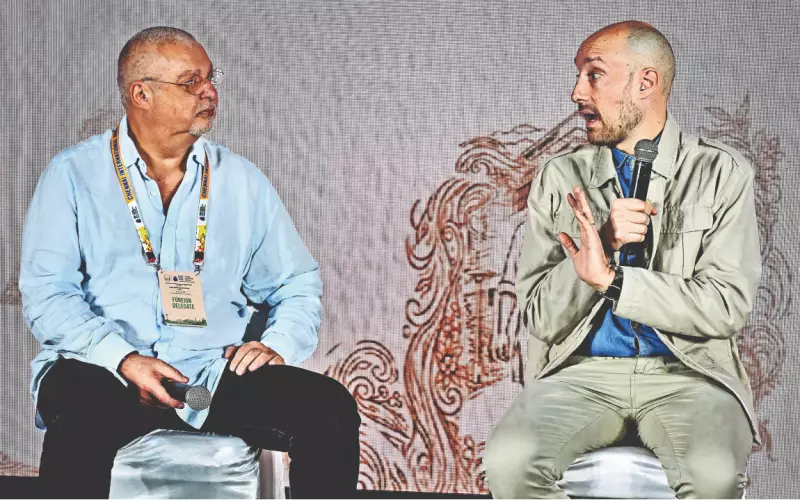
The debate took center stage at the recently concluded Chennai International Book Fair. Davide Daghia, Digital Director of Italy's Bologna Children's Book Fair, urged particular caution regarding AI in children's literature. He cited a compelling experiment where an Italian publisher, Castoro, had both a children's author and ChatGPT create stories from the same prompt.

"While adults could distinguish between the two narratives, children could not," Daghia revealed. "The AI-generated story adhered perfectly to grammatical and structural rules but lacked the whimsical, illogical details that give children's books their unique depth and emotional appeal. AI currently cannot replicate the essential human sensibility required for writing for young audiences."
Daghia did note AI's potential in book marketing, suggesting creative applications like using AI to manage social media for fictional characters to drive engagement and sales.
As Tamil publishing houses tentatively begin exploring AI, many international publishers are proactively adding specific clauses to their contracts governing AI use. "Several publishers are wary of AI for core creative content or design," says Ananth Daksnamurthy, founder of Two Shores Press. "When granting translation rights, they often explicitly prohibit the use of AI. However, AI can be invaluable for streamlining backend workflows like copy-editing, proofreading, or correcting pronunciation in audiobooks."
The Future: Opportunities and Unanswered Questions
Writer Marudhan points out an interesting asymmetry: AI currently performs better translating Tamil texts into English than the reverse. This opens a new opportunity for Tamil authors to translate their own works into English with AI assistance.
However, this advancement raises significant ethical and transparency questions. "The bigger issue now is disclosure," Marudhan poses. "Will the publishing industry honestly label a book as 'translated with AI assistance,' or will it simply credit only the author or human translator on the cover, obscuring the technology's role?" This question lies at the heart of the ongoing debate as artificial intelligence becomes an increasingly prominent tool in the world of literature and translation.