Amulya Rattan's Viral Saga: How Humor Transformed Online Criticism into Reflection
In the fast-paced world of social media, public opinion can shift dramatically in mere moments. A single video clip has the power to ignite widespread debate, attract sharp criticism, and propel individuals into the spotlight almost overnight. Over recent days, influencer Amulya Rattan has experienced precisely such a phenomenon, as a brief video involving her sparked a broader discussion about the use of public spaces and the ethics of online content creation.
The Backlash That Started It All
The controversy began several days ago when a short Snapchat clip featuring Amulya Rattan began circulating widely across various platforms. In that initial video, she was captured reacting with visible irritation to a man who walked past her while she was recording content in a public area. Her strong reaction and remark about the man not apologizing did not sit well with many social media users, leading to immediate backlash.
This clip quickly triggered important questions about whether influencers can reasonably expect people in shared public spaces to adjust their movements or behavior to accommodate content creation. The phrase "civic sense" soon became central to the online discussion, with users debating the boundaries between personal expression and public responsibility.

How Humor Changed the Conversation
What began as criticism soon took an unexpected turn when humor entered the equation, fundamentally altering the tone of the conversation. A new viral video emerged that took a lighter, more self-aware approach to the situation.
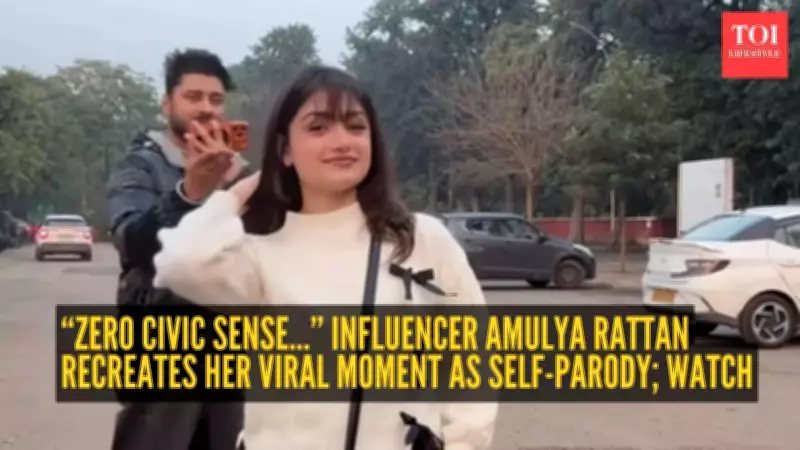
In one of her latest viral videos, Amulya appears in a setting familiar to most social media users—filming content in a public space with typical influencer-style equipment and setup. This time, however, another creator named Hardik Sharma added a clever twist. As Amulya continued filming, Sharma walked behind her while recording his own video, making a sarcastic comment: "Ye dekh lo, creators kahi bhi shuru ho jata hai, koi civic sense nahi hai."
This line directly referenced the criticism Amulya had faced earlier, but delivered in a playful, self-aware manner. Viewers quickly interpreted it as Amulya making fun of herself rather than offering a defensive or serious response. This humorous approach helped the video resonate with a wider online audience, shifting the narrative from confrontation to reflection.
The Internet Joins the Conversation
As the original clip gained attention, social media platforms erupted with reactions. Memes, parodies, and exaggerated recreations began appearing across Instagram, Twitter, and other platforms, demonstrating how quickly online communities can mobilize around trending topics.
The discussion soon expanded beyond Amulya Rattan as an individual and evolved into a broader conversation about influencer culture and public behavior norms. Several creators joined the trend, adding their own perspectives and interpretations. Even popular figure Orry became part of the viral wave, further amplifying the topic and pushing it deeper into public consciousness.
Apology and Evolving Approach
Amid the growing reactions, Amulya Rattan issued an apology, acknowledging that she should have chosen her words more carefully and handled the initial situation with greater sensitivity. Her statement reflected a recognition of the valid concerns raised by social media users regarding public space etiquette.
Her latest self-parody video appears to embody this evolving understanding. By opting for humor instead of confrontation, she successfully shifted the tone of the discussion from anger to introspection. While opinions about the incident remain mixed among online communities, the conversation has clearly progressed from initial outrage to more nuanced reflection about the responsibilities of content creators in public settings.
This episode serves as a compelling case study in how social media dynamics can rapidly transform personal moments into public discussions, and how strategic communication approaches—particularly humor—can reshape narratives in the digital age.