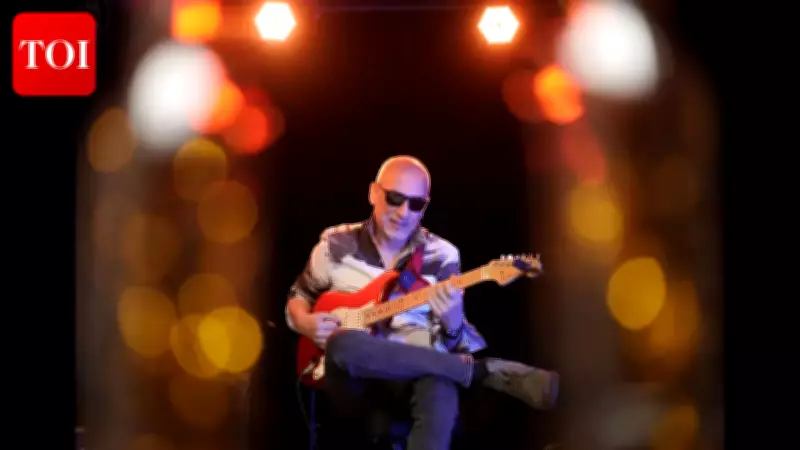
Amyt Datta: The Guitarist Who Teaches Music as a Way of Life
For generations of aspiring musicians across India, Amyt Datta has served as both a guiding light and a gravitational force in the music world. Recognized as one of the country's most respected guitarists, Datta commands admiration not only within domestic circles but also across global music communities. Yet his profound influence extends far beyond concert stages and recording studios.
Mentorship Through Shared Experience
As a dedicated mentor, teacher, and relentless seeker of musical truth, Datta has shaped the artistic journeys of countless students who have passed through his classrooms, workshops, and intimate jam sessions over several decades. For many who learn from him, the experience transcends mere technical mastery of an instrument, becoming instead a profound discovery of a complete way of life.
"I don't like the word 'teach' so much," Datta reveals during a session at Skinny Mo's jazz club. "I prefer the word 'share.' I've been fortunate to collect this musical knowledge over years of effort and commitment, and I find genuine joy in sharing it with students."

He describes seeing students in the front rows during performances, their eyes filled with dreams and aspirations. "I see the dreams in their eyes and I know exactly where they're coming from. So I try to enter that space, answering their questions as one student to another—only now I'm the teacher."
This exchange flows both ways, with Datta acknowledging that he learns extensively from his students as well. "Sometimes they ask questions about things I do instinctively but have never articulated. Explaining these elements becomes an enlightening exercise for me too."
The Transformative Power of Pure Music
Datta emphasizes music's scientifically proven capacity to enhance brain function and cultivate better human beings. "Music always unites. Everything else divides. I'm not discussing music for fame, popularity, or autograph signings. Just music for the sake of music itself. We're lucky to have this gift to share."
When questioned about Kolkata's traditional culture of pursuing arts for pure love, and whether this ethos is changing, Datta responds with characteristic wisdom. "Hope never dies. One lives hoping something positive will happen, even when circumstances don't appear particularly bright. That light of hope always glows somewhere."
He addresses the persistent sensibility that views his instrument—the electric guitar—as somehow "not our culture." "In today's interconnected world, how do you separate things like that? We speak about unity and one world, yet we continue dividing culture."
While acknowledging that mentalities have improved somewhat, Datta notes the absence of practical support systems. "Support that enables someone to perform this music and earn a sustainable living is missing. It might sound pessimistic, but the romantic notion of the city always supporting artists is somewhat mythical. Yet we persist like soldiers, battling forward daily with hope, continuing what we love."
The Lost Art of Deep Listening
As an educator who shares knowledge with younger generations, Datta has observed significant changes in how people engage with sound. "Hearing is one thing. Listening is something entirely different," he distinguishes.
"The world has accelerated dramatically. Everything appears instantly on your phone, but attention spans have shrunk to about thirty seconds. You need to deliberately slow down. Sit quietly without phones, television, or radio—even for just fifteen minutes. Reflect on who you are, what you want to accomplish, where you originate from."
He advocates for tactile, analogue experiences: "Enjoy a brown paper book, not only a digital screen. Appreciate a worn, torn book. Savor a small, simple strum on the guitar."

Datta contrasts the glamorous appearance of stage performance with its reality: "People don't witness the thousands of hours spent alone practicing in a room—mostly making mistakes. Then perhaps one magical moment emerges. That patience and grit must exist outside thirty-second reels. Otherwise, character never truly develops."
Transformative Moments in Learning
When asked about witnessing students experience sudden breakthroughs, Datta's eyes light up. "Yes. Sometimes I don't show it externally, but internally I'm burning with excitement. It's mysterious. Yesterday the student didn't grasp it. Today, suddenly they do. Something in their brain has clicked."
He describes noticing subtle details in their playing—"the things between the cracks of the piano keys"—and advising them to slow down and breathe. "When you decelerate, you start perceiving everything in detail. That transformation is rare but incredible. Those are the students who remain with music for life. Some have studied with me for fifteen years or more. Once the musical bug bites you, the sting remains forever. The deeper you delve, the more hooked you become."
Advice for Hesitant Beginners
For those curious about music but hesitant to begin, Datta offers straightforward encouragement: "If you have one foot in the door, put both feet in. Step inside. Taste it."
He outlines a natural progression: "You might simply enjoy playing a few songs after work with family. That's wonderful. The next level goes deeper. The third level demands total focus, with everything else adjusting around music. So step in first. Then life will teach you the remainder."
Datta emphasizes that genuine artists must embrace risk. "The first twenty years are merely a warm-up. If you possess the character to persist through those two decades, everything becomes beautiful afterward."
Kolkata as Sonic Muse
For Datta, Kolkata serves less as a conscious muse and more as an atmospheric influence that seeps quietly into his music. "Calcutta possesses that same restless vibe," he says, comparing it to New York's cultural collisions and distinctive sonic character.
The city's sensory experiences—metro rumbles, crowded streets, urban friction—all find expression in sound. This may explain why some of his music leans toward dissonance rather than conventional melody. "Music reflects life," he observes. "Sometimes life is rusty, broken, blue. Music mirrors all those dimensions."
To imagine Kolkata sonically is to walk through its layered landscapes: from Victoria Memorial's quiet grandeur to Rabindranath Tagore's culturally weighty house; from College Street's brown-paper book aromas to memories of Presidency College, political debates, load shedding, and dark power cuts.
Datta resists reducing Kolkata to any single genre or tradition, noting that Tagore himself taught openness. The city embodies multicultural and international elements, holding Christmas and Durga Puja, jazz clubs and classical traditions in harmonious coexistence.
"It's like a rainbow," he poetically concludes. "Spin it rapidly and it appears white. Slow it down and you perceive seven beautiful colors. You simply need the eye to see it—not these physical eyes, but your third eye."
Reflecting finally on music's essential place in human existence, Datta expresses gentle sorrow: "Music isn't external to life. It constitutes a significant part of life. Sometimes it's sad that such a beautiful subject ranks last in our priorities. I've never understood why."