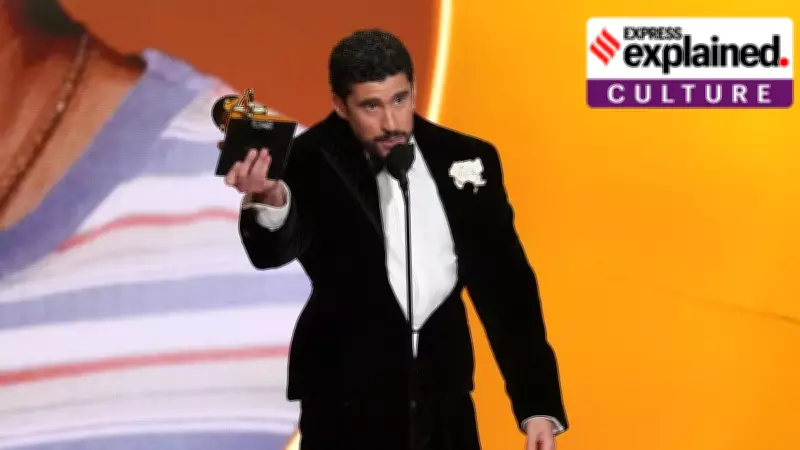
Bad Bunny's Historic 2026 Grammy Win: A Political and Cultural Milestone
The 2026 Grammy Awards witnessed a groundbreaking moment as Puerto Rican superstar Bad Bunny clinched the Album of the Year award for DeBÍ TiRAR MáS FOToS. This victory not only shattered linguistic barriers but also amplified Puerto Rico's historical and political struggles, drawing sharp criticism from figures like former US President Donald Trump and White House officials.
A Landmark Achievement in Music History
Born Benito Antonio Martínez Ocasio, Bad Bunny made history by becoming the first artist to win the top Grammy honor with a Spanish-language album. His work, DeBÍ TiRAR MáS FOToS (I Should Have Taken More Photos), is a profound exploration of Puerto Rican identity, blending folk music with contemporary sounds. The album features collaborations with historian Jorell Meléndez-Badillo, underscoring its deep cultural roots.
During his acceptance speech, Bad Bunny dedicated the award to immigrants, stating, "to all the people who had to leave their homeland, their country, to follow their dreams." This message resonated widely, challenging the long-held notion that Grammy's top categories are reserved for English-language works.

Political Controversy and White House Backlash
Bad Bunny's Grammy night was marked by bold political statements, particularly targeting the US Immigration and Customs Enforcement (ICE). In his win for Best Música Urbana Album, he declared, "ICE out," and emphasized, "We're not savage, we're not animals, we're not aliens. We are humans, and we are Americans." These remarks sparked immediate backlash from White House press secretary Karoline Leavitt, who criticized celebrities for demonizing law enforcement.
This is not the first time Bad Bunny has found himself at odds with US authorities. His selection to headline the 2026 Super Bowl Halftime Show was dismissed as "absolutely ridiculous" by Donald Trump, highlighting the ongoing tensions between the artist and political figures.
The Album's Cultural and Political Themes
DeBÍ TiRAR MáS FOToS serves as an unapologetic tribute to Puerto Rico, addressing issues such as independence, gentrification, and over-tourism. In the track Lo Que Le Pasó a Hawaii, Bad Bunny warns against cultural erosion, singing, "Don't let go of the flag nor forget the 'lelolai' because I don't want them to do to you what they did to Hawaii." This reference to Hawaii's history underscores the album's call for preserving Puerto Rican heritage amidst external pressures.
Bad Bunny's Journey and Political Activism
Growing up in Vega Baja, Puerto Rico, Bad Bunny was immersed in diverse musical influences, from salsa to reggaetón. His rise to fame was fueled by a commitment to highlighting Puerto Rican life, even as he balanced odd jobs and studies before abandoning his university course to pursue music full-time.
Bad Bunny's political activism is deeply rooted in Puerto Rico's status as a US territory, where residents lack voting rights and congressional representation. In 2019, he interrupted his European tour to join protests against Governor Ricardo Rosselló, later stating it was his "civic duty as a Puerto Rican." This involvement solidified his role as a global voice for Puerto Rican resistance, as noted in the book P FKN R: How Bad Bunny Became the Global Voice of Puerto Rican Resistance by Vanessa Díaz and Petra Rivera-Ridea.
Significance in Today's US Climate
Bad Bunny's Grammy win arrives at a critical juncture in the US, where debates over language, migration, and identity are intensifying. By elevating a Spanish-language album to the pinnacle of music awards, the Recording Academy has acknowledged the growing influence of Latino culture and the importance of diverse narratives in mainstream media.
This achievement not only celebrates artistic excellence but also serves as a powerful statement on inclusivity and representation. As Bad Bunny continues to use his platform for advocacy, his 2026 Grammy victory stands as a testament to the enduring power of music to challenge norms and inspire change.