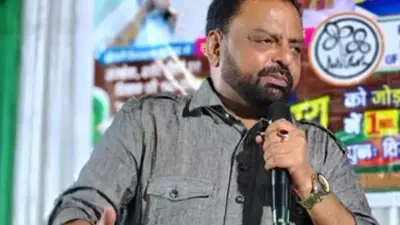
A police officer's question at a protest in Rajkot in 2019 changed everything for rapper MC Parshuraavan. As his defiant tracks blared from speakers, the officer demanded to know who was behind the music. Parshuraavan, then a young rapper, identified himself and was detained for the night. That confrontation, however, didn't silence him. It refined his art. The defiance remained, but the delivery softened, embodying the very essence of Gujarat's emerging rap identity—a sound distinct from Mumbai's gully rap or Delhi's battle culture.
The Roots: Cable TV, Isolation, and a Viral Spark
For many in Gujarat, rap's introduction wasn't digital. It arrived through cable television, echoing in living rooms before the genre had a name. Parshuraavan traces his awakening to a single track: Karmacy's "Blood Brothers." Hearing it planted a crucial seed—the realization that rap could thrive in Gujarati, not as a translation but as a native language. By 2016-17, scattered rappers were experimenting in different cities, largely unaware of each other. The 2019 Bollywood film "Gully Boy" then pushed hip-hop into the mainstream, just as the pandemic lockdown forced a sudden pause.
That enforced stillness became fertile ground. With streets and colleges quiet, a generation turned inward, grappling with anger, faith, and ambition. When they finally spoke, many chose rap as their voice.

Devotion Meets Bass Drops: The Aghori Muzik Blueprint
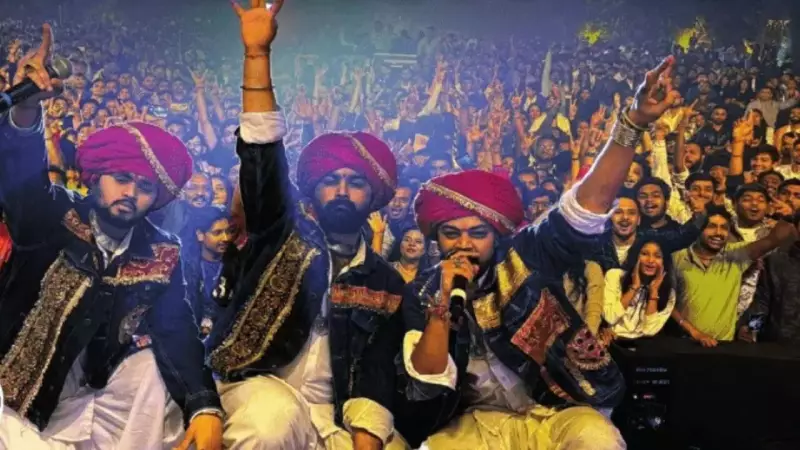
In Ahmedabad, a collective named Aghori Muzik posed a radical question: Could Gujarat's deep folk and devotional traditions authentically live within hip-hop? Their answer was a resounding yes, starting with their first track, "Jai Jai Shiv Shambhu." Members KDeep (30), Kruz (29), and Hard D (25) aimed to connect hip-hop to Gujarat's cultural roots to bring it to the mainstream. They researched folk figures like Jogidas Khuman and crafted original compositions so seamless that listeners often mistake them for remixes of old folk songs.
Their beginnings were humble—a makeshift recording booth built from PVC pipes and blankets, a cheap microphone, and a borrowed laptop. From that 5x5 feet space, they built a sound that now tours internationally, with houseful shows across India, the US, Australia, and Canada. Tracks like "Mata Na Pagla" and "Jhamkudi" have become viral hooks. They've faced backlash, too, such as when a lyric referencing 'chilam' as 'prasad' led to accusations of promoting intoxication, which they firmly deny, stating their core intention is worship.
Building Bridges: From Cyphers to a Thriving Community
While artists were creating, the scene lacked connection. Rapper Siyaahi, who moved to Ahmedabad from Bharuch, identified this gap. In 2017, he estimates the city had 15-20 rappers but no community. He founded "Ahmedabad Hip Hop" and started organizing cyphers. Today, that circle includes over 50 artists. Siyaahi also co-founded the AMD Live event series, which sells 300-500 tickets per show, proving a dedicated audience exists despite sponsorship challenges from corporates.
The community now nurtures diverse voices. Dhanji speaks of rap's golden age in India, its power lying in universal themes of anger and ambition. He is candid about his past, acknowledging and moving past earlier promotion of intoxication in his lyrics. For Hukeykaran, a civil engineer, rap began as a college passion, recorded with a handsfree mic. Family resistance turned to support as he built an audience, with his songs focusing on the struggles of poor families.
Women Take the Mic and Small Towns Amplify Their Voice
The scene is no longer male-dominated. Pooja Jha, 19, balances a company secretary course with rap, finding her true self on stage. She aspires to be called the "best rapper," not just the "best female rapper." Her mother, Shruti, initially believed rap was for the frustrated but now appreciates its depth. Seventeen-year-old Rupa Gill raps about society, discrimination, and gender inequality, supported by her teacher parents who draw a line against vulgarity.

Beyond Ahmedabad and Rajkot, the movement resonates in smaller towns. In Kutch, Tanuj Sanjot, son of daily-wage workers, blends Hindi and Kutchi dialect in his viral album "Kutch Se," even collaborating with folk singer Muralaala Marwada. In Rajkot, RJ Akash's local pride anthem "Rajkot Na Loko" became a massive hit. Artists like Snappy Kaal and Shaitan, who met at a 2022 cypher, push Gujarati rap in a market dominated by Hindi and English, challenging stereotypes that link rappers to addiction.
Gujarat's rap story isn't one of overnight, unified success. It is the story of dozens of individuals—from slums, villages, and middle-class homes—who decided their voices, their language, and their unique blend of devotion and protest truly mattered. They built studios from blankets, communities from cyphers, and an unmistakable sound that is now reaching the world.