There is a memorable scene from the 1990s television show Ally McBeal, which revolved around law, lawyers, lovers, and the American judicial system. In this particular moment, the lead character Ally McBeal, portrayed brilliantly by Calista Flockhart, and her ex-lover and colleague Billy, played by Gil Bellows, engage in a heated argument. The specifics of the fight are hazy, but it involved dating. Eventually, Billy, a good man and a great colleague, loses his temper and calls Ally a derogatory name. Ally responds simply, "Man!"
It has been three decades since I watched that scene, yet it remains unforgettable. It was one of those rare instances, even in fiction, where a woman, exhausted from navigating a man's world, takes a verbally violent word hurled at her, flips it, and wins the argument. One word: Man. For the first time, casual verbal violence, routinely directed at women worldwide, was turned back on a man. The noun became the adjective and expletive in that context.
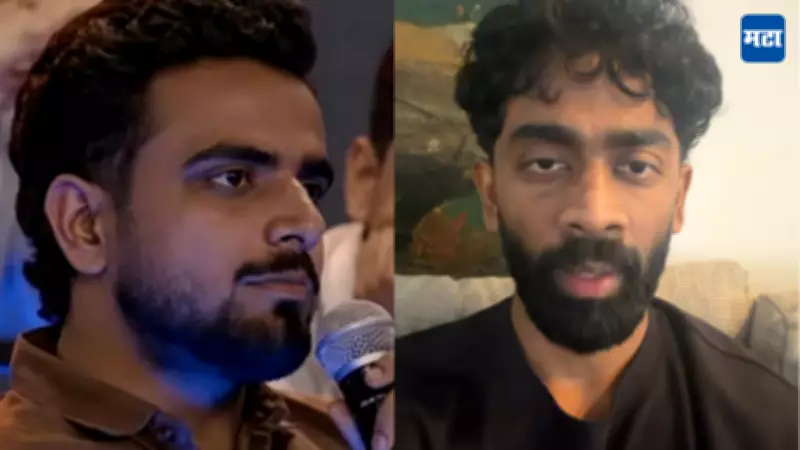
As the controversy surrounding Pranit More erupted last week, that scene from Ally McBeal came to mind. The distance between the courtroom corridors of Ally McBeal and a stand-up comedy stage in contemporary India may seem vast, yet both reveal the same uncomfortable truth: power often speaks before it acts. Violence is not always a fist; sometimes it is a narrative, an expectation, or a joke that transforms consent into debt, affection into obligation, and another human being into an object whose autonomy can be negotiated away. The injury is not inflicted on the body here, but in the social reality that words create and perpetuate.

Reigniting the Conversation on Verbal Coercion
The controversy has reignited a conversation about a form of violence that societies often struggle to identify: verbal and psychological coercion. At the center of the debate was the notion of "vasool," the idea that money spent on a date must somehow be recovered through physical intimacy. The concept of consent did not even come up.
The outrage that followed was as much about a joke as it was about the worldview the joke reflected and reinforced. It revealed how language can transform human relationships into transactions and how entitlement can masquerade as humour. This issue extends far beyond one comedian or one performance. It points to a deeper reality about patriarchal societies: power is not maintained only through physical force but also through narratives, assumptions, and words that shape how people understand their rights over others.
French sociologist Pierre Bourdieu described this as symbolic violence, the subtle process by which structures of power settle into language and habit until they no longer look like power at all — they are just the way things are. The most effective forms of this violence are rarely the loudest; they are the ones that have become routine. The casual certainty that women are gold-diggers, the notion that pursuing someone who has already said "no" is romantic rather than menacing, and the arithmetic that turns a spent rupee into an emotional debt — these ideas do not announce themselves. They travel, picking up legitimacy through sheer repetition, through clips, captions, group chats, and the easy laughter of a comedy show.
Why Symbolic Violence Is So Slippery
What makes this kind of violence so slippery is its built-in escape route. Physical harm is hard to deny, but words are easy to dismiss. Phrases like "It was only a joke," "You are being too sensitive," or "I did not mean it like that" serve as shields. Words play a crucial role in this process: they establish hierarchies, determine who gets to define reality, and shape expectations about gender, class, caste, race, and power. Repeated often enough, language can normalize behaviours that would otherwise be recognized as harmful.
The Language of Entitlement
The logic underlying the "vasool" argument is not new. It is rooted in a centuries-old belief that women are recipients of male provision and therefore owe men something in return. Historically, marriage itself was often framed in transactional terms. Dowries, bride prices, and economic dependence reinforced the idea that women were objects of exchange rather than autonomous individuals.

Modern dating was supposed to move beyond such frameworks. At its best, a date is a voluntary interaction between equals. Yet remnants of older patriarchal thinking continue to survive beneath the surface. When a man says that paying for dinner entitles him to intimacy, he is expressing a belief that consent can be purchased.
For women, hearing such ideas repeatedly can create an environment where refusal feels socially costly. If a culture constantly suggests that accepting a meal, a gift, or attention creates an obligation, then autonomy becomes harder to exercise. The coercion is psychological, but its effects are real and devastating.
Humour as a Vehicle of Dominance
Comedy has always pushed boundaries, challenged power, exposed hypocrisy, and confronted uncomfortable truths. Yet humour can also function in the opposite direction. It can normalize prejudice and reinforce existing hierarchies, as we are increasingly seeing in India. A joke allows an idea to enter public discourse with a built-in shield. If people object, they are accused of lacking a sense of humour. If they laugh, the idea gains legitimacy through collective approval.
This does not mean all offensive jokes are inherently harmful. Context matters. The crucial question is whether the joke punches up at power or punches down at those with less power. Throughout history, patriarchal cultures have frequently used humour to trivialize women's experiences. Harassment becomes flirtation, coercion becomes romance, and humiliation becomes banter. The laughter does not erase the underlying message; it often helps it spread.
What appears on a comedy stage is rarely created in isolation. It reflects attitudes already circulating in society. The stage has just amplified them.
From Gentlemen's Clubs to Digital Platforms
The phenomenon is hardly confined to stand-up comedy. Historically, elite male spaces — from gentlemen's clubs to corporate boardrooms — have often functioned through coded language that excludes, belittles, or objectifies women. Stories, jokes, nicknames, and innuendos become mechanisms through which group identity is reinforced.
The point has never been amusement, though; it is power. A sexist joke in such settings signals who belongs and who does not. It reminds participants of the hierarchy governing the space. Those who object risk social exclusion, while those who remain silent tacitly validate the norm.
The digital age has dramatically expanded the reach of such dynamics. Social media platforms reward provocation and outrage. Podcasts, reels, livestreams, and viral clips allow millions of people to consume messages that might once have remained confined to private conversations. As a result, verbal violence no longer requires proximity. A single remark can shape attitudes across an entire culture.
Every hierarchy begins as a story somebody tells. Every prejudice begins as a conversation somebody has. Every act of domination is rehearsed in language before it is committed in fact. The joke is not the harmless thing that precedes the harm; very often, it is the first instalment of it.
Which is the long way back to that small scene and the reason it refuses to fade. Ally's word, "Man," has stayed with a whole generation because it was accurate. She saw what was actually happening. She saw that the insult was not a man's private failure of temper but a system speaking through him, and she answered the system rather than the man. It is also possibly the reason when friends met after that particular episode aired, all we could discuss was how this scene had captured everything that our teenage minds felt but could not vocabularize. Ally McBeal aired sometime in the late 90s.
It is 2026. Some things do not change. The public conversation and the outrage about the joke shared by Himanshu Jangra at Pranit More's show are beginning to reckon with what that scene grasped in an instant — that language is never only language. Words often belittle and objectify women. And it is not even considered an insult, or even wrong, unless there is a backlash. But can backlashes really change deep-seated notions of "vasool"?