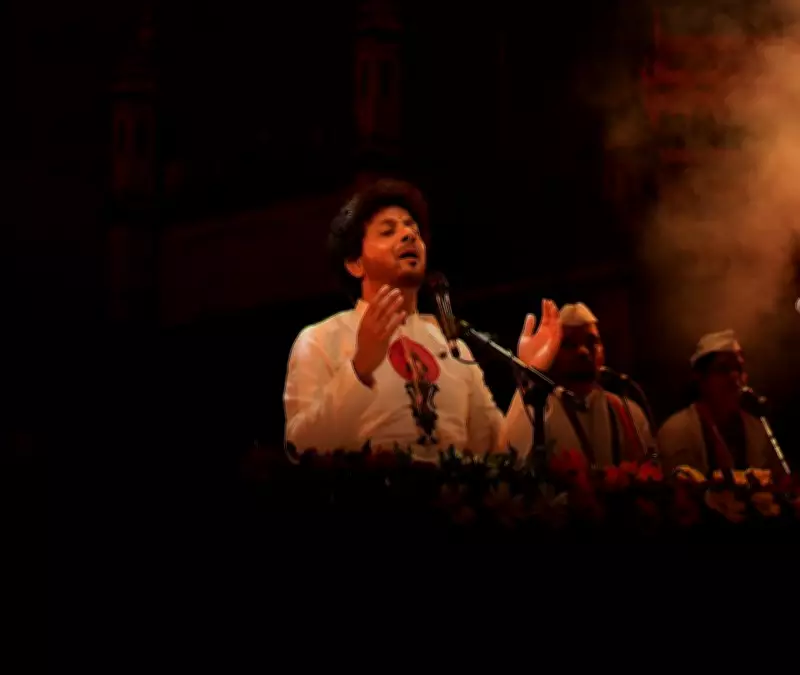
Mahesh Kale, a renowned singer of Marathi devotional abhangs, is set to take his Abhangwari series on a tour across 11 Indian cities from July 4 to August 8, following successful performances in Australia, New Zealand, and Singapore earlier this year. The tour includes shows at New Delhi's Bharat Mandapam on July 10 and Mumbai's Shanmukhanada Hall on July 26. Kale believes that abhang, though rooted in Maharashtra, has universal appeal and can attract audiences worldwide.
What Are Abhangs?
Abhangs are devotional songs in Marathi dedicated to the deity Vitthal or Vithoba, composed by saint-poets like Sant Tukaram, Namdeo, and Dhyaneshwar. Legendary singers such as Pt Bhimsen Joshi, Lata Mangeshkar, Kishori Amonkar, and Pt Jitendra Abhisheki have rendered these compositions. Every year, thousands of pilgrims visit Pandharpur in south Maharashtra on Ashadi Ekadashi, and abhang concerts are held across the region.
Expanding Horizons
Kale expressed his desire to bring Abhangwari to Punjab and northeastern states like Assam. “Spiritual music touches everyone, irrespective of language. This year, we are performing in Ahmedabad for the first time, and I am excited,” he said. The series began 10 years ago in Pune and Mumbai, and later expanded to Bengaluru, where it received a huge response from non-Marathi audiences.

Musical Journey and Training
Now 50, Kale started learning music from his mother Meenal Kale and gave his first devotional performance at age three. He trained under Purshottam Gangurde and later became a disciple of Pt Jitendra Abhisheki, followed by learning from Abhisheki's son Shaunak. He won a National Award for his song 'Aruni Kirani' in the 2015 Marathi film 'Katiyar Kaljat Ghusli'. Alongside abhangs, Kale focuses on spreading classical music in the San Francisco Bay area, where he and his wife Purva Gujar-Kale run the non-profit Indian Classical Music and Arts Foundation. “This is my way of trying to preserve tradition,” he said.
Punjab Connection and Learning from Students
Kale performed at the prestigious Shree Baba Harivallabh Sangeet Sammelan in Jalandhar in December 2022. He recalled a memorable experience: “We were driving from Amritsar and it was really cold and there was a thick layer of fog. We stopped for tea and I heard this wonderful hymn which I made the stall owner play again. It was the shabd 'Satguru Nanak Pargateya'. I loved it so much that I downloaded it and played it on loop till I reached Jalandhar.” At the Sammelan, he began with a khayal and concluded with Marathi natya sangeet and abhang, receiving a fabulous response. A Sikh gentleman later informed him that Bhagat Namdeo, known as Sant Namdeo in Maharashtra, also wrote 61 shabds included in Gurbani.
Exploring Other Spiritual Genres
Though Kale primarily sings works of Maharashtrian saint-poets, he is keen to learn about other spiritual traditions. “I try and study Kabir, and also want to learn more about Carnatic saint-poets like Thyagaraja and Muthuswamy Dikshitar, or Sufi mystics like Bulleh Shah. I have some Punjabi students and from them I learnt the shabd 'Mitti Dhund Jag Chanan Hoa' and the aarti 'Gagan Mein Thaal Rav Chand Deepak Bane'. So the learning is constant,” he elaborated.
Preserving Classical Purity
Kale emphasizes preserving the purity of the classical form. He cites the chant 'Ram Krishna Hari', with which he begins concerts, as an example. “In Mumbai, it had been raining on the day of my concert. So I sang it in Raag Megh Malhar. But I have also sung the same chant in raags Jhinjhoti and Jog and even Carnatic raags like Simhendra Madhyamam and Amritavarshini. My abhangs are based on raags, but I also try to get the audience to sing along where possible. Without realising it, many of them are singing the raag with me,” he said.
The interactive nature and energy of Kale's shows turn them into memorable experiences, and his upcoming tour promises to continue that tradition.