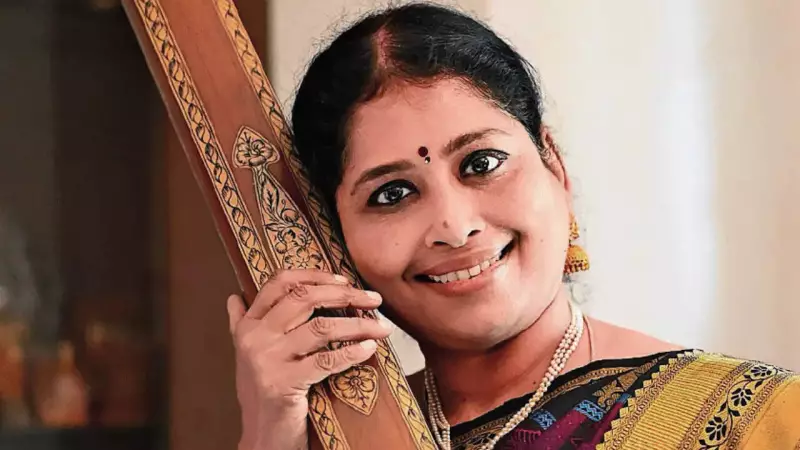
As the cool breeze of Margazhi descends upon Chennai, celebrated vocalist Nithyasree Mahadevan steps onto the stages of the city's packed sabhas with a feeling of quiet rejuvenation. For her, this iconic season is far more than a series of performances; it is a vital check on the pulse of her listeners, the enduring tradition of Carnatic music, and the continuous evolution of her own artistry. In a reflective conversation, she delves into the nuances of curation, the discipline required, and her proactive mission to cultivate the audiences of tomorrow.
The Unmatched Energy of the Margazhi Festival
Performing during the Margazhi season carries a distinctly different weight compared to the rest of the year. The expectations are undeniably higher, acknowledges Mahadevan. This decades-old, high-profile festival holds a place close to every performer's heart. Rasikas travel from across the globe solely to immerse themselves in the concerts, creating a unique and palpable energy that defines the season. Audiences observe with keen attention, often remembering performances from previous years and engaging in detailed discussions. This intense engagement provides immediate feedback. "Which is why, if I introduce a new item in Margazhi, whether it’s a raagam-tanam-pallavi or a rare composition, I immediately know how it’s received," she notes.
Curation, Comfort, and Connecting with New Listeners
Managing a packed schedule across 15 to 20 days for various sabhas requires a philosophy of equal dedication. Mahadevan emphasizes that she does not differentiate between venues—be it Mylapore, T Nagar, Tambaram, or Nanganallur—and performs with the same sincerity everywhere. She observes that rasikas outside the city's core often exhibit greater enthusiasm, as access to concerts is more challenging for them.

Crafting the set list for the season is a thoughtful challenge, especially with contemporary concert durations limited to about two to two-and-a-half hours. Careful planning is essential to avoid repeating ragas or even shorter pieces, particularly for dedicated followers who attend multiple concerts. Keeping the repertoire fresh is a priority that brings her personal satisfaction.
When asked about the key takeaway for a listener, Mahadevan speaks of maturity in artistry. While young artists might instinctively aim to prove themselves with technical prowess, experience teaches the value of offering soothing, qualitative music that lingers with the audience long after the concert ends. This is what she strives to deliver.
Bridging the Generational Gap in Carnatic Music
Addressing the perennial question of simplifying Carnatic music for lay listeners, Mahadevan advocates for a balanced approach. While artistic standards must not be lowered, an exclusive reliance on long, heavy pieces may not be ideal. The aim is an optimum blend that preserves the tradition's sanctity while remaining accessible.
A significant focus for her is attracting younger audiences. Noting the older demographic that often dominates kutcheris, she has been actively working on a solution. For the past two years, she has been part of the 'CAR - Creating A Rasika' initiative alongside artists like Santhanagopalan, Gayathri Girish, Sikkil Gurucharan, and the Chinmaya Sisters. The team visited approximately 50 schools, conducting short lecture-demonstrations to bust the myth of Carnatic music being 'slow' or inaccessible. The response was encouraging: though many students had never attended a live kutcheri, nearly 1,000 signed up as ambassadors, with a few hundred remaining active. Mahadevan recently had the joy of performing with 100 of these young ambassadors, a experience that fills her with great hope for the future.
She also acknowledges the role of film music as a potential gateway. When Carnatic musicians contribute to films, it can pique the curiosity of new listeners who might then explore a traditional concert. She cites Sid Sriram as a prime example of an artist who brings a significant number of young people to the genre. However, she cautions that "only if they’re impressed will they return."

Navigating the Season: From Stress to Sarees
The grueling schedule of the season demands careful management of energy. Mahadevan recalls a time when she performed daily, sometimes twice, until January 10. She realized that after about ten concerts, mental energy dips even if physical stamina holds. To ensure she never sounds tired for her eager audiences, she now strategically spaces out her concerts and limits their number.
On the much-discussed topic of Margazhi fashion, Mahadevan admits to a standardized approach, which her daughters teasingly call her 'uniform.' She prefers the reliability and comfort of pattu sarees, leaning towards dark and bright shades over sober colours, though she occasionally mixes it up. Her primary goal is to present herself comfortably and confidently before her audience.
Season Picks:
- Favourite sabha canteen: She mentions enjoying the food at Arusuvai Arasu in the Parthasarathy Swami Sabha recently.
- Favourite song to sing: She believes in making every composition she sings her favourite in that moment, presenting each with equal love.
- Artistes she tries to hear: She loves listening to peers, seniors, and upcoming musicians, and makes an effort to attend concerts by out-of-town performers when her schedule allows.