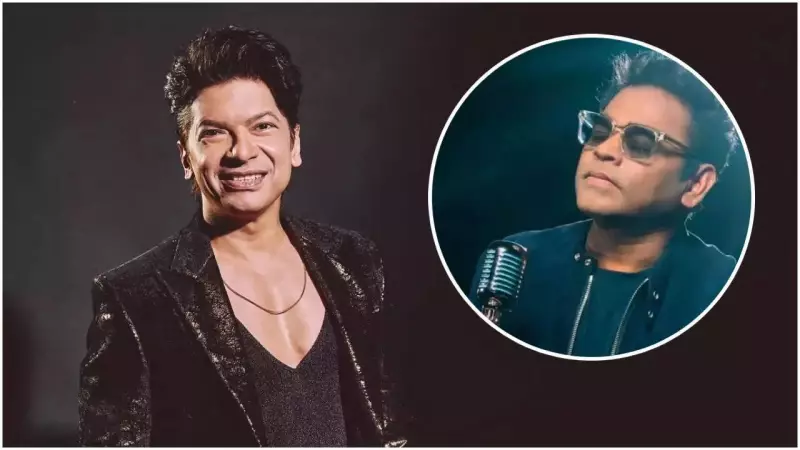
Shaan Presents Counter View to AR Rahman's Communal Remark
Renowned music composer AR Rahman recently made a statement that sent ripples through India's entertainment circles. The Oscar-winning artist suggested that 'power shifts' and 'communal whispers' have influenced his decision to avoid Hindi film projects in recent years.
Shaan Disagrees with Communal Interpretation
Reacting to Rahman's comments, popular playback singer Shaan offered a different perspective. He firmly stated that music operates on merit alone, without any communal or minority considerations.
"If someone questions opportunities in our industry, I stand here as living proof," Shaan told IANS. "I've sung countless songs over decades, yet I still face periods without work. I don't take this personally because artistic preferences vary among individuals."

Music Transcends Communal Boundaries
Shaan elaborated further on his viewpoint. "Music doesn't function through communal lenses. If that were true, our three biggest superstars from minority communities wouldn't have dominated the industry for thirty years. The reality is different - create excellent music, focus on quality work, and avoid overthinking external factors."
The singer emphasized that personal perspectives naturally differ in creative fields. "People hold diverse opinions, and that's normal. Not everyone needs to think alike. However, we shouldn't magnify these differences excessively because every musical creation carries its own artistic vision."
AR Rahman's Original Statement
During his conversation with BBC Asian Network, AR Rahman explained his position. "Perhaps in the last eight years, because a power shift occurred where non-creative individuals gained influence," he remarked. "There might be communal undertones, though not directly visible. These reach me as subtle whispers."
The celebrated composer added, "When sincerity fails to secure opportunities, I refuse to engage in office politics or lobbying for projects."
Industry Perspectives on Creative Freedom
This exchange highlights ongoing discussions about:
- Creative autonomy in India's entertainment sector
- Perceived barriers for artists from various backgrounds
- The role of quality versus external factors in artistic success
- How industry veterans navigate changing professional landscapes
Both artists represent significant voices in Indian music, with Rahman achieving global recognition and Shaan maintaining consistent popularity across generations. Their differing views reflect broader conversations about inclusion, opportunity, and artistic expression in contemporary Indian cinema.
The entertainment industry continues evolving, with creators balancing artistic integrity against commercial realities. Such dialogues between established artists provide valuable insights into the complex dynamics shaping India's cultural production.