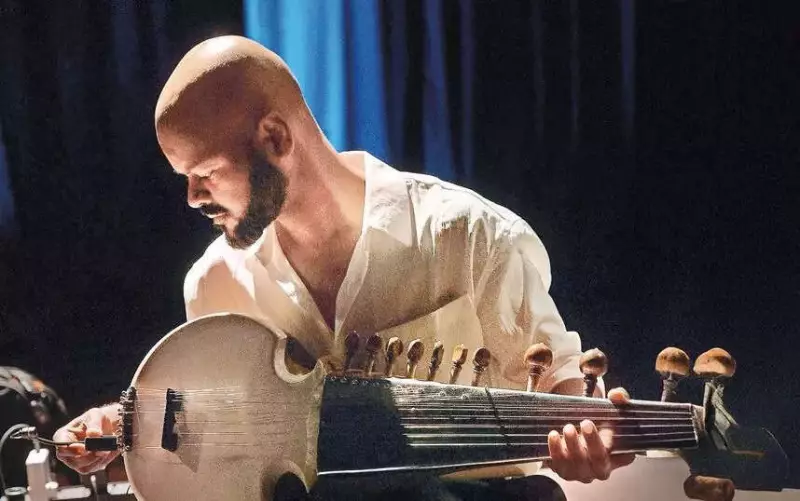
Award-winning sarod player Soumik Datta recently performed his compelling show 'Travellers' in Bengaluru. This event marked a significant stop on his expansive, seven-month artistic journey titled 'Melodies in Slow Motion'. In a candid conversation, the London-based musician opened up about using art as a form of protest, the unexpected discovery of his instrument, and the essential role of discipline in creative life.
Art as a Tool for Confronting Reality
For Datta, art is far more than entertainment; it is a vital medium to engage with the world's complexities. He believes that at its heart, art communicates profound feelings. In an era where many grapple with grim global news, music offers a unique pathway to process these emotions. By weaving together intricate sound design, field recordings, and human voices, his work facilitates a form of collective healing. The performance transforms into a communal gathering focused on shared issues, moving beyond a mere concert to become a space for reflection and connection.
Bridging Cultures and Finding Purpose
Growing up between Indian and British cultures was navigated through a home steeped in artistic expression. With a mother who is a filmmaker and theatre creator, constant rehearsals kept the essence of India alive for him in London. Over time, British culture also became integral to his identity, allowing him to hold both worlds within himself. The humanitarian themes now central to his work gained clarity during the pandemic. The global slowdown highlighted the interconnectedness of crises like migration, climate change, and social inequality. For Datta, it became impossible to 'just play music.' He feels a responsibility to use his platform—the microphone and the audience—with clear intention and purpose.

The Discipline of Touring and Creation
Life on tour is a mix of inspiration and challenge for the artist. The joys include exploring new spaces, experiencing unique acoustics, and tasting local cuisines. He describes each concert as a collaboration with the venue's architecture and how it reflects sound. However, the rigors of crossing time zones and extended periods away from family are demanding. Maintaining a strict regimen for sleep and meals is crucial. When at home, Datta divides his day methodically: one half dedicated to rigorous practice on the sarod, the other to broader creative work. He admits that some days require a conscious shift in mood to align with the music's demands—a testament to the profession's discipline.
The Sarod's Call and a Genuine Resurgence
The sarod entered Soumik Datta's life serendipitously at the age of 13. After his family moved from Mumbai to London, he discovered his grandmother's instrument among unpacked boxes. His father gave him his first lesson, setting him on a path that would lead to advanced training under the legendary Pandit Buddhadev Dasgupta in Kolkata. The sarod became his vital bridge back to his Indian heritage. Today, he observes a genuine resurgence of interest in Indian classical instruments among younger audiences. This trend, he notes, is not driven by nostalgia but by a sincere hunger for authentic, handmade sound and connection in an overwhelmingly digital and noisy world. The openness with which this generation discusses mental health further validates the authenticity of this revival.
His current show, 'Travellers,' which opened the 'Melodies in Slow Motion' tour, is designed to be an immersive experience. It is more than a traditional band performance; it is an invitation for the audience to engage with pressing questions surrounding migration, displacement, and the global conflicts shaping our contemporary landscape. Through his music, Soumik Datta continues to chart a course where deep artistry meets conscious engagement, proving that classical forms can hold powerful, urgent conversations.