The Viral Resurgence of Werner Herzog's 'Nihilist Penguin' Documentary Clip
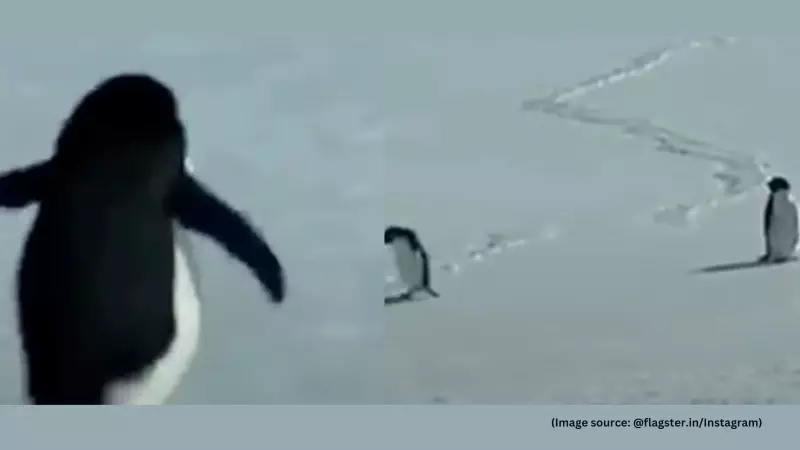
In a fascinating twist of internet culture, a clip from Werner Herzog's 2007 documentary Encounters at the End of the World has taken over social media feeds years after its initial release. The footage features an Adélie penguin that abandons its colony and typical coastal route to head toward distant icy mountains, approximately 70 kilometers from the sea. This unexpected behavior has captivated online audiences, sparking widespread discussion and metaphorical interpretations.
Social Media Embraces the Penguin as a Symbol
Social media users have enthusiastically embraced this penguin, now colloquially known as the "nihilist penguin" or the "depressed penguin." It has become a powerful metaphor for various human emotions and concepts, including letting go, freedom, or despair. Phrases such as "the penguin knows" or "heading toward oblivion" have circulated widely across platforms, reflecting how people project their own emotional narratives onto this animal's actions.
In the viral clip, Herzog is heard observing that all the penguins are moving toward the open water, except for one solitary individual. "These penguins are all heading to the open water to the right. But one of them caught our eye. The one in the centre. He would neither go towards the feeding grounds at the edge of the ice, nor return to the colony," Herzog narrates. This moment has resonated deeply with viewers, who see in it a reflection of human experiences of isolation or defiance.

Scientific Perspective on the Penguin's Behavior
From a biological standpoint, Adélie penguins are strongly tied to their breeding grounds and the sea, where they hunt for food. While occasional wandering does occur, deliberate inland treks toward barren mountain ranges are extremely rare and not considered normal survival behavior. Scientists emphasize that such deviations do not indicate intention or awareness of danger in a human sense.
Dr. David Ainley, an ecologist featured in the documentary, notes, "Even if he caught him and brought him back to the colony, he would immediately head back for the mountains. But why?" He adds, "Well, I've never seen a penguin bashing its head against a rock. They do get disoriented." This highlights the gap between human interpretation and animal reality, reminding us that penguin behavior is driven by instinct rather than philosophical motives.
Background on Adélie Penguins
According to BBC Wildlife, Adélie penguins are around 70 cm tall and weigh between 3 and 6 kg. They are named after a slice of Antarctica called Adélie Land. Alongside the emperor penguin, the Adélie is one of just two penguin species that truly inhabit the Antarctic continent. The Adélie penguin is the most abundant bird species in Antarctica, with a year-round distribution closely linked to the availability of sea ice and open water. Its vast, noisy breeding colonies are scattered around the continent's coastline and nearby islands.
This viral phenomenon underscores how digital platforms can breathe new life into older content, transforming a documentary moment into a global conversation piece. As users continue to share and reinterpret the clip, it serves as a reminder of the internet's power to connect art, science, and human emotion in unexpected ways.