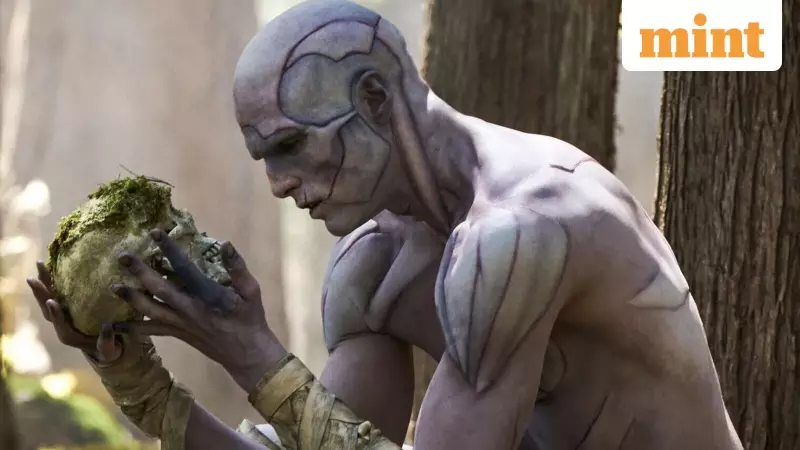
Acclaimed filmmaker Guillermo del Toro has finally realized his lifelong dream of adapting Mary Shelley's Frankenstein, with his highly anticipated interpretation now available for streaming on Netflix. The Oscar-winning director behind The Shape of Water and Pan's Labyrinth has described Shelley's gothic masterpiece as his personal Bible throughout his career.
A Stellar Cast Brings New Life to Classic Characters
The film features an impressive ensemble cast with Oscar Isaac portraying Victor Frankenstein, the brilliant yet tormented scientist, while Jacob Elordi takes on the role of the Creature. Mia Goth completes the principal cast as Elizabeth, who undergoes a significant transformation from previous adaptations.
Unlike traditional portrayals, Elordi's Creature emerges as a sensitive, tragic figure who displays more humanity than monstrosity. Meanwhile, Goth's Elizabeth breaks from convention as an independent, intelligent character rather than the passive romantic interest typically seen in Frankenstein adaptations.

Emotional Depth Over Scientific Caution
Del Toro's approach to the classic story marks a departure from conventional interpretations. While countless film versions have explored the novel since its 1818 publication—from James Whale's 1931 classic with Boris Karloff to Kenneth Branagh's 1994 adaptation—del Toro focuses on emotional resonance rather than scientific warning.
The director explained to Variety that his version isn't a cautionary tale about science gone wrong, but rather a story about forgiveness, understanding, and the fundamental human need to be heard. This emotional core shapes the entire film, transforming it from a horror story into a meditation on empathy, shame, and redemption.
Redefining Character Dynamics and Motivations
Professor Julie Carlson, an English expert from the University of California, Santa Barbara, noted that del Toro introduces a significant backstory element: Victor's father appears as an abusive physician who may have sacrificed his wife for scientific experimentation.
This creative choice shifts the narrative focus from hubris to shame, as Carlson observed: The father's violence mirrors Victor's frustration with his creation. It becomes a story about failure, trauma, and the need to outdo one's parents.
Elizabeth's character receives perhaps the most substantial reimagining. She emerges as a scientist and entomologist, a transformation that del Toro cleverly roots in Shelley's original text where Victor describes her as playful as an insect. This Elizabeth possesses agency, intelligence, and the courage to challenge Victor's self-delusion.
The Creature as Sympathetic Figure
Del Toro's Creature stands apart from previous cinematic versions through his intelligence, articulateness, and deep emotional capacity. The restoration of the Creature's interactions with the blind De Lacey family—often omitted in other adaptations—brings one of the novel's most poignant arcs to the screen.
Carlson emphasized the significance of this humanization: It's about face-to-face communication—when you truly see the other, you can't murder them. Shelley was already thinking about that at 19.
The relationship between Elizabeth and the Creature, which never occurs in Shelley's original work, adds a new dimension of empathy to the story. Elizabeth becomes the only character who shows the Creature genuine kindness, even sacrificing herself for him, creating a connection based on their shared status as outsiders.
Gothic Poetry Rather Than Horror
While Frankenstein typically falls into the horror genre, del Toro's interpretation leans more toward gothic poetry—melancholy, philosophical, and ultimately tender. Carlson described it as a tribute not only to Shelley's novel but to her entire literary circle, including Percy Shelley and Lord Byron.
The film continues del Toro's established tradition of portraying monsters not as villains but as mirrors to humanity, much like his approach in The Shape of Water. His Frankenstein transforms the centuries-old tale into an intimate, profoundly humane exploration of what it means to be human.

Guillermo del Toro's Frankenstein became available on Netflix starting November 7, offering viewers a fresh perspective on one of literature's most enduring stories.