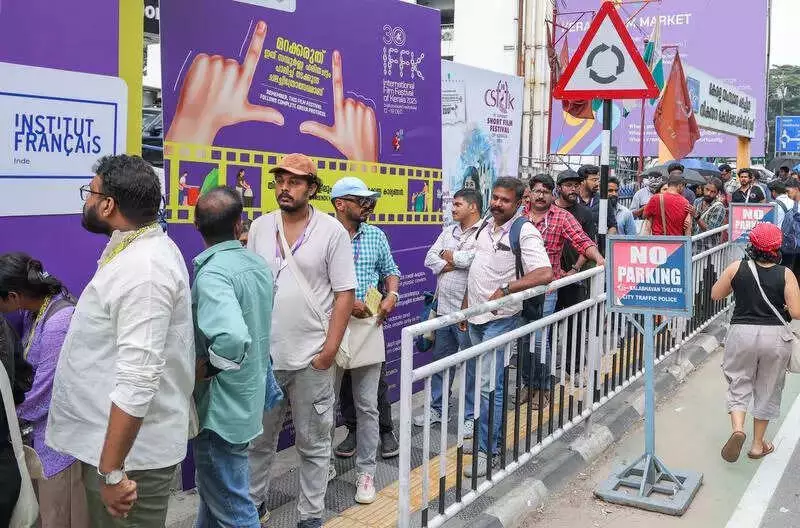
The 30th International Film Festival of Kerala (IFFK) has been thrown into disarray and uncertainty after the central government refused to grant mandatory censor exemption certificates for a number of scheduled films. This decision has led to last-minute cancellations, a scrambled schedule, and sparked sharp reactions from the political and artistic communities.
Procedural Delay or Selective Denial?
The controversy centres on the Union Ministry of Information and Broadcasting's refusal to grant censor exemption. Ministry sources stated that out of 187 applications received, 178 films were granted exemption. They attributed the denial for the remaining films to procedural lags, pointing out that the organisers applied for exemption on December 3. Official guidelines require such applications to be submitted at least 15 days before a festival's start. The 30th IFFK began on December 12 and runs until December 19.
However, festival organisers countered that the delay or denial of these certificates has created a legal impasse, barring them from screening the affected films. This has already resulted in seven screenings being cancelled over two days. Organisers warned that up to eight more screenings could face cancellation if clearances do not arrive in time.

Classics and Contemporary Films Caught in the Crossfire
The most notable film impacted is Soviet maestro Sergei Eisenstein's seminal silent classic, 'Battleship Potemkin'. The film, which was first released on December 21, 1925, was poised to celebrate its 100th anniversary this very weekend. A 74-minute landmark, it is a staple on every 'greatest films of all time' list and its 'Odessa Steps' sequence is studied globally for its groundbreaking cinematography and editing.
Apart from this historic work, several other high-profile screenings were initially refused permission. A package of films from Palestine, including 'Palestine 36', was also denied clearance, raising concerns about selective targeting. Interestingly, 'Palestine 36' was screened during the opening ceremony before the official restriction list was received by the organisers.
Following mounting pressure, the Centre on Tuesday granted clearance for four more films: 'Beef', 'Once Upon A Time In Gaza', 'Eagles of the Republic', and 'Heart of the Wolf'.
Political and Artistic Backlash
The situation has ignited a fierce debate on artistic freedom and federal overreach. Veteran filmmaker Adoor Gopalakrishnan criticised the move, stating that denying films based on titles or perceived themes undermines the spirit of an international festival.
CPM general secretary M A Baby accused the central government of deliberately attempting to sabotage the festival and interfering in cultural spaces. Congress MP Shashi Tharoor intervened, seeking an early resolution to prevent further disruption. Meanwhile, Kerala's Cultural Affairs Minister Saji Cherian directed the State Chalachitra Academy to ensure no selected film is dropped and asserted that all films would be screened as per the original schedule.
The episode has cast a shadow over one of India's most prestigious film festivals, highlighting the ongoing tensions between regulatory frameworks and the curatorial independence of cultural events.