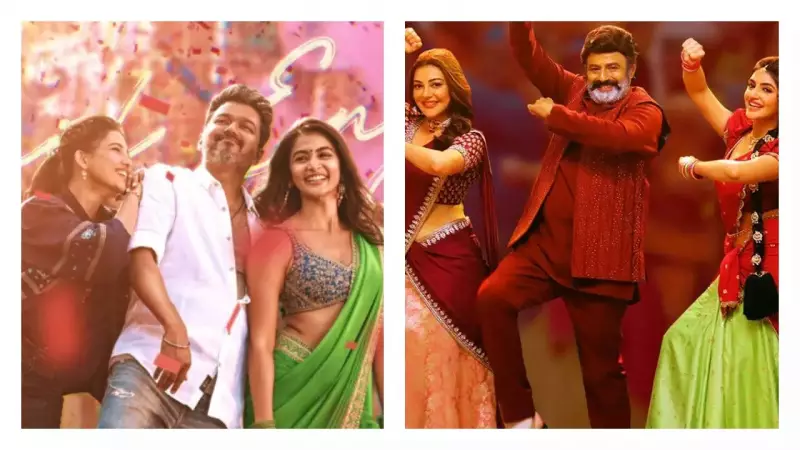
The announcement of Jana Nayagan instantly catapulted it to the top of the most anticipated Tamil film lists. The project brought together a powerful combination: it marks the final film of superstar Thalapathy Vijay, is a politically charged action drama, reunites Vijay with actress Pooja Hegde, features the villainous Bobby Deol fresh from the success of 'Animal', and is helmed by director H Vinoth. However, even before a single frame was shown to the public, the film found itself engulfed in a fiery debate that has split fan bases, sparked endless online arguments, and fueled intense speculation within the Indian film industry.
The Core of the Controversy: Original or Remake?
The central question tearing through social media is straightforward: Is Jana Nayagan an original political drama, or is it a remake—or even a partial remake—of the 2023 Telugu blockbuster Bhagavanth Kesari, starring Nandamuri Balakrishna? The release of the film's trailer provided some clues but failed to offer a definitive answer. The deliberate silence from the film's creators has only poured fuel on the fire, making it essential to move beyond fan wars and examine the facts, context, and storytelling traditions of South Indian cinema.
Why the Comparison Started
The whispers about Jana Nayagan being a remake did not appear out of thin air. Soon after the project was unveiled, early industry chatter pointed to narrative parallels with Bhagavanth Kesari. The Balakrishna hit was praised for blending mass action with a potent social message. When the Jana Nayagan trailer dropped, netizens were quick to draw connections, highlighting several apparent similarities:

- A powerful, authoritative male lead who was once a police officer.
- A deep, emotional father-daughter-like bond with a young woman.
- A plot driven by themes of power, conflict, and moral duty.
- Direct clashes with powerful antagonists.
- Specific scenes that mirror the relationship-building moments from the Telugu film.
- Dialogues in the trailer that felt reminiscent of the original.
When these elements are viewed side-by-side with a recent and popular film like Bhagavanth Kesari, the similarities became too striking for audiences to ignore.
The Game-Changer: Remake Rights Acquisition
The speculation reached a fever pitch when industry reports confirmed a critical detail: the makers of Jana Nayagan had indeed acquired remake rights related to Bhagavanth Kesari. For many, this was conclusive proof. However, the reality is more nuanced. Reports indicate that the rights were not purchased for the entire narrative of Bhagavanth Kesari. Instead, they were secured specifically for one particular thematic sequence—the impactful "Good Touch, Bad Touch" scene.
This practice is not unusual in Indian cinema. When filmmakers tackle sensitive social issues, they often acquire legal rights to specific scenes or concepts as a precaution against future legal disputes, even if the overarching story is original. This is especially true for scenes carrying a strong educational or emotional framework.
Director H Vinoth's Cryptic Response
Director H Vinoth has addressed the swirling rumors, but in his characteristic style, he avoided a simple yes or no. Speaking about the film, he stated, "This is a Thalapathy padam. Some people might think this is a remake and wonder why they should come and watch it. A few might even get angry. To them, I’ll say just one thing: Please wait until one show ends. You’ll get your answer."
He further added, "People who are coming to watch the film don’t need to worry about whether it’s a remake, whether a few scenes are inspired, or whether it’s just one scene." Rather than getting bogged down in labels, Vinoth redirects the focus to the film as a complete cinematic experience. His comments neither confirm nor deny inspiration but emphasize the importance of the final product's execution and intent.

Verdict: Remake or Original Political Drama?
Based on all available information, Jana Nayagan is not a full-fledged remake of Bhagavanth Kesari. While the core dynamic—the protective relationship between Thalapathy Vijay's character and the young woman played by Mamitha Baiju—remains a central pillar, the filmmakers have constructed a different and larger political backdrop around it. The film appears to be an original political action thriller that has legally adapted a specific, socially relevant sequence from the Telugu hit.
As H Vinoth suggests, the final judgment will not come from online debates or pre-release speculation. It will be delivered when audiences experience the film in its entirety from the first show to the last. The anticipation now shifts from questioning its origins to witnessing how Thalapathy Vijay's final cinematic chapter unfolds on the big screen.