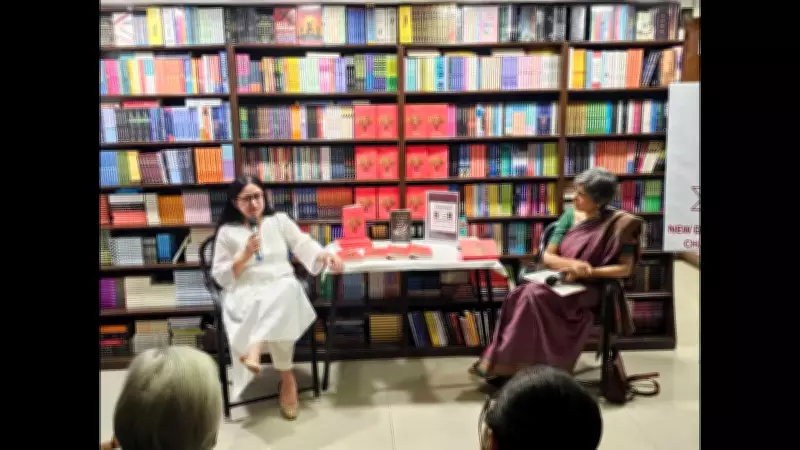
Chandigarh-based author Sakoon Singh recently engaged in a conversation about her latest work, Fourteen Springs of Separation, at a bookstore in Sector 8. The event provided an intimate setting as Singh discussed the historical fiction with Dr. Manpreet Kaur, a historian whose academic insights added depth to the discussion. The novel delves into the turbulent heartland of nineteenth-century Punjab, focusing on the final years of the Sikh Empire after Maharaja Ranjit Singh's death.
Central Figures of the Novel
At the heart of the story are Maharani Jind Kaur, the last queen of the Lahore Durbar, and her son Duleep Singh, the boy-king who lost his throne as a child. The British engineered their separation through colonial machinations, a rupture that lasted fourteen years. Singh's novel examines, mourns, and honors this wound.
Unique Narrative Approach
Singh explained that the novel stands out due to its layering of sources and perspectives. It draws on the oral tradition of the Dhadi singers, wandering balladists who preserved the memory of Jind and Duleep through song. By weaving folk narratives into the historical fabric, the work recovers voices often sidelined by formal history. Singh noted, "History is never just one story. It depends entirely on who is telling it, and why."

The novel employs a contemporary frame: young characters in the present day grapple with questions of memory, interpretation, and political bias as they reconstruct Jind and Duleep's story. This device transforms the book into a meditation on how history is written, whose perspectives are centered, and what is lost when official accounts dominate.
Geographical and Temporal Span
The narrative moves fluidly across time and geography, from the gilded courts of Lahore to the drawing rooms of London, and through Chandigarh, Pondicherry, and Dharamsala. This mirrors the displacement that defined the subjects' lives.
Engaged Audience
The event attracted a warm audience of academics, lawyers, students, and professionals. Questions from the floor covered colonial history, feminist readings of Jind Kaur's agency, and the ethics of fictionalizing real lives. The discussion concluded with a book signing, leaving many attendees eager to obtain a copy.