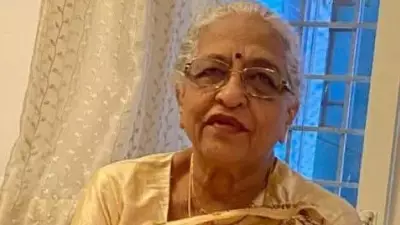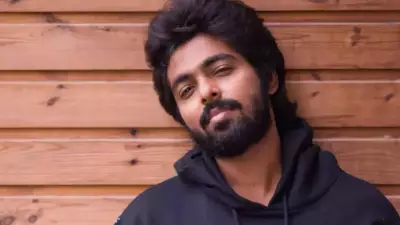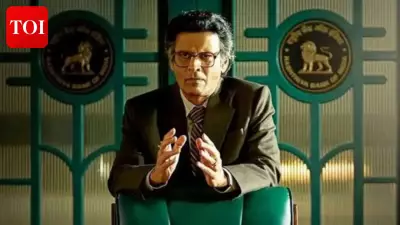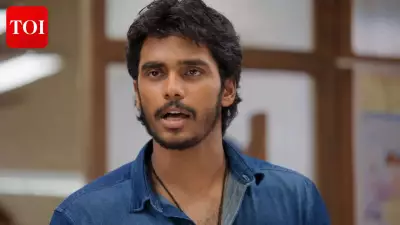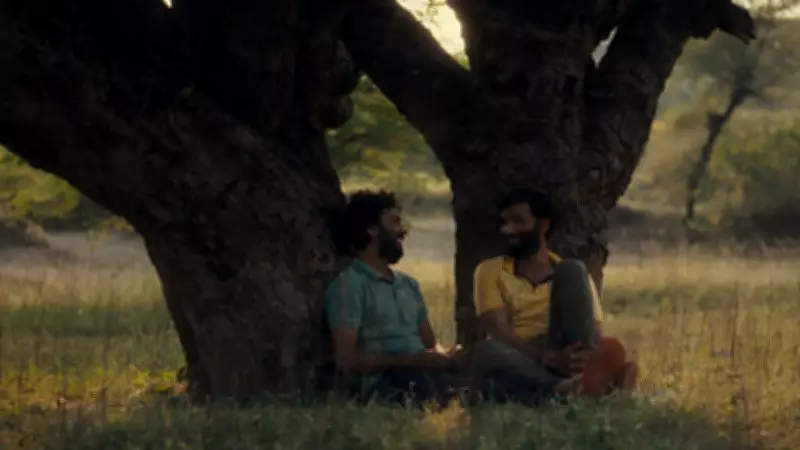
Rohan Kanawade’s Marathi film ‘Sabar Bonda’ (English title: ‘Cactus Pears’) has been selected for the FIPRESCI-India Grand Prix Top 10 Indian Films of 2025, following its win of the World Cinema Dramatic Grand Jury Prize at the Sundance Film Festival 2025. The film resists conventional queer tragedy narratives, instead offering a warm emotional refuge through quiet gestures and radical silences.
Plot and Setting
Set over the 10-day mourning period after the death of protagonist Anand’s father, the story follows Anand, a Mumbai resident, as he returns to his ancestral village in Maharashtra to perform rituals. His journey through grief transforms into a tale of yearning, recollection, and self-recognition when he reconnects with his childhood friend Balya, a local farmer also resisting pressure to marry. The mourning rituals force Anand to confront not only his father’s loss but also questions of belonging and identity.
Filmmaking Approach
Kanawade, raised by a chauffeur father in a slum, was initially drawn to the technical aspects of cinema—projectors and sound systems—rather than storytelling. He studied interior design before turning to filmmaking, which he says explains his meticulous attention to how spaces within frames deepen emotional resonance. The film employs static camera work and predominantly wide shots, emphasizing characters’ environments. Sound design and cinematography function as major characters, enhancing the narrative.

“I knew from the beginning it was a story about grief, but I was never interested in making a tragic film,” Kanawade said. “Many mentors asked me to do otherwise, but I was clear—the film had to be compassionate, warm and hopeful.” He took five years to make ‘Cactus Pears’, collecting random observations from strangers to shape ideas.
Industry Challenges
Despite the Sundance win, Kanawade noted that no Marathi distributor came forward to release the film. “It took Rana Daggubati from Hyderabad to step in and distribute it,” he said. He dismissed the idea of a Marathi cinema resurgence, pointing out that only English and Hindi media covered the film after Sundance. “So many people from my own state came up to me and said that my second film should not be in Marathi. What can be sadder than that?”
Kanawade stressed that he always wanted a theatrical release for ‘Cactus Pears’, rejecting the notion that only films like ‘Kantara’ deserve big-screen viewing. “In a film like ours, we have crafted an experience through sound and visuals that you simply cannot get on a laptop, mobile phone or even television,” he said. He criticized OTT platforms for algorithm-driven content, saying, “Every web series starts the same way. The colour palettes are the same, the camera work is the same, the background music is the same. They are not really creating meaningful work.”
Need for Support
Kanawade called for more intimate film festivals like the Dharamshala International Film Festival (DIFF), which focus on films rather than marketing. He also highlighted the lack of state funding for independent filmmakers in India, noting that the National Film Development Corporation (NFDC) no longer provides funds. “The government needs to step forward and at least create arrangements with theatres so that independent films can be released,” he said.
His next film remains “in the head,” and he believes conditions are only becoming more difficult for independent filmmakers, especially without the subsidies many European filmmakers receive.