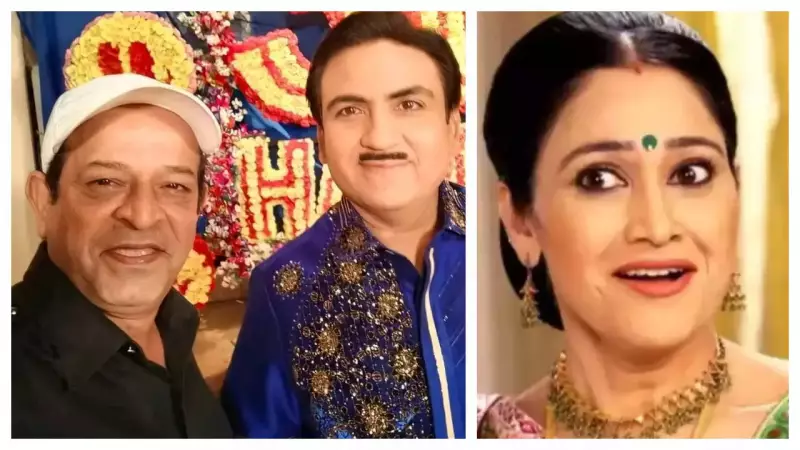
In a candid and revealing conversation, Sharad Sankla, the beloved actor behind Abdul in India's longest-running television sitcom Taarak Mehta Ka Ooltah Chashmah, has opened up about his personal and professional journey. Speaking on The Awaara Musaafir Show podcast, Sankla shared intimate details about a difficult seven-year phase with no work, his deep respect for co-star Dilip Joshi, and his thoughts on the potential return of Disha Vakani as Dayaben.
The Struggle Before Stardom: Seven Years in the Wilderness
Sharad Sankla revealed a period of significant professional hardship that lasted from 2001 to 2007. During this time, he found himself with very little work, attributing it partly to industry trends where production houses preferred working with fixed teams. "Everyone faces tough phases in life," Sankla reflected, describing this period as his personal "Sade Saati" or difficult astrological phase.
He explained that the comedy landscape was dominated by actors like Johnny Lever and later Rajpal Yadav, which limited opportunities for others. "When people saw Johnny bhai on screen, they would say that Rajpal Yadav had arrived," he noted, highlighting the competitive environment. This dry spell ended when his friend and college mate, Raj Premi, recommended him to producer Asit Kumar Modi.

Asit Modi's Lucky Charm and the Birth of Abdul
Sankla shares a long-standing bond with producer Asit Kumar Modi, dating back to the latter's first production. "I was his lucky charm because I gave him the first shot for his production house," Sankla stated, explaining why Modi has always considered him auspicious.
When TMKOC was being conceptualized, Modi directly called Sankla without an audition. He explained the show's concept, noting it featured characters from various communities but lacked a Muslim character. Modi offered him the role of an innocent paan shop owner from Gujarat. "At that point, I had no work, and honestly, who would refuse Asit Kumar Modi?" Sankla admitted. He accepted the role, which has now made him a household name.
Dilip Joshi: The Unshakeable Pillar of TMKOC
Sharad Sankla reserved high praise for his co-star Dilip Joshi, who plays Jethalal. He called Joshi "the main pillar of the show" and a king of Gujarati theatre. He highlighted Joshi's exceptional command over Hindi despite being Gujarati, a quality that sets him apart.
"He is the main pillar of the show, and when he builds the scene well, everyone else comes together and the performance naturally becomes better," Sankla explained. He described the collaborative process on set, where actors, led by Joshi, discuss scenes in advance to refine performances. He credited Joshi's discipline and energy for motivating the entire cast.
Addressing Controversies and Dayaben's Possible Return
When asked about controversies surrounding the show, including allegations of non-payment by some former cast members, Sankla offered a firm perspective. He suggested that those who complain often left the show of their own accord. "No one asked you to leave, and no one forced you out—you chose to walk away on your own," he said, adding that such actors are "not seen anywhere else also." He defended Asit Modi, stating the producer is not at fault.
On the much-speculated return of Disha Vakani as Dayaben, Sankla was cautiously optimistic. "I don’t think that is possible now, but at the same time, nothing can be said for sure," he remarked. He acknowledged that the show has successfully run for eight years without Daya, yet the audience's longing for the character remains strong.
"Our producer truly wants the original actress to return," Sankla clarified, but added that the decision rests with Vakani and her personal journey. He praised her creation of the iconic character, noting her real-life persona and voice are completely different from Daya's. He also mentioned that Mayur, who plays her brother Gogi, is her real sibling.
Sharad Sankla's interview paints a picture of resilience, camaraderie, and the behind-the-scenes dynamics that have kept Taarak Mehta Ka Ooltah Chashmah thriving for over a decade and a half.