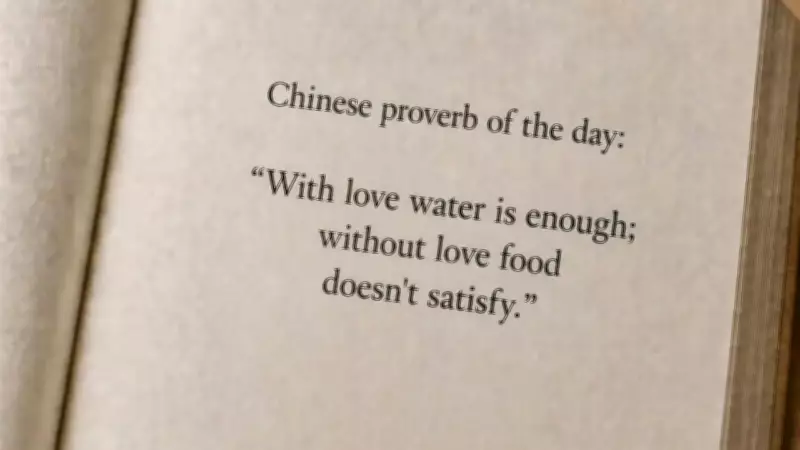
Some sayings endure for centuries not because they sound dramatic or clever, but because people continue finding pieces of their own lives within them. This Chinese proverb feels like one of those. The words appear simple, speaking of water, food, and love. Nothing seems complicated at first glance. Yet old proverbs often behave interestingly—they look small on the surface and then slowly reveal something larger upon reflection.
Chasing Comfort and Finding More
Most people spend a large part of their lives pursuing comfort in various forms: better opportunities, financial stability, a secure future, a comfortable home. There is nothing unusual about that. Human beings naturally desire safety and peace, wanting to feel that things are moving in the right direction. However, many eventually discover something surprising: material comfort and emotional fulfillment do not always arrive together. Someone can sit at a beautifully decorated table filled with expensive food and still feel lonely. Another person may eat something very ordinary with family or close friends and remember that moment years later with warmth. That difference seems to reside quietly within this proverb.
The Proverb's Deeper Meaning
Chinese proverb of the day: "With love water is enough; without love food doesn't satisfy."

The proverb uses food and water as symbols rather than speaking literally. It does not suggest that people need only water if love exists. Instead, it observes the emotional side of human life. Water represents simplicity—something basic and ordinary. Food represents abundance, comfort, or physical satisfaction. The larger message connects to emotional connection itself. When affection, care, and genuine love are present, even ordinary moments carry meaning. Things that seem small can suddenly feel complete. Without that emotional connection, people discover that comfort alone does not create satisfaction.
Childhood Memories and Emotional Attachments
Many individuals have likely experienced this without stopping to think about it. Consider childhood memories. People often remember certain meals vividly years later, not because the food was extraordinary, but because of the emotional atmosphere. Sitting around a small table while relatives talked and laughed, a parent making something simple after a difficult day, conversations more than flavors—the emotional feeling attached to the memory quietly becomes the part that lasts.
Feelings Outlast Possessions
Human beings often expect important moments to look dramatic—huge celebrations, life-changing achievements, or expensive experiences. Yet real life behaves differently. Someone remembers sitting with grandparents during childhood, listening to stories heard dozens of times before. Someone remembers sharing tea with a friend during a difficult period. Someone remembers eating simple food while traveling because of the people present, not the meal itself. At the time, these moments feel ordinary. Then years pass, and those ordinary experiences become valuable in unexpected ways. Emotional experiences attach themselves to simple moments rather than perfect ones. The proverb understands this: people frequently remember how something felt long after they forget what exactly happened.
Relevance in Modern Life
Modern life often sends a different message. People constantly see images of success, luxury, and carefully arranged lifestyles. Social media creates an environment where happiness appears connected to visible things—bigger houses, expensive holidays, perfect photographs. After seeing those images repeatedly, it becomes easy to assume happiness follows the same path. Yet many people living in highly connected, comfortable environments continue speaking about loneliness. Technology has made communication easier than ever, with instant messages and video calls across continents. Still, emotional closeness does not always increase at the same pace. The old proverb almost seems to have recognized this problem long ago. Comfort matters, security matters, and physical needs matter. But emotional connection occupies a different place entirely.

Love Beyond Romance
The word "love" in this proverb appears larger than romance. It encompasses family love that changes homes, friendship that changes difficult days, support that changes painful experiences, and kindness that changes ordinary interactions. Many individuals can recall times where a small act of care remained in memory for years—someone called at the right moment, stayed present during a difficult situation, or listened carefully without rushing. None of these actions look extraordinary from the outside, but their effect can become much larger than expected. Love here feels connected to emotional presence rather than romance alone.
Lessons on Love, Contentment, and Lasting Memories
This proverb does not suggest that food, comfort, or material security have no value. Human beings naturally need these things and work hard to build them. The message points slightly differently: people sometimes spend years believing satisfaction exists outside themselves, waiting for larger achievements or greater possessions. Then life occasionally delivers a quieter lesson through everyday experiences. A simple meal shared with people who genuinely care can remain in memory far longer than something expensive. Perhaps that explains why such a short proverb continues traveling across generations. The words are simple, but the feeling behind them is not.