

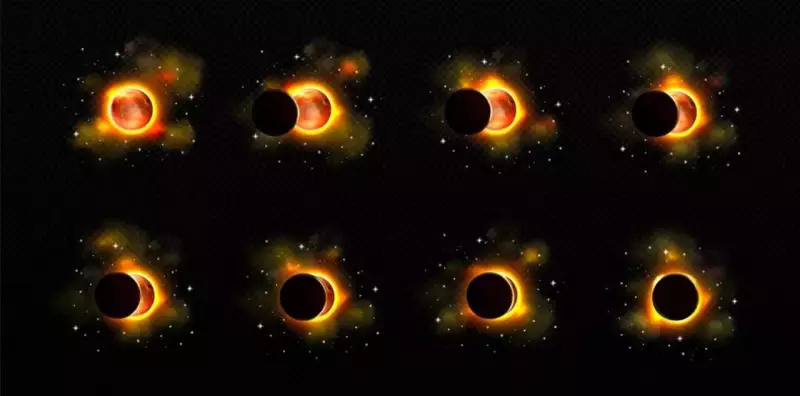
Solar and Lunar Eclipses hold immense religious and astrological importance across various cultures, particularly in Hinduism. These astronomical phenomena are considered major events that can bring significant shifts in life, emotions, and planetary influences. In Hindu tradition, eclipses are often viewed as inauspicious occurrences, believed to happen when the shadow planets Rahu and Ketu consume the Sun and Moon.
Understanding Eclipses: Religious and Scientific Perspectives
During an eclipse, both the Sun and Moon are thought to lose their power temporarily, affecting the Earth and its environment. This period, known as sutak, is considered unfavorable for performing puja rituals or other religious activities. From an astrological standpoint, eclipses are believed to trigger profound changes in emotions, energy levels, and planetary alignments, impacting all zodiac signs.
The Science Behind Eclipses
Scientifically, a Solar Eclipse occurs when the Moon passes between the Earth and the Sun, blocking sunlight. Conversely, a Lunar Eclipse happens when the Earth moves between the Sun and the Moon, casting a shadow on the lunar surface. These events are predictable and follow specific astronomical cycles.

Solar Eclipse: Meaning and Significance
Solar eclipses take place during the New Moon phase when the Moon obstructs the Sun's light. Astrologically, they symbolize new beginnings, endings, and resets, often related to personal identity, life purpose, and direction. They are moments of transformation and renewal.
Lunar Eclipse: Meaning and Significance
Lunar eclipses occur during the Full Moon when the Earth's shadow falls on the Moon. They emphasize culmination, emotional revelations, and karmic clearing. These events encourage introspection and the release of past burdens.
Eclipse Dates and Visibility in India for 2026
Solar Eclipse 2026
- February 17, 2026: Solar Eclipse – Not visible in India.
- August 12, 2026: Solar Eclipse – Not visible in India.
Lunar Eclipse 2026
- March 3, 2026: Lunar Eclipse – Visible in India from 06:26 PM to 06:46 PM.
- August 28, 2026: Partial Lunar Eclipse – Not visible in India; occurs from 08:04 AM to 11:22 PM.
What to Do During the Eclipse Period
Following traditional practices during eclipses is believed to mitigate negative influences and enhance spiritual well-being. Here are some recommended activities:
Spiritual Practices
Engage in spiritual activities such as reading sacred texts, chanting mantras, and performing naam jap (repetition of divine names). These practices help maintain positive energy and focus during the eclipse.
Taking Bath
It is advised to bathe both before and after the eclipse. This ritual is thought to cleanse the body and mind, removing negative energies accumulated during the event.
Charity
After the eclipse concludes, consider performing acts of charity. Donate items associated with the Sun, Moon, Rahu, and Ketu, such as milk, black clothes, black urad dal, seven types of grains, and white clothes. This is believed to bring merit and balance.
Bathing in Holy Rivers
Taking a bath in sacred rivers like the Ganga, Narmada, Yamuna, or Shipra is considered highly meritorious during eclipse periods. It symbolizes purification and spiritual renewal.
Eclipses are powerful celestial events that blend science, spirituality, and tradition. By understanding their significance and following recommended practices, individuals can navigate these periods with awareness and positivity.






