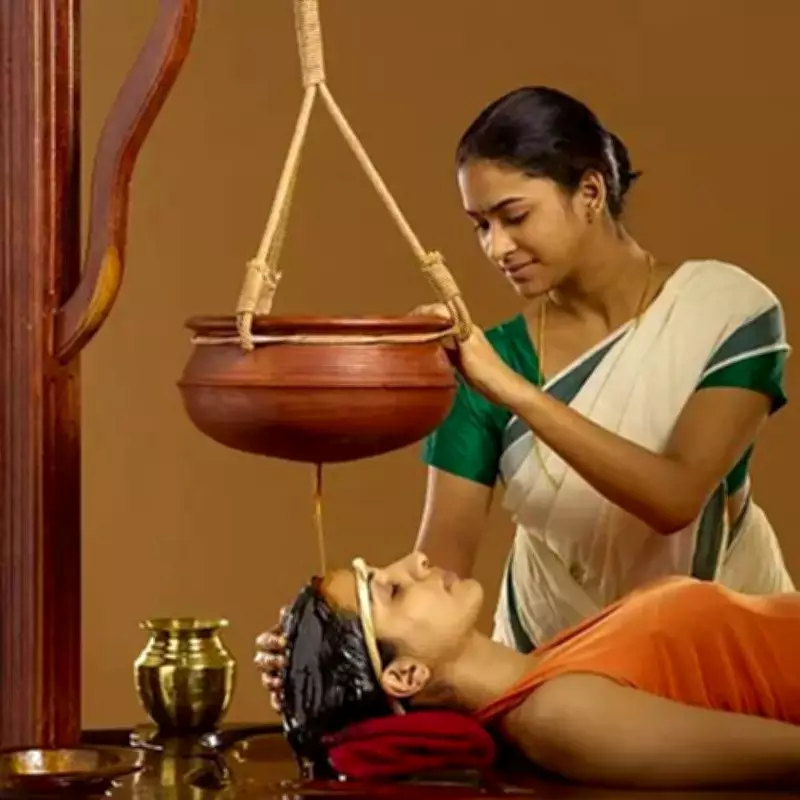
Kerala, often called "God's Own Country," has long been synonymous with Ayurveda, yoga, and holistic healing. Today, the state is witnessing a renewed revival of its ancient medical tradition as doctors increasingly integrate Ayurveda with modern medical approaches, even in women's healthcare.
Integrative Medicine in Women's Health
Across Kerala, Ayurvedic hospitals and wellness centres are blending centuries-old knowledge with contemporary medical understanding to address issues related to reproductive health, fertility, lifestyle disorders, and post-natal care. The trend reflects a broader shift toward integrative medicine, where traditional systems work alongside modern healthcare practices rather than in isolation.
Dr. Hridya, senior Ayurvedic consultant and Head of the Department of Women's Health at Sanjeevanam Ayurveda Hospital in Kakkanad, says Ayurveda provides a holistic framework for women's health that begins long before disease appears.

"Ayurveda is not only about treatments once a problem occurs," she told The Tribune. "It focuses on preventive healthcare. From the time a girl reaches puberty, lifestyle corrections and dietary habits become important in maintaining hormonal balance and overall well-being."
Dr. Hridya, who holds a Master's degree in Ayurvedic Surgery with a specialisation in gynaecology and is currently pursuing her PhD, explained that Ayurveda is structured around the classical framework of Ashtanga Ayurveda. This system comprises multiple branches of medicine, from general healthcare and surgery to pediatrics and rejuvenation therapies, focused on both disease prevention and treatment.
Preventive Care and Early Intervention
According to her, many health issues commonly seen among women today can be prevented through early intervention and lifestyle guidance. "If a young girl begins experiencing irregular menstrual cycles at 12 or 13 years of age, timely guidance can prevent it from progressing into conditions such as PCOS or PCOD," she said.
Polycystic ovarian syndrome, a condition increasingly common among young women, is often linked to sedentary lifestyles, hormonal imbalance, and dietary habits. Left untreated, it may later contribute to metabolic disorders such as diabetes, hypothyroidism, hypertension, and high cholesterol.
"Our approach is to address these concerns early," Dr. Hridya explained. "When girls are young, they should be educated about lifestyle habits, hygiene, nutrition, and exercise. This is not because they are ill, but because preventive care is essential for healthy living."
Pre-conception Care and Fertility
Ayurvedic practitioners also emphasise the importance of pre-conception care. Instead of waiting until pregnancy begins, couples are encouraged to seek medical advice months or even years in advance to prepare the body for healthy conception.
"Pre-conception care allows us to address conditions like ovarian cysts, back pain, hormonal imbalances, or nutritional deficiencies beforehand," Dr. Hridya said. "It helps reduce complications during pregnancy."
She added that the hospital has assisted more than 100 couples dealing with infertility, many of whom had previously been told they could not conceive. "We have seen cases where one fallopian tube was absent or an ovary had been removed due to surgery. Even with such challenges, holistic treatment has helped many couples start families," she said.
Menopause and Chronic Conditions
Ayurveda's approach to women's health also extends beyond fertility and pregnancy. Menopausal care, musculoskeletal pain, and age-related hormonal changes are other areas where traditional therapies are increasingly being applied.
"Menopause is a stage when women experience physical and emotional changes. With proper diet, herbal medicines, and lifestyle practices, we can help manage these transitions effectively," Dr. Hridya said.
While Ayurvedic practitioners highlight the benefits of traditional treatments, they also acknowledge the importance of modern medicine. "Ayurveda and modern medicine should not be seen as competitors," she said. "Each has its strengths. For surgical procedures or emergency care, modern medicine is essential. But for preventive care, chronic disease management, and lifestyle-related conditions, Ayurveda can play a powerful role."

Nadi Pariksha and Personalised Treatment
Another traditional element of Ayurveda still practiced in Kerala is Nadi Pariksha, or pulse diagnosis. According to Dr. Nirmithy Thampan of D Fort Ayurveda, this technique helps determine a person's body constitution and guide personalised treatment.
"In Ayurveda, one medicine does not work the same for everyone," Dr. Thampan explained. "Every individual has a different constitution—Vata, Pitta, or Kapha. By understanding a person's nature through pulse examination, we can recommend treatments that are most effective for them."
She added that such knowledge has been passed down through generations of practitioners. "Many traditional diagnostic methods are learned through practice and oral teaching. They are part of a living tradition that continues to evolve."
Residential Care and Long-term Healing
Kerala's Ayurvedic hospitals often require patients to stay for extended treatment periods, sometimes three weeks or more, allowing therapies to work gradually and comprehensively. Many centres provide residential facilities, wellness spaces, and supportive environments designed to promote long-term healing rather than quick symptomatic relief.
Health experts say the growing global interest in Ayurveda reflects rising concerns about lifestyle diseases, stress, and the limitations of purely symptom-based treatment approaches.
For many practitioners in Kerala, the revival of Ayurveda is not just about preserving tradition; it is about rediscovering a healthcare system rooted in prevention, balance, and personalised treatment.
"As Indians, we should value the scientific heritage we have inherited," Dr. Hridya said. "Ayurveda is our own system of medicine. When used wisely and alongside modern science, it can offer immense benefits for people's health."
As the demand for holistic healthcare continues to rise worldwide, Kerala's model of integrative medicine, where ancient knowledge meets modern practice, may offer valuable lessons for the future of healthcare.