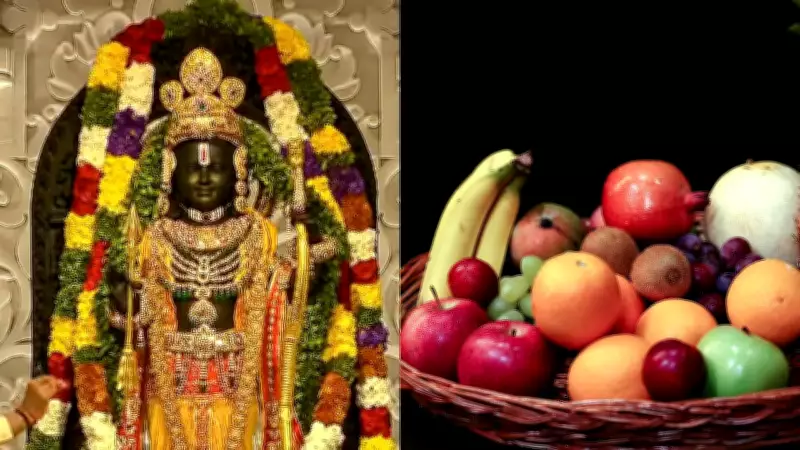
Ram Lalla at Ayodhya's Ram Mandir has often made headlines for many reasons. This time, the most-talked-about temple made news for being offered the world's most expensive mango. The latest report states that the prized Japanese Miyazaki mango was offered to Ram Lalla on Monday, keeping local traditions, with the first ripe fruit of the season presented to the deity along with a Tulsi leaf. Scroll down to read the details.
What is Miyazaki Mango
The report states that for the first time, this expensive mango made its way to Ram Mandir's bhog thali. Also known as "Egg of the Sun," it is one of the rarest and costliest mango varieties in the world. It is valued between Rs 2.5-Rs 3 lakh per kilo in international markets.
Who grew this rare mango
The report states that the rare variety was cultivated by local farmer Omprakash Singh who planted the sapling around two years ago to see whether it could thrive in Ayodhya's climate. The experiment proved successful with the tree adapting well to local conditions and producing nearly a dozen fruits this season. According to ANI, Singh said that each fruit weighs between 150-300 gms. "It is much sweeter than other varieties, rich in fibre, and packed with vitamins. I planted the tree about two years ago to test its viability in Ayodhya's climate, and it has yielded about a dozen fruits, each weighing between 150g and 300g. As per tradition, the first ripe mango was offered to the deity. Besides the Miyazaki, I am also growing various other varieties, including Thailand's 'Banana Mango,' Australia's 'R2E2,' and Indian staples like 'Chaunsa' and 'Dasheri,'" Singh told ANI.

History of Miyazaki Mango
It is one of the world's most exclusive and expensive mango varieties, originating from Japan's Miyazaki Prefecture on the island of Kyushu. It is known for its striking ruby-red skin, exceptional sweetness, and rich aroma. According to experts, the variety gained popularity in the late 20th century as Japanese farmers refined cultivation techniques to produce premium-quality mangoes under carefully controlled conditions. It is reported that each fruit is grown in protective nets, receives ample sunlight, and is harvested only when fully ripe, allowing it to develop its signature colour and high sugar content.