

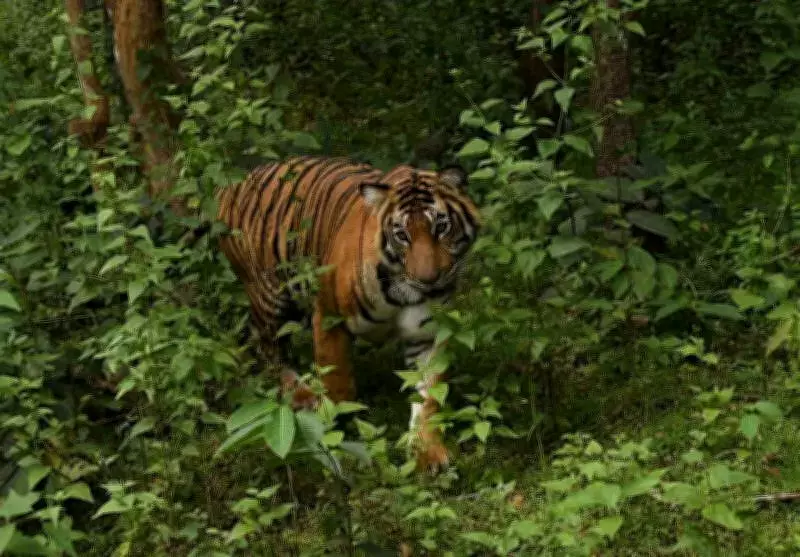
NTCA Analysis Challenges Karnataka's Tiger Overpopulation Narrative
A recent surge in human-wildlife conflicts in Karnataka during late 2025 reignited longstanding debates about the carrying capacity of the state's tiger reserves. For over a decade, state government officials and forest authorities have frequently attributed rising tiger attacks on humans to reserves exceeding their spatial limits. However, a groundbreaking analysis by the National Tiger Conservation Authority (NTCA) has directly contested this established narrative.
Scientific Review Contradicts State Government Claims
The NTCA's review, based on data submitted by Karnataka itself, examined three critical tiger reserves: Bandipur, Nagarahole, and the Biligiri Ranga Temple (BRT) reserve. The authority's findings concluded that current tiger populations in all three reserves remain well within their scientifically estimated carrying capacities. This challenges the repeated assertions from state officials that overcrowding is the primary driver of conflict.
The issue gained significant political attention in early January 2026 when Chief Minister Siddaramaiah convened a meeting to reconsider the ban on jungle safaris in tiger reserves. His opening question to officials focused on the reasons behind the sudden increase in conflicts. Forest Minister Eshwar Khandre pointed directly to high tiger density in Bandipur and Nagarahole as the cause.

NTCA's Detailed Findings and Recommendations
Amid what it described as an unusual and unprecedented rise in tiger capture incidents across Karnataka, the NTCA conducted a thorough review of draft conservation plans. The authority sought to assess scientifically how many tigers these landscapes could sustainably support. During the period from September to December 2025 alone, Karnataka reported rescuing and rehabilitating 27 tigers.
Following its comprehensive analysis, the NTCA wrote to the Chief Wildlife Warden of Karnataka on January 27, 2026, stating clearly: "As per the available scientific assessments, the tiger populations in these reserves remain within their estimated carrying capacities." The analysis, when compared with figures from the 2022-23 tiger census report, revealed surprising capacity margins. Bandipur was found to have enough space to accommodate an additional 119 tigers, Nagarahole could support 35 more, and BRT reserve had room for 34 additional tigers.
The NTCA also issued a caution against routine captures of tigers, emphasizing ecological principles. "In high-density landscapes, occasional dispersal of tigers beyond the protected areas is a natural ecological process and may not always warrant capture," the authority noted. "Such situations are often better addressed through intensified monitoring and appropriate conflict-mitigation measures in accordance with NTCA guidelines."
The authority recommended that the issue be examined comprehensively, taking into account ecological data, long-term conservation objectives, and best national practices. This approach would ensure that tiger management in Karnataka continues to remain science-based, balanced, and sustainable, rather than being driven by political narratives or public pressure.
Broader Implications for Wildlife Conservation Policy
This development highlights a significant disconnect between on-the-ground political narratives and scientific wildlife management. The NTCA's findings suggest that factors beyond simple overpopulation—such as habitat fragmentation, human encroachment, or prey availability—might be contributing to the rise in human-tiger conflicts. The authority's emphasis on science-based management represents a crucial intervention in a debate that has often been dominated by emotional and political considerations.

The situation in Karnataka serves as a critical case study for tiger conservation across India, demonstrating the importance of rigorous scientific assessment in wildlife policy decisions. As human-wildlife conflicts continue to rise in various parts of the country, the NTCA's methodology and recommendations could provide a template for other states grappling with similar challenges.





