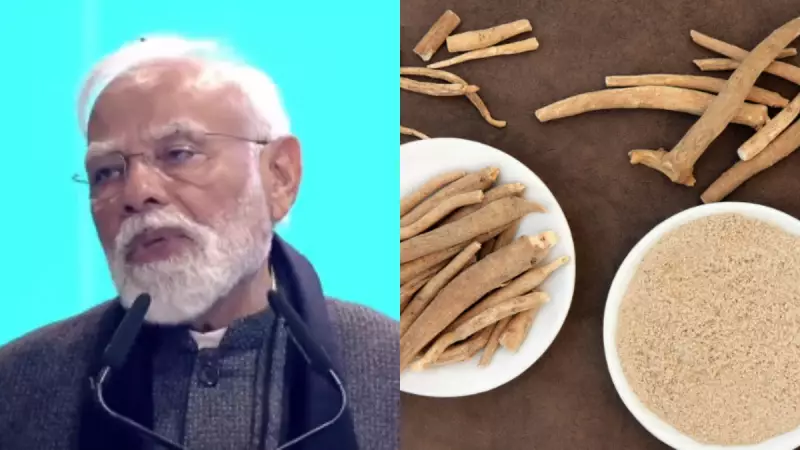
Prime Minister Narendra Modi made a series of landmark announcements aimed at propelling India's traditional medicine systems onto the global stage. Addressing the second WHO Global Summit on Traditional Medicine in Gandhinagar, Gujarat, the Prime Minister unveiled initiatives designed to standardize, digitize, and promote ancient Indian wellness practices worldwide.
A Trio of Transformative Initiatives
The Prime Minister's address was centered around three major announcements. The first and most significant is the introduction of the AYUSH Mark. This certification is envisioned as a global benchmark for quality and authenticity for products derived from traditional Indian medicine systems like Ayurveda, Yoga, Unani, Siddha, and Homeopathy.
The second key announcement was the launch of the WHO Global Centre for Traditional Medicine (GCTM) Yoga Portal. This digital platform, hosted by the GCTM in Jamnagar, is set to become a comprehensive global repository for all yoga-related knowledge, research, and practices, facilitating easy access for practitioners and researchers across the world.

Complementing these, PM Modi also inaugurated a Digital Health Atlas and announced the upcoming International Classification of Traditional Medicine (ICTM) 2025. The atlas will map traditional medicine resources globally, while the ICTM 2025 aims to create a standardized terminology and classification system, crucial for integrating these practices into modern healthcare frameworks.
India's Leadership in Global Wellness
In his speech, the Prime Minister positioned India not just as a repository of ancient knowledge but as an active leader in shaping its future. He emphasized that traditional medicine is a holistic science of life, not merely an alternative treatment. "India is ready to share its traditional medicine knowledge with the world," PM Modi stated, highlighting the country's commitment to global well-being.
The summit, co-hosted by the World Health Organization (WHO) and the Government of India, saw participation from G20 health ministers and global experts. The location itself was symbolic, as the WHO-GCTM in Jamnagar is the first and only global center dedicated to traditional medicine, established with India's support.
Implications for the Future of Healthcare
These announcements are expected to have far-reaching consequences. The AYUSH Mark will build consumer trust in international markets by ensuring product quality and safety, potentially boosting India's exports in this sector. The yoga portal and digital tools will democratize access to authentic information, combating misinformation.
Furthermore, the push for a standardized international classification (ICTM 2025) is a critical step towards mainstreaming traditional medicine. It will enable better research, data collection, and potentially pave the way for these practices to be included in national health policies and insurance schemes worldwide. This move solidifies India's role as the "Vishwa Guru" (world teacher) in the realm of traditional and holistic wellness, setting the agenda for its ethical and scientific global integration.