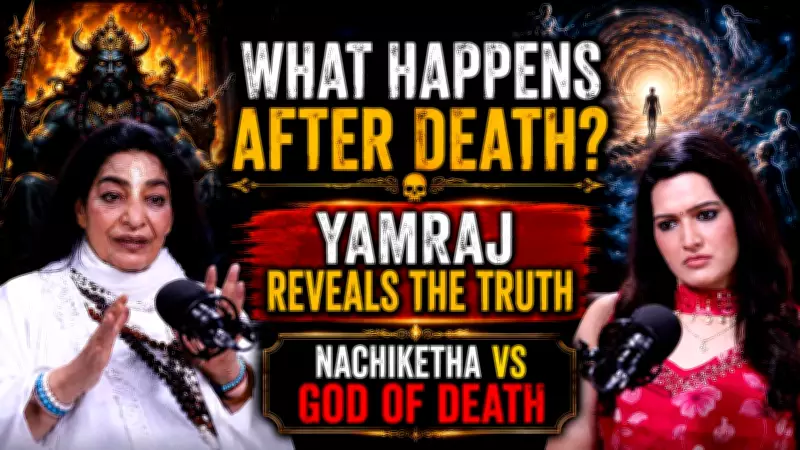
What really happens after death according to ancient spiritual wisdom? In a recent discussion, Premmayi Gurumaa explains the powerful story of Nachiketha and Yamraj from the Upanishads, where a young seeker asks the God of Death the ultimate question about life, death, and the soul.
The Timeless Conversation Between Nachiketha and Yamraj
This ancient conversation has remained spiritually significant for centuries. The story, found in the Katha Upanishad, describes how Nachiketha, a young boy, confronts Yamraj, the god of death, and asks him the ultimate question: What happens after death? Yamraj reveals profound truths about consciousness, karma, and the journey of the soul after death.
Key Spiritual Insights from the Upanishads
Premmayi Gurumaa delves into the deeper meaning of this dialogue. She explains that according to Hindu philosophy, death is not the end but a transition. The soul, or Atman, is eternal and undergoes rebirth based on its karma. Yamraj teaches Nachiketha that the true self is beyond birth and death, and that liberation (moksha) is achieved through self-realization.

Understanding Consciousness and Karma
The discussion explores how consciousness continues after physical death. Gurumaa emphasizes that the quality of one's thoughts and actions (karma) determines the soul's next journey. She explains that the Upanishads offer a roadmap for understanding the cycle of life, death, and rebirth, and how one can break free from this cycle through spiritual wisdom.
The Relevance of This Wisdom Today
This ancient wisdom remains relevant for modern seekers. Gurumaa encourages viewers to contemplate the nature of existence and to seek spiritual knowledge. She notes that the story of Nachiketha and Yamraj is not just a myth but a profound teaching that can help individuals overcome the fear of death and find inner peace.
Watch the full discussion for profound spiritual insights and a deeper understanding of life after death according to Hindu philosophy.