

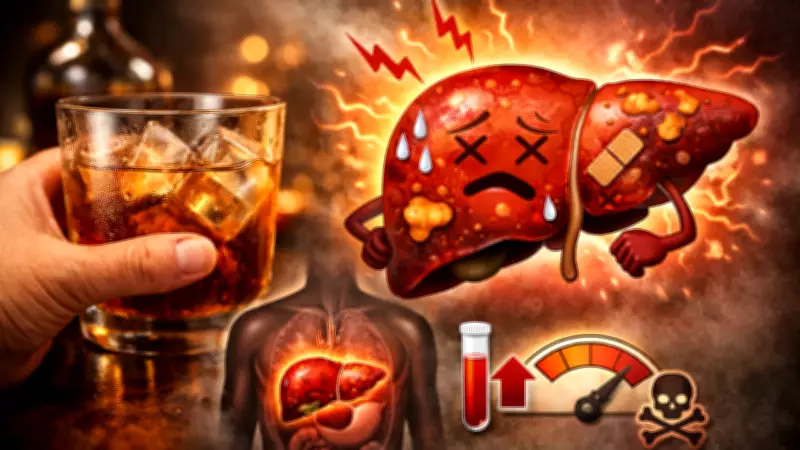
The Silent Progression of Alcohol-Induced Liver Disease in India
Liver damage accumulates gradually, advancing from fatty liver to cirrhosis, frequently before any noticeable symptoms emerge. In clinical practice, a prevalent misconception is the belief that "a little alcohol every day is fine." However, the liver presents a starkly different narrative, particularly in India, where liver disease is increasingly common.
Alcohol Consumption and Liver Health in India
India faces significant exposure to alcohol, with recent data indicating that approximately 14–16% of Indians consume alcohol. A substantial portion engages in harmful or addictive drinking patterns. More alarmingly, studies suggest about 1 in 12 Indians may suffer from alcohol use disorder, characterized by excessive and dangerous consumption, directly impacting liver health.
Daily alcohol intake forces the liver to continuously metabolize it, generating toxic by-products like acetaldehyde. This substance damages liver cells and triggers inflammation, setting off a dangerous yet predictable progression over time.

Stages of Liver Damage from Alcohol
Fatty liver marks the initial stage, potentially developing within weeks of regular drinking. At this point, cessation of alcohol can lead to recovery. Unfortunately, many patients persist in drinking, allowing damage to worsen silently.
This can escalate to alcoholic hepatitis, where liver inflammation occurs. Symptoms such as fatigue, loss of appetite, and jaundice may appear, though not always, making clinical management unpredictable.
Repeated exposure leads to fibrosis and eventually cirrhosis, a permanent and irreversible condition. Alcohol has become the primary cause of liver cirrhosis in India, accounting for over 40% of cases in some studies, overshadowing other etiologies.
The Hidden Nature of Liver Damage
Globally and in India, alcohol-related liver disease is prevalent, with an estimated 3–5% of the general population possibly having some liver damage from alcohol. This figure rises sharply among regular drinkers. The insidious aspect is that liver damage often remains asymptomatic; a significant number of patients show no signs until advanced stages. By the time complications like fluid accumulation, internal bleeding, or liver failure arise, the damage is typically permanent.
India bears a heavy burden of liver disease, contributing to more than 18% of all liver-related deaths globally, highlighting the scale of the issue.
Expert Insights and Conclusion
The key takeaway is evident: liver failure does not occur suddenly but progresses slowly, quietly, and often without warning. Even moderate daily alcohol consumption denies the liver essential recovery time. While society may normalize daily drinking, the liver does not adapt; it deteriorates.
Dr. Shaleen Agarwal, Principal Consultant & Chief of Liver Transplant & HPB Services, Amrita Hospital, Faridabad, emphasizes the critical need for awareness and moderation to combat this growing health crisis.






