

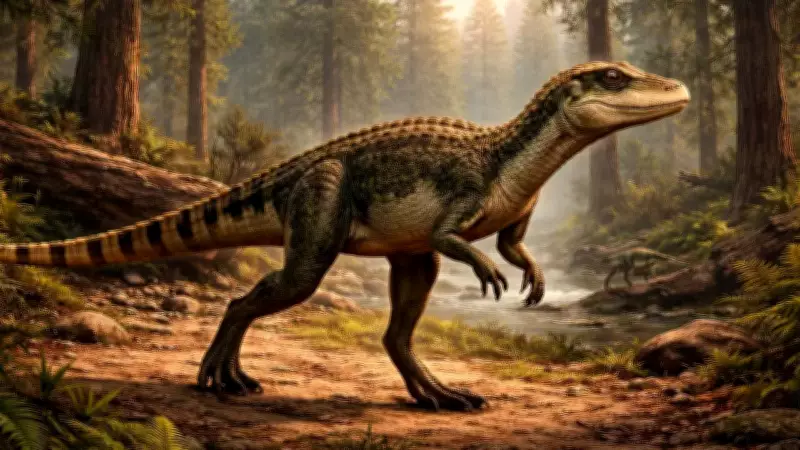
Groundbreaking Fossil Discovery Unveils Ancient Crocodile-Line Reptile
The scientific naming of Sonselasuchus cedrus represents a monumental paleontological finding that illuminates the remarkable diversification of reptiles within the crocodile lineage during the Late Triassic Era, approximately 215 million years ago. This discovery provides unprecedented insights into the evolutionary pathways of prehistoric archosaurs.
Extensive Fossil Excavation in Arizona's Chinle Formation
Fossils of Sonselasuchus cedrus have been meticulously uncovered from the Chinle Formation of Arizona, specifically within the Petrified Forest National Park. According to a comprehensive study published in the Journal of Vertebrate Palaeontology titled "Osteology and ontogenetic changes in the shuvosaurid archosaur Sonselasuchus cedrus from the Upper Triassic Chinle Formation of Arizona," researchers conducted in-depth analysis using specimens from multiple individuals.
The excavation project, initiated in 2014, yielded an extraordinary collection of more than 950 fossil elements representing a minimum of 36 distinct individuals. The remarkable preservation included bones from all body regions, enabling scientists to study both juvenile and mature specimens of Sonselasuchus cedrus with exceptional detail.

Distinct Anatomical Features and Classification
The genus Sonselasuchus is classified within the Shuvosauridae family, a suborder of the Pseudosuchia order that represents crocodile-line archosaurs. This ancient reptile displayed several distinctive anatomical characteristics that differentiate it from modern crocodilians.
Key anatomical features include:
- Long hind limbs and a lightweight bone structure
- Large eye orbits suggesting specific visual adaptations
- Complete absence of teeth, potentially replaced by a beak-like jaw structure
- Proportions indicating adaptation to terrestrial living environments
While these characteristics might superficially resemble features found in some dinosaur lineages, phylogenetic analysis confirms that Sonselasuchus is definitively not a dinosaur. The similarities represent a fascinating case of convergent evolution between distinct archosaur lineages.
Ontogenetic Transformation in Locomotion Patterns
The fossil evidence reveals a remarkable transformation in locomotion as Sonselasuchus matured from juvenile to adult stages. Juvenile specimens exhibited clear quadrupedal characteristics, moving primarily on all four limbs. However, adult specimens demonstrated anatomical adaptations suggesting a shift toward bipedal locomotion.
This dramatic change resulted from significant alterations in limb proportions during growth. As Sonselasuchus matured, its hind limbs grew substantially stronger and longer relative to its forelimbs, shifting the creature's center of mass and enabling potential bipedal movement. This ontogenetic transition represents one of the most compelling aspects of the research findings.
Evolutionary Significance and Broader Implications
The research on Sonselasuchus cedrus suggests that crocodile-line reptiles exhibited far greater diversity in body forms and locomotion strategies during the Triassic period than their modern descendants. Members of the Shuvosauridae lineage inhabited terrestrial environments and developed specialized adaptations for land-based existence.
The presence of characteristics such as bipedalism and toothless jaws in multiple archosaur lineages indicates these traits evolved independently through convergent evolution. This discovery fundamentally expands our understanding of prehistoric ecosystems and the evolutionary flexibility of archosaur reptiles during the Triassic period.
The comprehensive study of Sonselasuchus cedrus continues to provide valuable data about the complex evolutionary history of reptiles and the diverse adaptations that emerged during the Triassic era, approximately 215 million years before present.






