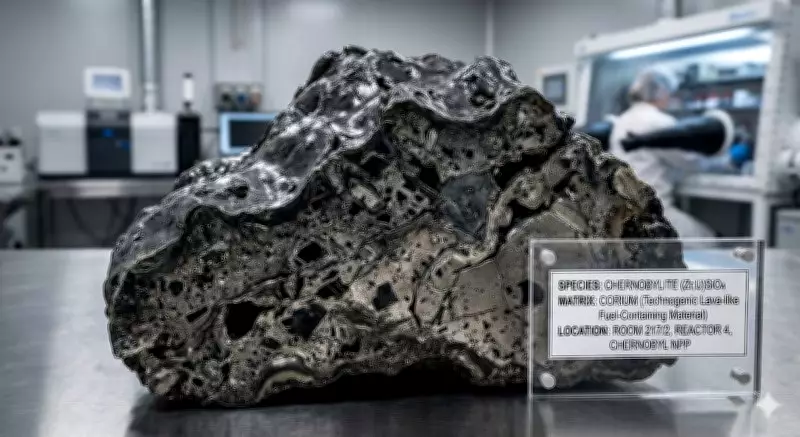
In the aftermath of the catastrophic Chernobyl nuclear disaster of 1986, a unique and highly radioactive mineral was born. Named Chernobylite, this crystalline substance is not a naturally occurring mineral but rather a technogenic creation, formed from the intense heat and radiation of the reactor meltdown. It represents a stark reminder of the destructive power of nuclear accidents and provides valuable insights for scientists studying nuclear waste management and the long-term effects of radiation.
Formation and Composition
Chernobylite was discovered within the sarcophagus that entombs the damaged reactor. It formed when nuclear fuel, along with other materials like concrete and metals, melted and mixed together at extremely high temperatures. The resulting substance cooled into a hard, black, glassy material with a distinctive crystalline structure. Its composition is complex, containing uranium oxide, concrete, graphite, and various fission products. The mineral is highly radioactive, emitting dangerous levels of gamma and beta radiation.
Scientific Significance
Studying Chernobylite offers scientists a unique opportunity to understand the behavior of nuclear materials under extreme conditions. It provides clues about how nuclear fuel interacts with structural materials during a meltdown, which is crucial for improving reactor safety and designing better containment structures. Furthermore, it helps researchers predict the long-term stability of radioactive waste and develop strategies for safe disposal.

Environmental and Health Concerns
The presence of Chernobylite poses ongoing environmental and health risks. The mineral is highly radioactive and can remain hazardous for thousands of years. Its formation also contributed to the release of radioactive particles into the environment, contaminating surrounding areas. However, the study of Chernobylite also aids in the development of remediation techniques, such as using chemical agents to immobilize radioactive materials or designing barriers to prevent further contamination.
Comparison with Other Nuclear Disaster Minerals
Chernobylite is not the only mineral formed from a nuclear accident. Similar materials have been found at other disaster sites, such as the Trinity test site in New Mexico, where the first atomic bomb was detonated. However, Chernobylite is unique due to the large volume of material and the specific conditions of the reactor meltdown. Understanding these differences helps scientists better predict the consequences of potential future accidents.
Lessons for Nuclear Safety
The study of Chernobylite and the Chernobyl disaster has led to significant improvements in nuclear safety worldwide. Reactor designs have been modified to prevent similar meltdowns, and emergency response protocols have been strengthened. Additionally, the mineral serves as a powerful symbol of the potential dangers of nuclear energy, emphasizing the need for rigorous safety standards and responsible waste management.
In conclusion, Chernobylite is more than just a radioactive curiosity; it is a scientific tool that helps us learn from past mistakes. By studying this mineral, we gain valuable knowledge that can prevent future disasters and improve the management of nuclear waste. As we continue to rely on nuclear energy, the lessons from Chernobylite remain as relevant as ever.