

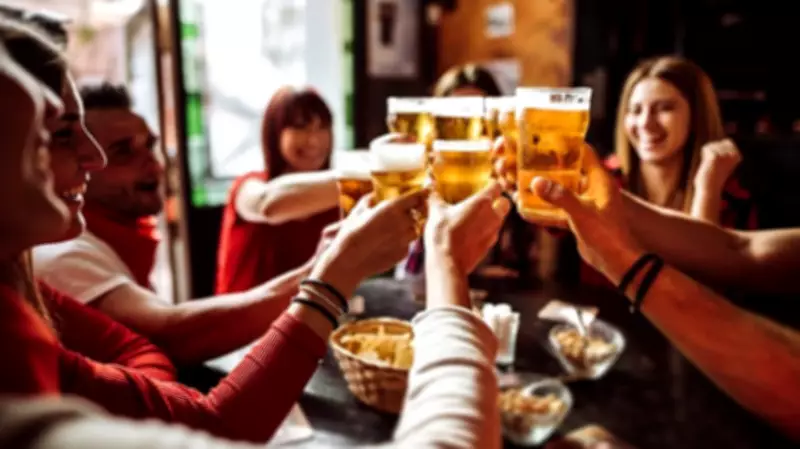
Dr. Oz's 'Social Lubricant' Comment on Alcohol Draws Expert Criticism
In a recent statement, Dr. Oz referred to alcohol as a 'social lubricant,' a characterization that has ignited debate among health professionals. While some view this as a casual observation on social drinking norms, many experts express significant worry about the potential implications for public health and alcohol consumption behaviors.
Study Details: Analyzing Alcohol's Effects in Controlled Groups
A scientific study, as reported by the International New York Times, involved dividing men and women into three distinct groups to examine the impacts of alcohol consumption. The first group was randomly assigned a vodka cocktail mixed with cranberry juice, providing a standard alcoholic beverage for analysis. The second group received an alcohol-free placebo, which was carefully prepared in a glass smeared with vodka to mimic the sensory experience of a real cocktail, thereby controlling for psychological effects. The third group served as a control, receiving no drink at all, to establish a baseline for comparison in the research.
This methodological approach aimed to isolate the physiological and psychological effects of alcohol from mere expectations, offering insights into how drinking influences social interactions and health outcomes. The findings, published on February 11, 2026, highlight the complexities of alcohol's role in society and underscore the ongoing discussions surrounding its use.

Expert Concerns and Broader Implications
Health experts have voiced concerns that labeling alcohol as a 'social lubricant' might trivialize its risks, including addiction, liver disease, and impaired judgment. They emphasize the importance of balanced messaging, advocating for awareness of both the social aspects and the potential harms associated with drinking. The study's results are expected to contribute to this dialogue, providing empirical data on how alcohol affects behavior and perception in social settings.
As debates continue, the intersection of celebrity influence, scientific research, and public health policy remains a critical area for further exploration and education.






