Vetlapalem Firecracker Blast Leaves Families Devastated, Multiple Victims Unidentifiable
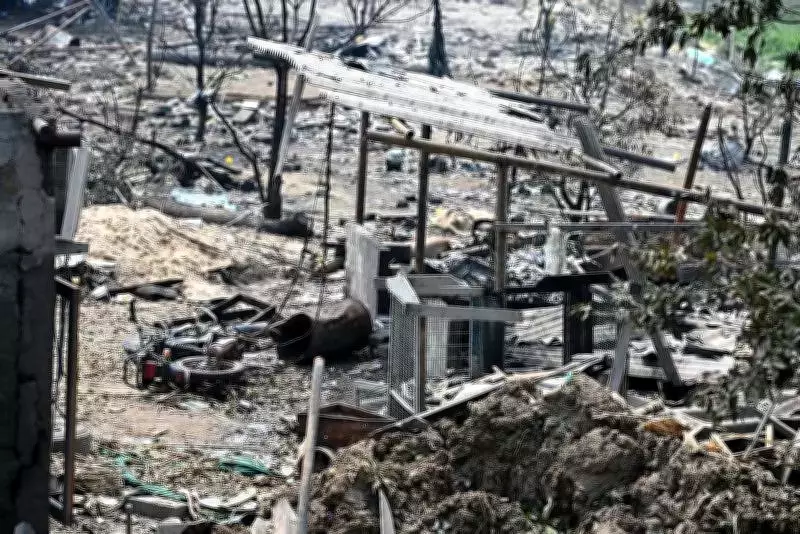
The quiet village of Vetlapalem in Kakinada district was shattered on Saturday by a catastrophic explosion at a local firecracker manufacturing unit, leaving behind a trail of unimaginable grief and destruction. The blast has not only claimed multiple lives but has plunged numerous families into profound despair, with many victims rendered unidentifiable due to the severity of their injuries.
Families Left Bereft and Financially Vulnerable
Among the heart-wrenching stories emerging from the tragedy is that of Valluri Chandrakala, a 30-year-old woman now left to navigate an uncertain future while cradling her four-year-old daughter. Her husband, Ravi Kumar, who served as the family's sole breadwinner, perished in the explosion. The silence in their home has become unbearable, with Chandrakala inconsolable and her daughter too young to comprehend the enormity of their loss.
Ravi Kumar's responsibilities extended beyond his immediate family. As the eldest son, he was the primary support for his widowed mother and three younger sisters, making his sudden absence devastating for the entire extended household. The financial and emotional void created by his death is immense, leaving multiple dependents without their crucial lifeline.

In another home gripped by sorrow, recent graduate Godatha Siva mourns the loss of his father, Venkata Ramana, who was the family's only source of income. "I do not know how we will manage now," Siva confessed, struggling to process the tragedy. His mother, Bujji, described the haunting emptiness that now permeates their home: "He used to come home during lunch and rest for two hours, but on Saturday, he went straight to work after the meal. He arranged everything at home. Now everything feels blank."
Horrific Identification Challenges for Grieving Relatives
The explosion's ferocity presented families with a harrowing reality that compounded their grief. Many victims were so severely mutilated that conventional identification became nearly impossible. Some bodies were decapitated, while others were charred beyond recognition, forcing distraught relatives to rely on fragments of clothing or circumstantial evidence to claim their loved ones' remains.
P. Jagadeeswari experienced this cruel twist of fate firsthand when she received her childless aunt Raghava's body without a head for cremation. "The tragedy is doubly cruel," she lamented. "I was raised by her, but I could not see her one last time. Her face was completely damaged in the blast, leaving no chance for a final farewell. She had only recently taken up this work, and now this has happened."
Similarly, the body of Kadimpalli Krupamma was discovered in nearby paddy fields, charred beyond visual recognition. Family members maintained a vigil beside the remains for hours, ultimately identifying her only by a small piece of clothing. Her husband, Satyanarayana, who also works in firecracker units during the lean agricultural season, expressed profound grief at the sudden loss.
Unanswered Questions and Shattered Futures
K Srinu, who lost his father Dhana Raju in the blast, articulated the confusion and despair gripping affected families. "Nobody knows exactly what happened at the site. We are devastated. My sister is yet to be married, and we do not even have a home. Life has suddenly turned dark for us," he said, highlighting how the tragedy has upended multiple aspects of their existence.
The explosion has exposed the precarious nature of work in informal firecracker manufacturing units, where safety protocols are often inadequate. Many victims, like Raghava, had recently taken up this hazardous employment, seeking to support their families through seasonal work that complements agricultural income.
As investigations into the cause of the blast continue, the community of Vetlapalem is left to grapple with the physical, emotional, and financial aftermath. The incident serves as a stark reminder of the human cost behind such industrial accidents, with families now facing not only immediate grief but long-term uncertainty about their survival and stability.