Diagnosed with thalassemia major at just two months old, Zehra's early years were defined not by playgrounds and classrooms but by hospital corridors and blood transfusions. Her parents noticed she was unusually weak and pale, leading to a medical confirmation of a severe inherited blood disorder that hampers the body's ability to produce healthy haemoglobin, resulting in anaemia, fatigue, stunted growth, and eventual organ damage.
India's Thalassemia Burden
India bears one of the heaviest thalassemia burdens globally, with 10,000 to 15,000 affected infants born annually. Limited awareness and lack of premarital screening mean many families learn of their carrier status only after a child is diagnosed. Experts estimate that 3% to 4% of Indians are beta-thalassemia carriers.
A Turning Point: The Transplant
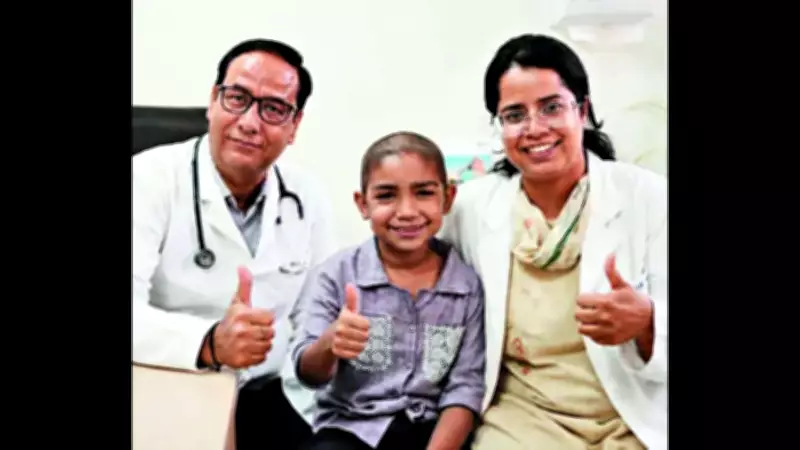
Now five years old, Zehra has been cured of thalassemia and is ready for a healthier future filled with school, games, and birthday parties. Her journey, which began in Jaipur, reached a turning point thanks to a complex bone marrow transplant at Max Super Speciality Hospital, Patparganj, Delhi.

Dr Satyendra Katewa, director of paediatric hemato-oncology and bone marrow transplant, explained the severity: "It's a genetic problem. To keep such children alive, blood is transfused. But 1 ml of blood has 0.9 mg iron, so 200 ml transfused blood results in 180 mg iron entering the liver, heart, testicles, and ovaries, damaging organs. Hence, by age 20, most such patients die. This is where the transplant helps."
Haploidentical Transplant: A Complex Procedure
The challenge was that no fully matched donor was found within the family. Doctors opted for a 50% HLA (human leukocyte antigen) matched, or haploidentical transplant, a procedure once considered highly risky. In bone marrow transplants, a fully matched HLA donor—often a sibling—is typically sought. A haploidentical transplant uses a donor, usually a parent or sibling, who shares about 50% of HLA markers.
Dr Anjali Yadav, consultant in hemato-oncology, noted: "Such transplants can involve serious complications, including graft rejection, graft-versus-host disease, and infections." Despite these risks, Zehra was discharged within 28 days of the transplant and had her first follow-up this week.
Family's Gratitude
Her father Aftab expressed profound gratitude: "It's her second life, and her doctors are farishtas (angels)."
Government Support and Screening
According to a Union government report, as of March 2025, over 15 lakh individuals have been screened, with 5,000 found to have the disease and 50,462 identified as carriers. To support the high cost of transplants, the Centre's Thalassemia Bal Sewa Yojana contributes up to Rs 10 lakh for bone marrow transplants through empanelled hospitals.