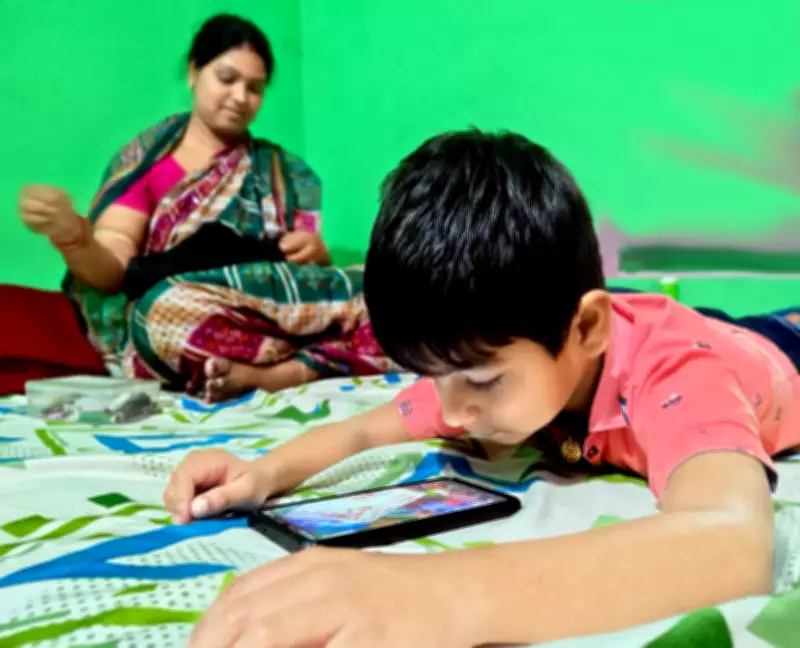
New Delhi: Children with higher screen exposure at around one year of age are associated with a greater likelihood of autism spectrum disorder (ASD) or autism-like traits by the age of three, experts have warned, raising concern over early and prolonged screen use.
Understanding Autism Spectrum Disorder
ASD is a complex condition shaped by genetic, epigenetic and environmental factors, with early screen exposure emerging as a potential environmental contributor. The condition begins early in brain development, with symptoms appearing between 12 and 36 months, making early identification critical. Excessive screen time may reduce face-to-face interaction, eye contact and communication — key inputs for neural development — and has been linked to behavioural issues, sensory sensitivities, sleep disruption and altered brain connectivity.
Research Findings
“Studies show that children with higher screen exposure at around one year are more likely to show autism-related traits by age three, particularly among boys,” said Prof Sheffali Gulati, faculty in-charge of the paediatric neurology division at AIIMS. A large JAMA Pediatrics study of over 84,000 children reported similar findings, though as an association, not causation.

An AIIMS Delhi study, published as an abstract in the Journal of International Child Neurology Association, analysed 250 children aged 3-18 years and found earlier and heavier screen use among children with autism. Over 80% of those with autism used screens for more than 20 minutes per session, compared to 66% among others, along with lower physical activity and higher sleep disturbances. Gulati said the findings indicated a pattern but did not establish causation.
Expert Opinions
The link needs to be interpreted cautiously as multiple developmental processes are at play in early childhood, said Dr Praveen Gupta, chairman of Marengo Asia International Institute of Neuro and Spine, Gurgaon. He noted that excessive screen use during this critical phase might limit social interaction and was increasingly being seen alongside rising speech and behavioural delays, though long-term studies are needed to establish a clear relationship.
Similar trends are being seen in clinical practice. Excessive screen exposure can affect attention, language and social skills, said Dr Vinit Banga, director of neurology at Fortis Hospital, Faridabad, noting increasing cases of speech delay, reduced eye contact and behavioural issues among toddlers with high screen use.
Dr Jitendra Jain, senior consultant in paediatrics at Cocoon Hospital, said excessive screen time could amplify underlying developmental vulnerabilities. He noted that early reduction in screen time, along with increased caregiver interaction, often led to improvement.
Recommendations for Screen Time
Prof Gulati advised no screens for children below 18 months, up to one hour a day with supervision for children aged 18 months to 6 years, and no more than two hours for older children above six years.