

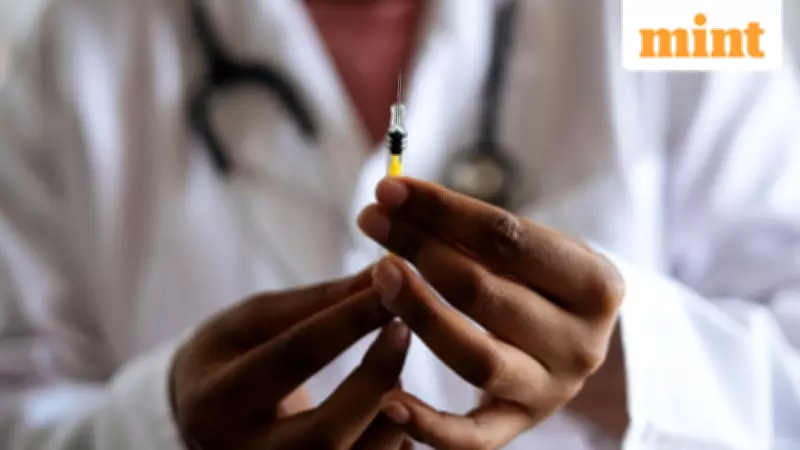
HPV Vaccines Gain Momentum in India Amid Rising Awareness, But Affordability Hurdles Persist
India's HPV vaccine market is witnessing a significant resurgence after years of sluggish uptake, fueled by growing awareness of cervical cancer prevention and enhanced accessibility through digital health platforms. According to data from the pharma intelligence platform Pharmarack, the market was valued at ₹91 crore as of January 2026 on a moving annual total basis, with sales volume surging over 87% to 333,160 units from January 2024 to January 2026.
Digital Platforms Drive Urban Adoption
Digital-first healthcare providers like PharmEasy report that HPV vaccines now constitute nearly 25% of their total vaccine sales, marking it as one of the fastest-growing segments in preventive healthcare. Gaurav Verma, head of B2C at PharmEasy, attributes this growth to increased consumer awareness and the convenience offered by features such as at-home vaccination, flexible scheduling, and free administration. "HPV vaccination has seen substantial growth on PharmEasy, driven by rising awareness about preventive healthcare and the convenience we offer," he stated.
Demand is concentrated in metropolitan cities, including Bengaluru, Delhi, Mumbai, Hyderabad, Chennai, and Pune, where women account for nearly 70% of purchasers, with the 26–35 age group being the most active. While tier-I and urban-adjacent markets contribute around 15% of demand, another 15% comes from tier-II, tier-III, and smaller cities, indicating a gradual spread of awareness beyond major urban centers.

Market Dominance and Cost Barriers
US-based drugmaker Merck's Gardasil leads the market with sales of ₹70 crore, while Serum Institute of India's indigenously developed Cervavac offers a more affordable alternative, though availability remains limited. Dr. Manisha Kulkarni, senior consultant at Sahyadri Hospitals in Pune, noted that Gardasil 9, which covers nine HPV strains and provides broader protection, is the most expensive, costing between ₹9,000 and ₹11,000 per dose. "Gardasil 9 offers superior protection, including against genital warts, but its high price limits accessibility," she explained.
Experts emphasize that affordability is a major constraint, skewing adoption toward higher-income urban populations. Srikanth Mahadevan, director at Deloitte India, highlighted that per-dose prices range from about ₹1,500 to over ₹11,000, depending on the brand, which continues to restrict wider uptake. For girls aged 9-14, a two-dose series is recommended, while individuals aged 15-45 require a three-dose schedule.
Growing Screening Efforts and Public Health Initiatives
On the screening front, early signs of increased momentum are emerging, though from a very low base. Kuldeep Singh Sachdeva, chief medical officer at Molbio Diagnostics, reported that HPV screening rates have increased by about 1–2% compared to last year, from an initial 2% of the eligible population. "India's large population means even small percentage gains translate into significant absolute numbers," he added.
Professional associations like the Federation of Obstetric and Gynecological Societies of India (FOGSI), Indian Medical Association (IMA), and Indian Academy of Pediatrics (IAP) are actively driving awareness campaigns. Dr. Sunita Tandulwadkar, immediate past president of FOGSI, emphasized the need for sensitization among gynecologists and better data collection through private-public synergies. "Our gynecologists also need sensitization, who in turn can sensitize people," she said, noting ongoing dialogues with the health ministry to enhance vaccine affordability.
Challenges and Future Outlook
Despite the uptick, experts caution that growth remains uneven, largely confined to urban markets and private healthcare channels. Aryaman Tandon, managing partner at Praxis Global Alliance, observed, "The recent increase in HPV vaccine sales reflects improved awareness and access, particularly in urban markets, but this growth is largely concentrated in metro cities."

Inclusion of the HPV vaccine in India's central immunization program could be a pivotal step toward improving penetration by enabling scale, lowering costs, and normalizing vaccination as routine preventive care. Evidence from state-led initiatives in Sikkim and Punjab, where school-based vaccination programs have achieved coverage rates exceeding 90%, underscores the potential impact of public-sector involvement.
Without broader integration, reliance on private healthcare risks fragmented protection, and screening rates for cervical cancer remain low outside urban centers. Srikanth Mahadevan warned that unless backed by national-scale strategies, HPV prevention efforts may continue to benefit only a limited segment of the population, highlighting the urgent need for comprehensive public health policies to address India's heavy burden of HPV-related diseases, including over 120,000 new cervical cancer cases annually.





