Researchers at the Indian Institute of Technology (IIT) Bhubaneswar have developed a portable device capable of rapidly and accurately detecting arsenic contamination in drinking water. This innovation offers a potential solution to a significant public health challenge.
ArsenSafe: A Handheld Solution
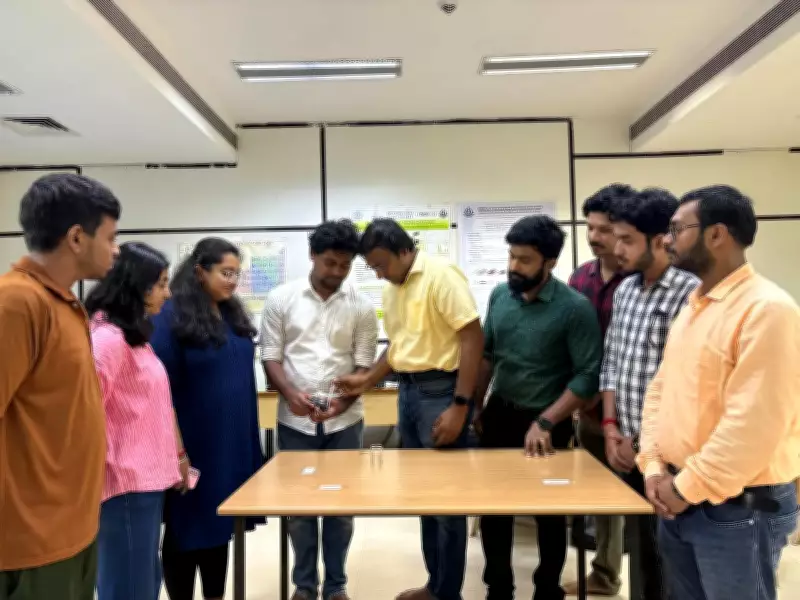
The handheld device, named ArsenSafe, has been developed by Nano Semic, a startup led by faculty members Sayan Dey and Akshay K. It was incubated at the Research and Entrepreneurship Park of IIT Bhubaneswar. Dey, who heads the Sensors and Spectroscopy Research Group at the School of Electrical and Computer Sciences (SECS), explained that the team's research has focused on creating affordable, sensitive, and field-deployable technologies for arsenic detection in drinking water.
Technology and Operation
The device utilizes a reduced graphene oxide (rGO)-based sensing system and is designed for easy operation with minimal training and setup requirements. According to Dey, the device can be used by government agencies, public health departments, environmental monitoring organizations, water treatment providers, industries, non-governmental organizations, and even individual consumers.

The prototype has achieved a high Technology Readiness Level (TRL) and has been successfully tested on water samples collected from the IIT Bhubaneswar campus and nearby areas. The TRL is a method for estimating the maturity of technologies during the acquisition phase of a program.
Significance of the Innovation
This innovation is particularly significant as arsenic contamination remains a major public health concern in several parts of India and across the world. In Odisha, a study by the Central Ground Water Board (CGWB) found arsenic concentrations exceeding the Bureau of Indian Standards (BIS) permissible limit of 0.01 mg/l in districts such as Gajapati, Ganjam, Bhadrak, Kendrapara, and Jagatsinghpur.
International Recognition
The innovation has also garnered international recognition. In a recent paper published in Environmental Science: Nano, a journal of the Royal Society of Chemistry (RSC), Dey and his team, including researchers Arijit Pattra, Bathula Sathwik, and Himanshu P Padole, presented an advanced microsensor based on reduced graphene oxide and its derivatives. This sensor can detect extremely low concentrations of arsenic in drinking water, in line with World Health Organization safety standards.
The study integrates nanotechnology with machine learning to enhance the accuracy and sensitivity of arsenic detection. Recognizing the significance of the work, the journal's editorial board has invited the paper to be featured in its special themed collection on 'Nanosensing'.