

Jaipur's TB Elimination Goal Delayed After Massive Case Discovery
The health department in Jaipur has missed its ambitious target to eliminate tuberculosis by 2025. A recent screening campaign uncovered a staggering 1.8 lakh new TB cases, pushing the goal further out of reach.
Campaign Reveals Hidden Epidemic
From December 7 to December 30, health officials conducted intensive screenings across the region. They identified 1,76,063 new instances of tuberculosis during this period. The breakdown shows 1,09,523 cases among vulnerable populations, while 65,356 cases emerged in other groups.
Officials immediately linked all identified patients with treatment programs. This swift action aims to curb further transmission of the disease throughout communities.

Surprising Positivity Rate Patterns
The data revealed unexpected patterns in TB positivity rates. Among vulnerable populations, the positivity rate stood at just 1%. However, other population groups showed a significantly higher rate of 3%.
"These were hidden cases which we successfully identified," explained health department representatives. They emphasized that finding these previously undetected cases represents crucial progress toward eventual control.
Regional Variations in TB Detection
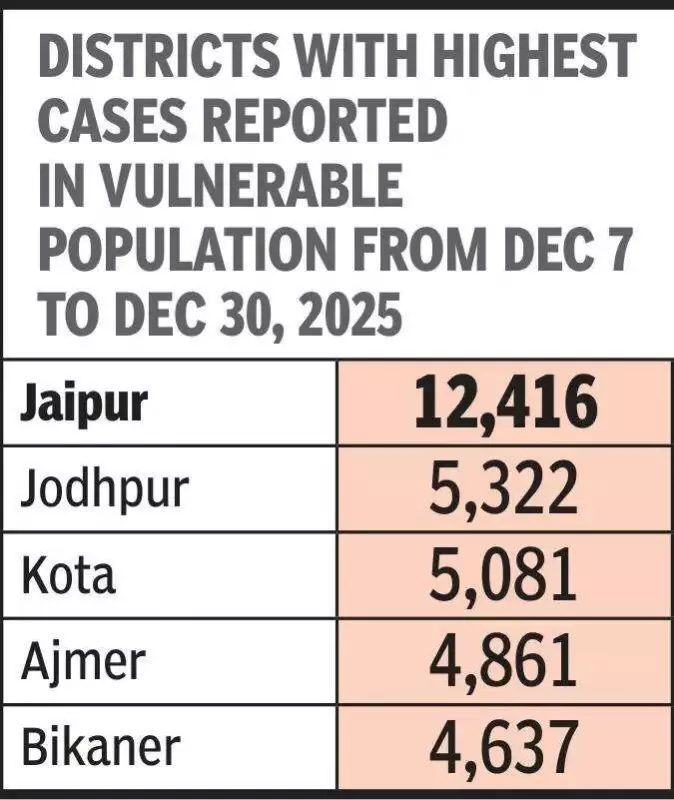
Jaipur district reported the highest absolute numbers with 12,416 cases in vulnerable populations and 13,708 cases in other groups. The positivity rates told a different story though - vulnerable groups showed 1% positivity while non-vulnerable groups reached 5%.
Alwar district presented an even more dramatic contrast. The non-vulnerable population there demonstrated a 7% positivity rate, compared to just 1% among vulnerable groups.
Massive Screening Effort Details
The December campaign screened an impressive 1.8 crore people for tuberculosis. This included 1.6 crore individuals from specifically targeted vulnerable populations.
A senior health official outlined their strategy: "Our main objective was to quickly identify hidden TB cases and provide timely treatment." Teams conducted door-to-door screenings in communities including:
- People living with HIV/AIDS
- Individuals with diabetes
- Those above 60 years of age
- Malnourished individuals
- Smokers and alcoholics
- Migrant workers
- Tribal communities
- Former TB patients
- Residents of mining and construction sites
- Incarcerated populations
- Urban slum dwellers
Why Vulnerable Populations Matter
Identifying TB cases in vulnerable groups remains particularly crucial. These individuals often have compromised immune systems, making them more susceptible to severe illness. However, officials clarified an important distinction: those infected but not yet ill cannot transmit the disease to others.
Path Forward for TB Control
The health department believes these identification campaigns will significantly help control TB's spread. "With continuous efforts of district-level teams and public participation, timely identification of the maximum possible number of patients is becoming possible," noted the senior official.
This approach aims to effectively break the chain of infection through early detection and treatment.
Understanding Tuberculosis Transmission
Tuberculosis spreads through airborne transmission when people with lung TB cough, sneeze, or spit. Alarmingly, a person needs to inhale only a few germs to become infected. This ease of transmission underscores why finding and treating cases promptly remains so vital for public health.
The recent campaign's findings, while disappointing for the 2025 elimination timeline, provide valuable data for refining future TB control strategies across the region.

