

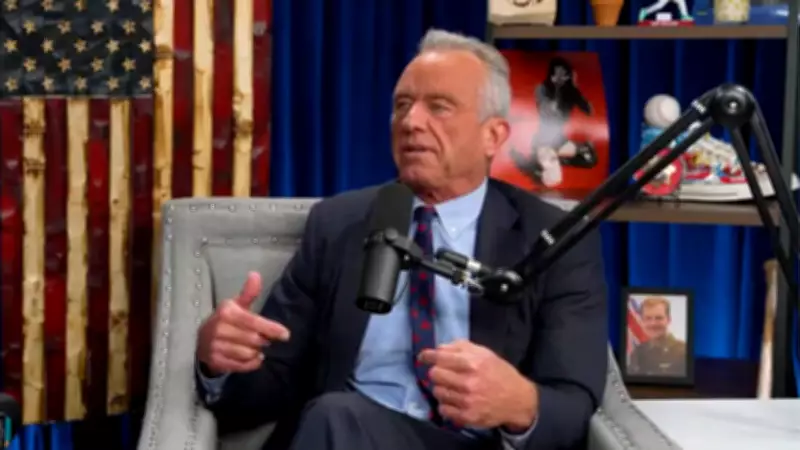
HHS Secretary's Candid Remarks on Past Drug Use Ignite Debate
The Department of Health and Human Services (HHS) continues to navigate turbulent waters as its secretary, Robert F. Kennedy Jr., finds himself embroiled in fresh controversy. This latest episode stems from Kennedy's appearance on comedian Theo Von's popular podcast, This Past Weekend w/ Theo Von, where the 72-year-old official made startlingly candid remarks about his history of substance abuse.
"I Used to Snort Cocaine Off Toilet Seats"
During the podcast conversation, Kennedy revealed intimate details about his past struggles with addiction. "I said this when we came in and, I said, 'I don't care what happens, I'm going to a meeting every day.' I'm not scared of a germ. I used to snort cocaine off of toilet seats," Kennedy told Von, referencing his commitment to daily recovery meetings.
The HHS chief explained that he has maintained sobriety for over four decades through this rigorous approach. He described organizing what he called a "pirate group" during the 2020 COVID-19 shutdowns to ensure recovering addicts could continue meeting despite pandemic restrictions. "I know this disease will kill me if I don't treat it, which for me means going to meetings every day. It's just bad for my life. So, for me, it was survival," Kennedy emphasized, highlighting the critical importance of the recovery community in his personal journey.

Long History of Substance Abuse
Kennedy's struggles with addiction date back to his teenage years. Official records show he was arrested at age 16 for marijuana possession. The situation escalated when, at 30 years old, he faced arrest in South Dakota for heroin possession. This incident ultimately served as a turning point, pushing him toward treatment and recovery.
The conversation with Von focused extensively on the vital role of recovery communities in maintaining long-term sobriety. Kennedy's willingness to discuss such personal matters publicly has drawn both admiration for his transparency and criticism for what some perceive as inappropriate disclosures from a sitting cabinet secretary.
Controversial Health Policies Under Scrutiny
Kennedy's remarks about germs and past drug use emerge against a backdrop of intense scrutiny regarding his leadership at HHS. Since assuming office under President Donald Trump, Kennedy has championed his "Making America Healthy Again" platform. This initiative argues that chronic diseases in the United States stem primarily from environmental toxins, chemicals in food, and what Kennedy describes as systemic failures within the medical establishment.
Medical experts and public health organizations have raised significant concerns about several of Kennedy's positions:

- Vaccine Safety Skepticism: Kennedy has long questioned vaccine safety, a stance that contradicts established scientific consensus. While he denies being anti-vaccine, his actions have included dismissing a group of vaccine specialists at the Centers for Disease Control and Prevention (CDC), including its chief, and replacing them with individuals described as vaccine skeptics.
- Research Funding Cuts: The HHS secretary has withdrawn contracts and eliminated $500 million in funding for 22 mRNA vaccine research projects, decisions that have drawn criticism from lawmakers and public health advocates.
- Hospital Regulation Changes: Kennedy eliminated a federal regulation that encouraged hospitals to track and report staff vaccination levels, further distancing his administration from mainstream public health approaches.
- Controversial Health Claims: The secretary has previously suggested links between vaccines and autism, claims consistently debunked by large-scale scientific studies. He has also supported assertions connecting acetaminophen use during pregnancy with autism, a theory many researchers say relies on disputed evidence.
Growing Tension Between Personal Views and Public Policy
The tension between mainstream public health policy and Kennedy's personal views has become increasingly apparent during his tenure. His podcast appearance this week merely represents the latest manifestation of this ongoing conflict. Critics argue that his unconventional positions and controversial statements undermine public confidence in established medical guidance.
Kennedy's leadership continues to spark debate about the appropriate role of personal beliefs in shaping national health policy. As the HHS secretary advances claims that challenge long-standing medical consensus, the department remains at the center of political and scientific controversy, with implications for public health initiatives across the United States.





