Kolkata Decorators Fire: Forensic Teams Face DNA Challenge in Identifying Charred Victims
In the aftermath of the devastating fire at the Pushpanjali Decorators godown in Kolkata, forensic teams are engaged in a painstaking and technically demanding operation. Their primary objective is to sift through mountains of ash and debris to recover human remains that could lead to the identification of the charred victims. This process is proving to be exceptionally challenging due to the severe conditions left by the blaze.
The Grim Recovery and the Missing
To date, rescue teams have retrieved 11 charred bodies from the site, most of which are now skeletal remains. However, the tragedy deepens as 23 individuals are still reported missing. There is a growing fear among authorities and families that many of these missing persons may have perished in the intense fire, adding to the urgency and emotional weight of the forensic identification process.
The Scientific Hurdles in DNA Profiling
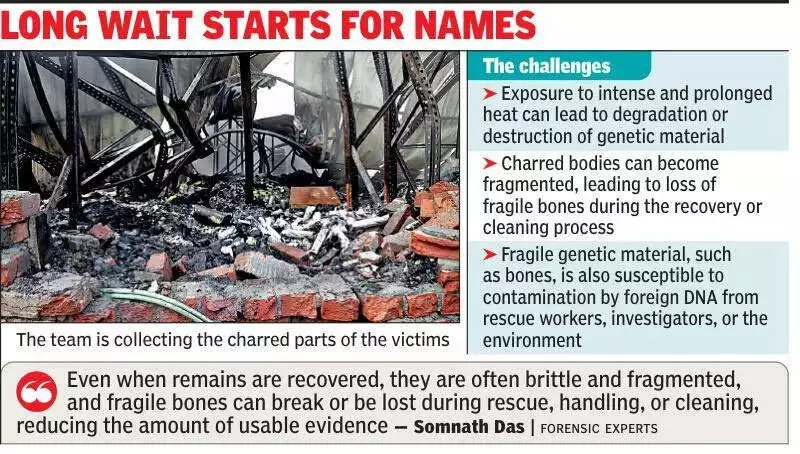
Forensic experts on the ground are highlighting significant scientific obstacles. Professor Somnath Das, head of the department at Bankura Sammilani Medical College, explained the core issue. "Intense and prolonged heat can severely degrade or completely destroy genetic material," he stated. This makes standard DNA profiling extremely difficult and inevitably slows down the identification timeline.

The professor further detailed the physical fragility of the evidence. "Even when remains are recovered, they are often brittle and fragmented. These fragile bones can break or be lost during the rescue operation, handling, or the cleaning process. This reduces the amount of usable evidence we have to work with," he added.
Contamination Risks and Alternative Methods
Investigators are also operating under the constant threat of contamination. Unintentional introduction of foreign DNA by rescuers, officials, or elements from the surrounding environment can complicate test results. This necessitates the implementation of strict forensic protocols to preserve the integrity of the samples.
In such extreme cases, experts often turn to more heat-resistant biological sources. The marrow from long bones and teeth are prime targets. The enamel of teeth, in particular, can protect the inner pulp, offering the best chance of obtaining reliable DNA for analysis.
When DNA testing is delayed or yields inconclusive results, forensic teams may resort to alternative methods. Superimposition, which involves matching skeletal features with photographs of the missing, is one such technique. However, experts caution that this method is less definitive than DNA matching.
The Human Toll: Families in Agonizing Limbo
For the grieving families, each technical step and delay in this forensic process extends their trauma. The sequence is heartbreakingly familiar: a final phone call, then a sudden silence, followed by an agonizing wait for science to confirm their deepest fears.
Priyanka Santra, sister of missing victim Anup Pradhan from Pingla in West Midnapore, embodies this anguish. Standing outside her home in Maligeria, she recounted, "My brother spoke to me briefly the night before the fire. The next morning, his phone was switched off. Since then, there has been only silence."
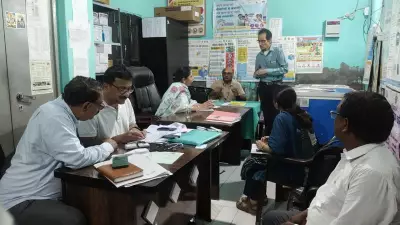
On a recent Tuesday morning, she, along with other family members, traveled to Kolkata to provide DNA samples. They joined relatives of other victims, all drawn into the same painful and uncertain identification procedure. Families of two other individuals from Maligeria also arrived in the city after being informed that conventional identification methods—such as visual recognition, clothing, or personal belongings—were no longer feasible due to the fire's severity.
Scene of Devastation
A police officer involved in the rescue operation summarized the scene's devastation. "The intensity of the fire left little that could be immediately linked to individuals. When the bodies were brought out, they were completely charred," the officer reported, underscoring the scale of the challenge facing both rescue workers and forensic scientists.