

Kolkata Health Department Rolls Out Detailed Nipah Virus Guidelines
The West Bengal health department has created a comprehensive guideline document. This document focuses on identifying contacts, isolating patients, and treating confirmed Nipah cases. It also covers individuals suspected of having the infection.
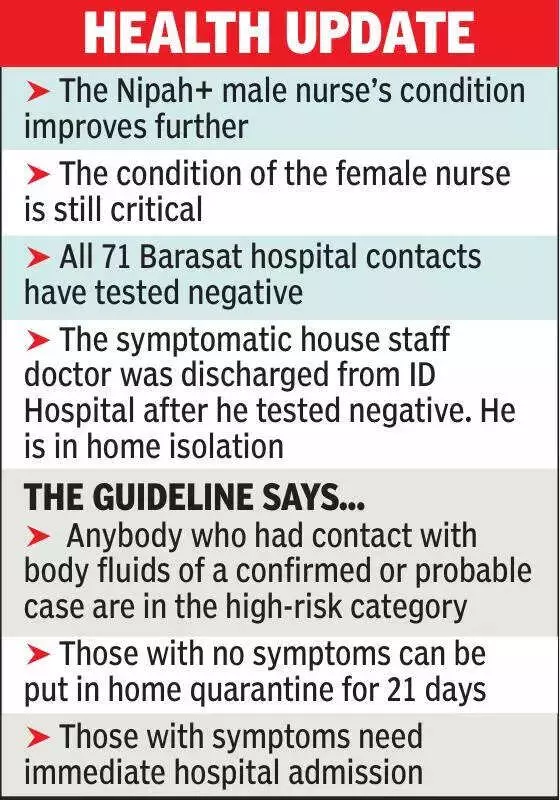
Currently, Bengal reports two confirmed Nipah virus infections. State health officials explained the guideline's purpose. They aim to provide proper medical care. This care should help reduce mortality rates. It should also prevent the wider spread of the infection.
First Major Guideline Since the Pandemic
This marks the first such guideline issued by the department after the Covid-19 pandemic. In a related move, the health department has selected personnel for specialized training. They handpicked one nurse from each of 24 government hospitals. These nurses will attend a Nipah sensitization training program at Swasthya Bhawan.

Despite the concern, testing results offer some reassurance. More than 100 samples have been diagnosed so far. None of these samples tested positive for the virus. Doctors emphasize caution despite the virus not spreading widely. They note the infection has a high mortality rate. Therefore, all necessary steps must be taken promptly to contain any outbreak.
Defining High-Risk and Low-Risk Contacts
The new guideline clearly defines risk categories. Anyone who had contact with body fluids from a confirmed or probable case falls into the high-risk group. These fluids include saliva, blood, urine, or respiratory secretions. This applies even if the person died before a lab test confirmed the infection.
Asymptomatic individuals in this high-risk category can undergo home quarantine for 21 days. Those showing symptoms require immediate hospital admission. They must be placed in an isolated ward.
"During home isolation, asymptomatic close contacts need active surveillance twice daily," a health official stated. "A home care worker must conduct this surveillance to check for any emerging symptoms." If symptoms develop during quarantine, the individual must be admitted to a hospital immediately to start treatment.
Protocol for Lower Risk Exposures
The guideline also addresses lower-risk scenarios. Casual physical contact without exposure to body fluids is considered low-risk. Touching clothes or linens used by a patient also falls into this category. However, if these low-risk contacts become symptomatic, they must be admitted to a hospital isolation unit. Their samples must be sent for testing.
The document provides specific instructions for healthcare workers. Caregivers who tend to confirmed or suspected cases are at high risk. Yet, if they use adequate personal protection equipment, they are not classified as contacts. They do not require specific quarantine measures.
Even individuals with low-risk exposure can continue working under certain conditions. They must remain asymptomatic. They must also wear adequate personal protection, including an N95 mask.
Expert Team Behind the Guidelines
A team of infectious disease experts prepared these guidelines. The team included Yogiraj Ray, Ayan Basu, Soumendranath Haldar, and Dipankar Pal from the state health department. Pritam Roy from the World Health Organization also contributed.
The guideline specifies the antiviral medications doctors should use. It instructs physicians to start these antivirals at the earliest opportunity. This applies to all positive cases and all symptomatic cases.

