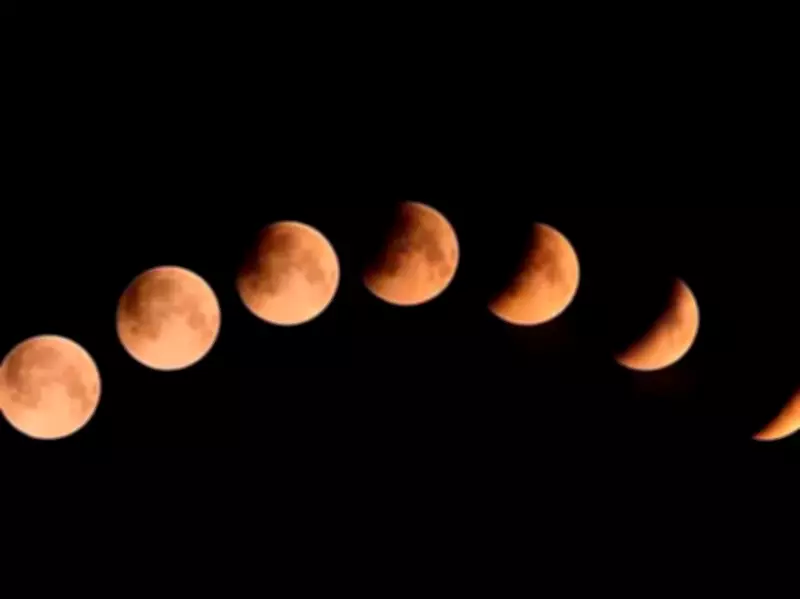
Total Lunar Eclipse 2026: A Spectacular Blood Moon Event
Sky watchers and astronomy enthusiasts, mark your calendars for an extraordinary celestial spectacle. On March 3, 2026, a total lunar eclipse, famously known as a Blood Moon, will grace the skies. This rare astronomical phenomenon offers a thrilling adventure for observers worldwide, presenting a unique opportunity to witness the Moon bathed in a reddish hue.
What is a Lunar Eclipse?
A lunar eclipse occurs when the Sun, Earth, and Moon align perfectly, with the Earth positioned directly between the Sun and the Moon. This alignment casts Earth's shadow onto the Moon, blocking direct sunlight. During a total lunar eclipse, the Moon enters the umbra, the deepest part of Earth's shadow. Interestingly, even when obscured, some sunlight filters through Earth's atmosphere, bending due to refraction. Shorter blue wavelengths scatter away, while longer red and orange wavelengths reach the Moon, giving it a crimson appearance—hence the term "Blood Moon." This event is not casual; it happens periodically, making each occurrence a significant astronomical event.
Date, Time, and Visibility in India
The lunar eclipse on March 3, 2026, will commence at 3:20 PM and conclude at 6:47 PM. However, visibility in India will be limited due to "moonrise eclipse" conditions. The eclipse will already be in progress when the Moon rises across the country. As a result, Indians will only be able to witness the eclipse from approximately 6:26 PM, with maximum visibility occurring between 6:33 PM and 6:40 PM. This provides a brief window of about 15 minutes for observation after moonrise.

Regional Variations: Northeastern states such as Assam, Arunachal Pradesh, Meghalaya, and West Bengal will have an advantage, as the Moon rises earlier there, offering a slightly longer viewing period. Sky watchers in these regions are encouraged to prepare their DSLRs and cameras to capture this incredible event.
Sutak Time and Cultural Significance
In Hindu tradition, sutak kaal, an inauspicious period, begins before an eclipse. For this lunar eclipse, sutak will start at 6:23 AM on March 3 and end with the eclipse. During this time, certain activities are avoided due to cultural beliefs. Notably, Holi, the festival of colors, falls on Phalguna Purnima, which coincides with this eclipse day. It is advised not to play Holi on March 3, 2026, as eclipses are considered inauspicious, and celebrations should be postponed to maintain auspiciousness.
Hindu mythology links eclipses to the shadow planets Rahu and Ketu, believed to disrupt lunar energy. People often take precautions, such as avoiding outdoor activities and following rituals, to stay safe during grahan. From a scientific perspective, lunar eclipses provide valuable opportunities to study Earth-Moon interactions and atmospheric effects, aiding research into sunlight alteration and atmospheric composition.
Global Visibility and Astronomical Insights
This total lunar eclipse will be visible from a wide range of countries, including Pakistan, Afghanistan, Iraq, Iran, New Zealand, Australia, Antarctica, North and South America, Russia, and across Asia. Astronomers, both amateur and professional, can leverage this event for public outreach, organizing sky-watching activities, photography sessions, and educational programs to engage communities in science.
Astrologically, the eclipse occurs in the Leo sign under the Purva Phalguni Nakshatra, adding cultural and astrological dimensions to its significance. Stay tuned for more updates on this captivating celestial event, which promises to be a highlight for sky enthusiasts and researchers alike.