

Madhya Pradesh Healthcare System Strained as Junior Doctors Stage Statewide Protest
Patients throughout Madhya Pradesh faced significant healthcare disruptions on Monday as approximately 8,000 junior doctors initiated a comprehensive statewide strike. The protest was organized to demand long-overdue stipend increases that were originally promised by government authorities.
Immediate Impact on Medical Services and Patient Care
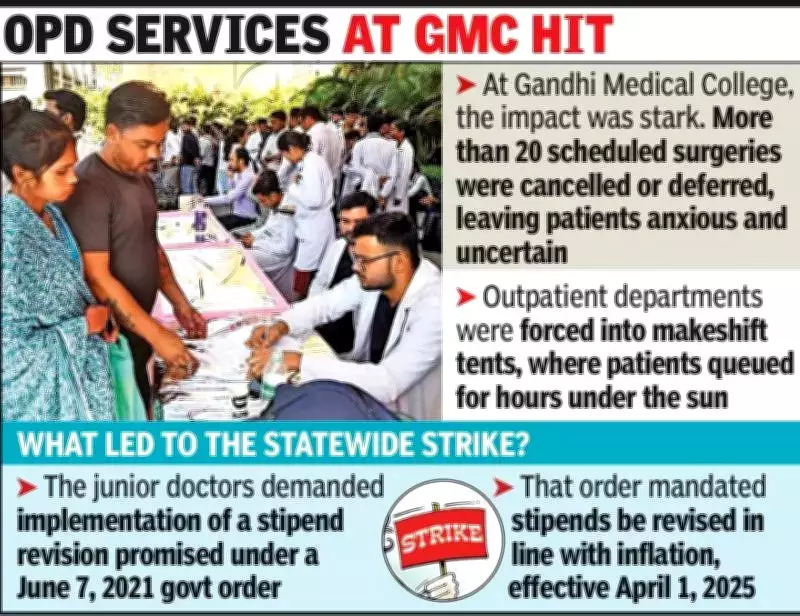
The strike's consequences were particularly evident at Bhopal's Hamidia Hospital, which operates in association with Gandhi Medical College. Hospital administrators reported that more than twenty scheduled surgical procedures had to be either cancelled or postponed indefinitely. This created considerable anxiety and uncertainty among affected patients and their families.
Under normal operational circumstances, the hospital typically completes over sixty surgical interventions daily. However, by Monday evening, medical staff had managed to perform only about three dozen procedures, representing a substantial reduction in surgical capacity.

Emergency medical services, including critical cesarean deliveries, continued without interruption throughout the protest period. Nevertheless, outpatient departments experienced severe operational challenges, forcing healthcare providers to establish makeshift treatment tents where patients endured extended waiting periods under direct sunlight.
Patient Experiences and Healthcare System Vulnerabilities
Sameer, a patient suffering from persistent leg pain, described his frustrating experience: "I have been wandering since morning, distressed and unable to get proper medical treatment." His situation reflected the broader challenges faced by numerous patients caught between the ongoing protest and the healthcare system's diminished operational capacity.
The strike created multiple layers of healthcare disruption:
- Expectant mothers experienced heightened anxiety about their medical care
- Surgical patients received last-minute notifications about postponed procedures
- Individuals seeking routine medical attention found themselves in healthcare limbo
While hospital officials maintained that "life-saving services were not compromised" during the protest, the widespread disruption highlighted the healthcare system's critical dependence on junior doctors for essential patient care delivery.
Protest Origins and Government Negotiations
The Junior Doctors' Association (JUDA) organized the strike to demand implementation of a stipend revision that was originally promised through a government order dated June 7, 2021. This official directive mandated that junior doctor stipends should be revised according to inflation rates, with the new stipend structure scheduled to take effect from April 1, 2025.
Despite repeated appeals from the medical community, neither the revised stipend amounts nor corresponding arrears payments have been disbursed to junior doctors. This persistent delay ultimately compelled the healthcare professionals to escalate their protest through coordinated strike action.
By Monday afternoon, JUDA representatives conducted negotiations with Deputy Chief Minister and Health Minister Rajendra Shukla in Jabalpur. Following these discussions, government authorities provided assurances that stipend implementation orders would be issued within several days.
Temporary Resolution and Future Implications
In response to these governmental assurances, junior doctors agreed to temporarily suspend their strike action until March 16. However, JUDA leadership issued a clear warning that if promised stipend revisions remain unimplemented by that deadline, medical professionals will resume their agitation with "stronger measures" and potentially more disruptive protest actions.
The one-day healthcare stoppage revealed significant vulnerabilities within Madhya Pradesh's medical infrastructure. Patients endured the direct consequences through postponed surgeries, disrupted outpatient services, and extended waiting periods in temporary treatment facilities. Simultaneously, junior doctors intensified their demands for compensation commitments they describe as substantially overdue.

This situation underscores the delicate balance within state healthcare systems, where patient welfare becomes directly impacted by unresolved labor disputes between medical professionals and government authorities.





