

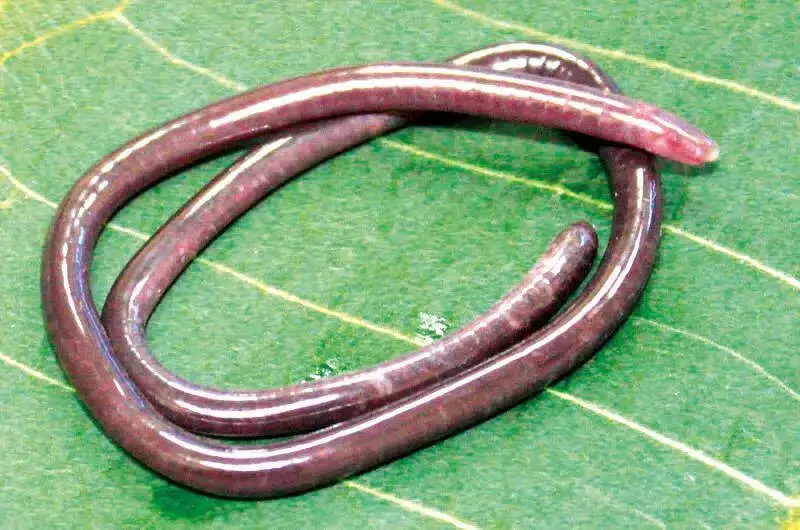
New Blind Caecilian Species Gegeneophis Valmiki Discovered in Maharashtra's Satara District
Wildlife researchers and herpetologists across India are celebrating a significant discovery in the Western Ghats biodiversity hotspot. A new species of caecilian, scientifically named Gegeneophis valmiki, has been identified at Paneri, Palashi, in Maharashtra's Satara district. This exciting find brings the total number of documented species in the Gegeneophis group within the Western Ghats to eleven, with four of these fascinating creatures having been documented in the neighboring state of Goa.
Honoring Ancient Heritage with Scientific Naming
The newly discovered amphibian species carries a name steeped in cultural significance. It has been named after the Maharshi Valmiki Mandir located on the Valmiki plateau in the northern reaches of the Western Ghats. This naming convention honors both the geographical location of the discovery and India's rich literary heritage associated with the sage Valmiki.
Understanding the Elusive Blind Caecilians
Caecilians belonging to the genus Gegeneophis are commonly referred to as blind caecilians due to their unique anatomical feature: their eyes are completely hidden beneath the bony cranium. These remarkable invertebrates are limbless amphibians that spend their entire lives underground, inhabiting the soil and humus-rich organic matter where they remain largely hidden from human observation.

In Goa specifically, researchers have documented six caecilian species to date. Among these, four belong to the Gegeneophis group: Gegeneophis goaensis, Gegeneophis mhadeiensis, Gegeneophis danieli, and Gegeneophis pareshi. The remaining two species documented in Goa are Ichthyophis bombayensis and Ichthyophis davidi, representing different caecilian lineages.
A Decade-Long Journey to Scientific Recognition
The discovery process for Gegeneophis valmiki represents years of meticulous scientific work. Nirmal Kulkarni, a Goan herpetologist and member of the scientific team involved in the research, revealed that the first type specimen was actually discovered back in 2017. "We worked and studied them till recently while the paper was published only in December 2025," Kulkarni explained, highlighting the extensive research period required for proper species identification and validation.
KP Dinesh, a senior scientist at the Zoological Survey of India who collected the first specimen in 2017, jointly published the study along with his colleague Sahil Shikalgar and three other experts in the international journal Phyllomedusa. Dinesh emphasized the importance of this discovery, stating, "The scientific recognition and formal validation of these species bring national and global attention to one of the most elusive groups of subterranean amphibians."
Significance for Biodiversity Research
Varad Giri, head scientist at Reliance Foundation and an expert on caecilians, expressed enthusiasm about the discovery. "The finding is good news to all, especially researchers, as it shows that there is a diversity not known to science," Giri stated. He further emphasized the ecological importance of these often-overlooked creatures, drawing a powerful analogy: "The role of an ant and elephant is the same in maintaining the ecological balance."
Giri also acknowledged the challenges facing researchers in this field, noting, "I feel grateful to those few who are researching caecilians as these little life forms are ignored." Caecilians represent one of the most underexplored groups of vertebrates in India, making each new discovery particularly valuable for understanding the country's biodiversity.

Challenges in Caecilian Research and Identification
Identifying and studying caecilians presents unique challenges for researchers. As Kulkarni explained, "It is particularly difficult to identify caecilians, as they are worm-like and superficially resemble earthworms." Their subterranean lifestyle adds another layer of complexity to research efforts. Unlike frogs that produce vocal calls, caecilians remain silent, making them mostly discovered in the field by chance rather than through active searching techniques.
Historical Context and Recent Developments
The Western Ghats region is renowned for its remarkable caecilian diversity, hosting 26 documented species that are all endemic to this biodiversity hotspot. However, no new species within the Gegeneophis genus had been discovered for over a decade prior to this finding. The last caecilian species discovered in the northern Western Ghats was found at a plantation near Cotigao Wildlife Sanctuary and was named after Paresh Porob, then range forest officer of Bondla, in recognition of his conservation work.
Adding to the significance of the Gegeneophis valmiki discovery, researchers have recently found a second specimen of this species in the same location on the Valmiki plateau. This additional finding helps confirm the species' characteristics and distribution patterns, providing valuable data for ongoing research into these elusive amphibians.
