

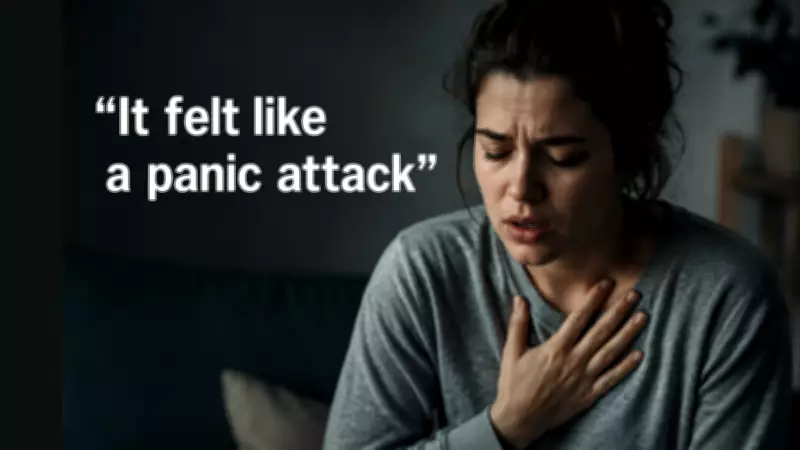
What if you were not panicking at all? Your heart is racing. You cannot catch your breath. There is a weight on your chest and your mind screams that something is terribly wrong. You feel pure dread in your gut. Most people in this situation would assume they are having a panic attack. Friends would tell them to breathe, to calm down, to get help for their anxiety. But what if none of that was true? What if you were not panicking at all? This nightmare happens more often than you would think. Pulmonary embolism is being mistaken for panic attacks with alarming regularity.
Delhi Based Doctor Discusses This Life Threatening Condition
Dr. Nitish Anchal, HOD and Consultant of Vascular and Endovascular Surgery at Manipal Hospitals Dwarka in New Delhi, has spent his career watching this misdiagnosis play out. He puts it bluntly: "Shortness of breath, a pounding heart, and an overwhelming sense that something is terribly wrong. Most people would associate these feelings with anxiety or a panic attack. But what many do not realise is that these exact symptoms can be the body's signal of something far more dangerous: pulmonary embolism. This life-threatening condition is commonly missed due to the close resemblance of its symptoms to a panic attack."
Why This Matters
Pulmonary embolism is the third most common cardiovascular disease after cardiac ischemic syndromes and stroke. Yet it kills more people than heart attacks do. The death rate from pulmonary embolism exceeds that from myocardial infarction because myocardial infarction is much easier to detect and treat. Think about that: a pulmonary embolism is less recognized but deadlier than a heart attack. The incidence is staggering. Venous thromboembolism affects an estimated 300,000 to 600,000 individuals in the United States each year, with rates ranging from 1 to 2 per 1,000 people to as high as 1 in 100 for those over 80. But because the symptoms mimic panic, misdiagnosis is shockingly common.

What Is a Pulmonary Embolism?
A pulmonary embolism is a blood clot that forms somewhere in your body, usually in your leg or arm, and then breaks loose and travels through your veins to lodge in your lungs. Dr. Anchal explains: "A pulmonary embolism is a blood clot in one of the blood vessels in the lung. This happens when a clot in another part of the body, often in the leg or arm, moves through the veins to the lung. A pulmonary embolism restricts blood flow to the lungs, lowers oxygen levels in the lungs, and increases blood pressure in the pulmonary arteries." When that clot gets stuck in your lungs, things fall apart fast. Your heart has to work harder. Your oxygen levels plummet. Your body panics, literally, as your nervous system goes into survival mode, which is why you feel like you are dying. Because on some level, your body knows you might be.
Pulmonary Embolism Symptoms
The symptoms are sneaky. They show up suddenly or build slowly. Sometimes they hit you like a truck. Sometimes they are subtle enough that you convince yourself it is just stress. Dr. Anchal outlines what to watch for:

- Sudden shortness of breath: Breathing suddenly feels difficult, whether at rest or moving, and does not settle easily.
- Chest pain that spreads: Sharp, unexplained pain in the chest that can travel to the arm, back, shoulder, neck, or jaw and may worsen on deep breathing.
- Fast breathing with wheezing: Breaths become quicker than usual, sometimes with a whistling sound.
- Cough, sometimes with blood: A persistent cough that may bring up bloody mucus in some cases.
- Rapid heartbeat with sweating and skin changes: Pulse races along with excessive sweating, and the skin may turn pale, clammy, or even bluish.
- Dizziness, anxiety, or fainting: Feeling unusually anxious, lightheaded, or in severe cases, fainting or passing out.
Underlying Risks
Getting diagnosed depends on recognizing risk factors. If you have had recent surgery, a recent injury, have been immobilized for a long time, or have a family history of clots, you are at higher risk. Dr. Anchal emphasizes: "For those with underlying risks like diabetes, cancer, recent injury, or a family history, the chances of missing something serious like this only get higher. What feels like anxiety in the moment may actually be your body asking for urgent attention." Dr. Anchal's final warning is worth listening to: "Ignoring it or waiting it out can cost valuable time. Getting it checked early is not overreacting; it is the difference between catching it in time and dealing with something far worse."





