

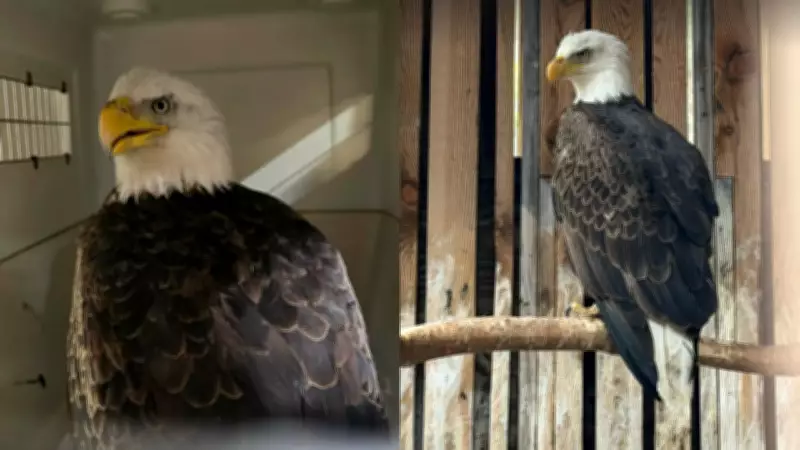
What appeared to be a peaceful scene beside a road in Wallkill, New York, quickly turned into a rescue mission. A passing driver noticed what looked like a majestic bald eagle resting on the ground and initially assumed the bird was sleeping. But something felt wrong. Bald eagles rarely spend time on the ground, especially near busy roads. Realizing the bird might be in distress, the motorist contacted wildlife rehabilitator Dave Loverde of the Friends of the Feathered and Furry Wildlife Center. The decision likely saved the eagle's life, as rescuers soon discovered the national bird was suffering from a potentially fatal case of poisoning.
The Hidden Danger That Was Slowly Killing the Majestic Bird
When Dave Loverde arrived at the scene, he immediately knew something was wrong. Bald eagles typically perch high in trees and are rarely found sitting beside roads. The female eagle appeared weak and disoriented and showed little interest in flying away. According to Loverde, the bird's behaviour suggested a serious medical problem. She was unable to properly navigate her surroundings and remained dangerously exposed to traffic and predators.
Tests performed at the Friends of the Feathered and Furry Wildlife Center revealed that the eagle had elevated levels of lead in her blood. Experts believe she likely ingested the toxin after feeding on prey contaminated with lead bullet fragments. Loverde also suspected that rodenticides may have contributed to her condition. Rat poisons often move up the food chain, affecting predators such as hawks, owls and eagles that feed on poisoned animals.

The Rescue Came Just in Time
The eagle was so weak that she offered almost no resistance when rescuers approached with a net. Loverde later said the bird had been dangerously close to death. Once she arrived at the rehabilitation centre, the team immediately began treatment aimed at removing toxins from her system and stabilising her condition. Intensive care and careful monitoring gave the bird a fighting chance.
After about 10 days of treatment, the eagle showed dramatic improvement. She was moved to an outdoor enclosure, where she quickly resumed flying. "She's doing really well," Loverde said. "I put her in a cage outside and she's flying around like crazy." The next step in her rehabilitation will involve a larger flight enclosure, allowing her to rebuild strength and endurance before being released back into the wild.
A Growing Threat to Birds of Prey
Wildlife experts say the eagle's case is far from unique. The Friends of the Feathered and Furry Wildlife Center sees numerous animals each year suffering from lead poisoning and exposure to rodenticides. These toxins do not only affect rodents. Eagles, hawks, owls, foxes and other predators are often poisoned after consuming contaminated prey. Conservationists have increasingly warned that such substances pose a major threat to wildlife populations across North America.
A Simple Act That Made All the Difference
Had the driver continued on without stopping, the eagle might not have survived. Instead, a moment of curiosity and compassion led to a successful rescue and gave one of America's most iconic birds a second chance. For now, the recovering eagle is continuing to regain her strength, and rescuers hope she will soon return to the skies where she belongs.






